Seasonal production creates a difficult cold storage decision for food manufacturers.
Build or lease too much permanent freezer space, and the business carries overhead it may not need for much of the year. Under-plan capacity, and production can run into storage pressure, outbound delays, short-term freight issues, or customer service problems during the weeks that matter most.
That is why seasonal cold storage should be planned as a flexible operating model, not only a space calculation.
Food manufacturers need enough capacity to support production surges, retail promotions, holiday demand, harvest cycles, product launches, and contract manufacturing runs. They also need the right handling, staging, freight coordination, and inventory visibility to keep finished goods moving after production.
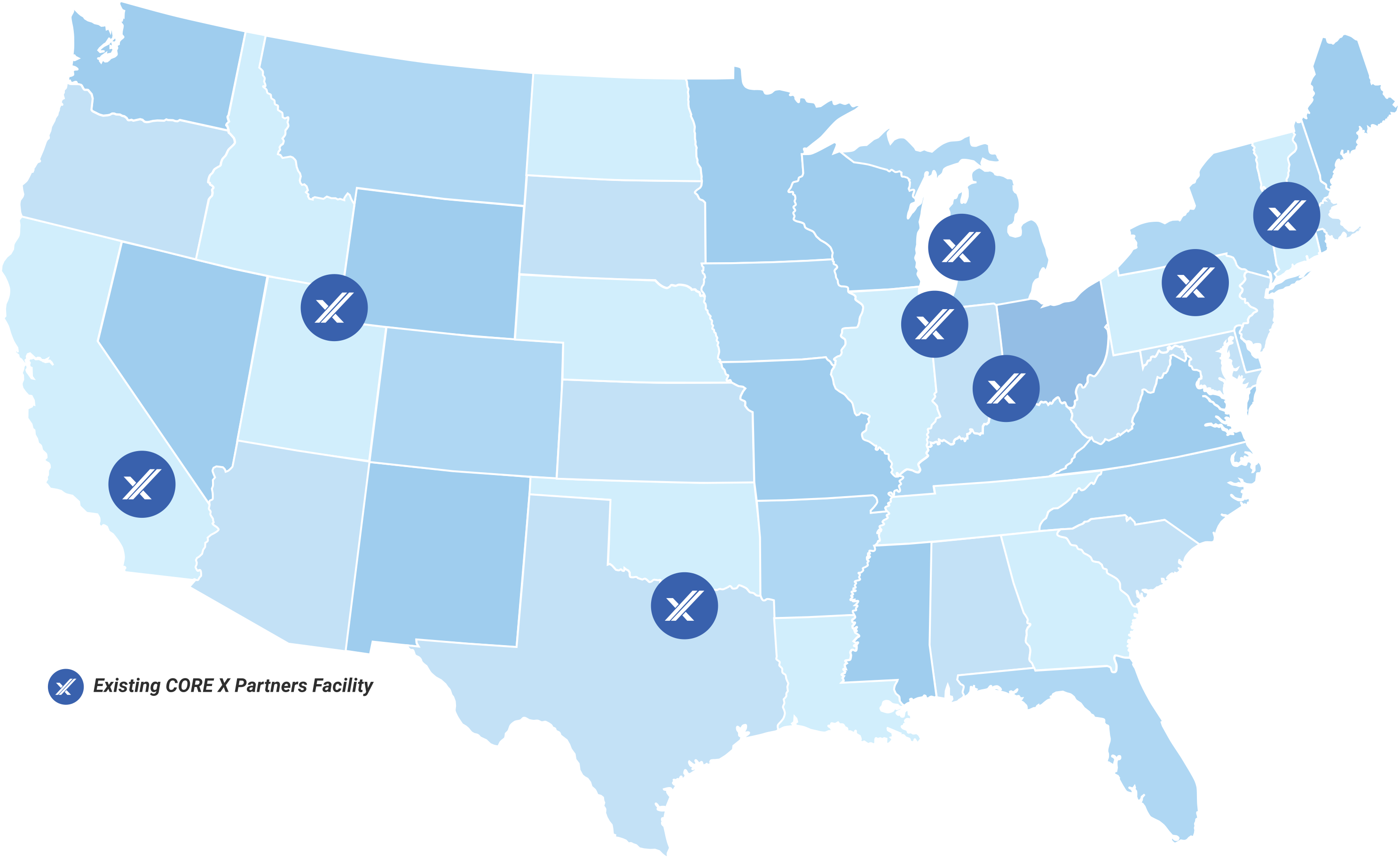
CORE X Partners supports scalable cold storage capacity through a national cold storage network with temperature-controlled warehousing, value-added services, coordinated freight movement, 52 million cubic feet of storage capacity, and more than 220,000 pallet positions.
The Capacity Problem for Seasonal Manufacturers
Seasonal manufacturers rarely have a smooth, predictable inventory curve.
A frozen dessert brand may build inventory before summer. A bakery manufacturer may carry more seasonal product ahead of holidays. A producer tied to harvest cycles may need temporary refrigerated warehousing after a short, intense production window. A growing brand may land a new retail program that creates a temporary inventory build before weekly replenishment stabilizes.
The wrong capacity decision creates cost either way.
Permanent freezer infrastructure can become expensive when the business only needs peak volume for a short window. But too little cold storage capacity can constrain production, force rushed shipping decisions, increase dwell time, or create avoidable pressure on customer delivery windows.
Rather than building the whole supply chain around the busiest month of the year, the goal is to create enough flexibility to absorb seasonal pressure without losing control of product quality, inventory, or outbound flow.
That is where food manufacturer cold storage planning should begin.
How to Plan Seasonal Cold Storage Capacity
Seasonal capacity planning works best when storage, production, handling, and outbound movement are reviewed together. Space matters, but space alone does not tell the full story.
Establish the Baseline
Start with the normal operating profile.
Manufacturers should know how much inventory they carry during a typical week, how quickly finished goods leave production, and how long product usually sits before shipment. This baseline gives the business a clearer view of what changes during peak season.
Useful baseline inputs include:
- Average pallet positions
- Average weekly production volume
- Average dwell time in storage
- Normal outbound orders per day or week
- Minimum safety stock
- SKU count by temperature zone
- Typical shipment size
- Normal inbound and outbound appointment volume
This helps separate the standing cold storage requirement from the seasonal cold storage requirement. Without that distinction, the manufacturer may overcommit to fixed space or under-plan the surge.
Identify the Surge Pattern
Not every seasonal surge looks the same.
Some manufacturers see predictable annual pea ks. Others see shorter spikes tied to retailer promotions, new product launches, contract manufacturing runs, limited-time offers, or weather-driven demand. The surge pattern affects how much space is needed, how long the capacity is needed, and what other services must flex at the same time.
A useful planning view compares production, storage, and outbound movement by month.
| Month | Production volume | Pallet positions needed | Outbound shipment activity |
| January | Normal | 850 | Normal replenishment |
| February | Normal | 875 | Normal replenishment |
| March | Build begins | 1,150 | Moderate increase |
| April | Peak production | 1,600 | Higher outbound activity |
| May | Peak outbound | 1,350 | Heavy retail replenishment |
| June | Normalizing | 950 | Normal replenishment |
These are example measurements, not universal benchmarks. The point is to see when inventory builds, when it ships, and where storage pressure is likely to appear.
A seasonal manufacturer should also identify which products create the most pressure. One SKU may occupy more pallet positions. Another may require a tighter temperature range. Another may be tied to a customer promotion with limited delivery flexibility.
Plan Inbound Flow Before Production Peaks
Finished goods need somewhere to go as soon as production increases.
Inbound planning should be completed before the seasonal run starts. That includes appointment scheduling, receiving capacity, pallet configuration, labeling requirements, lot capture, temperature requirements, and the expected pace at which product leaves the manufacturing facility.
The receiving plan should answer practical questions:
- How many pallets will arrive each day?
- Will product arrive floor-loaded, palletized, or in mixed configurations?
- What lot, date-code, and expiration information must be captured?
- Are there special handling requirements by SKU?
- How quickly does product need to be received and visible in inventory?
- Which temperature zones will be required?
- What happens if production exceeds the forecast?
The faster finished goods are received, recorded, and placed into the correct environment, the easier it becomes to protect temperature integrity and keep production moving.
This is especially important for seasonal production requirements that involve multiple SKUs, changing production schedules, or customer-specific handling rules.
Plan Outbound Flow at the Same Time
Storage planning cannot stop at inbound capacity.
The outbound plan determines how quickly seasonal inventory turns back into available product for customers. If finished goods move into storage faster than they move out, the manufacturer may run out of capacity even when production is going well.
Outbound planning should account for:
- Picking requirements
- Staging needs
- Dock scheduling
- Trailer availability
- Retail appointment windows
- Customer routing requirements
- Less-Than-Truckload (LTL), consolidation, and Full Truckload (FTL) options
- Documentation, labels, and Advanced Shipping Notices (ASN)
- Exception response when pickups or appointments change
Seasonal pressure often builds when inbound production and outbound transportation are planned separately. Product arrives on schedule, but freight capacity lags. Orders are picked, but trailers are not ready. Retail delivery windows are booked, but staging space is already tight.
A stronger seasonal cold storage plan connects warehouse readiness with freight timing before peak volume arrives.
Determine Which Services Should Expand with Volume
Seasonal volume can affect more than pallet positions.
A manufacturer may need more storage space, but it may also need more picking, staging, pallet breakdown, re-palletizing, repacking, kitting, or transportation support. If those services do not expand with inventory, the cold storage facility can become crowded even when space is technically available.
For example, a holiday retail program may require customer-specific pallet builds. A frozen product launch may require staged outbound shipments across several regions. A refrigerated product may need tighter lot rotation because shelf life is shorter. A promotional pack may require repacking or kitting before distribution.
Seasonal capacity planning should define which services need to flex:
Service area |
Seasonal planning question |
| Storage positions | How much temporary capacity is needed, and for how long? |
| Receiving | Can inbound appointments keep pace with production? |
| Picking and staging | Will order volume increase during the same window? |
| Value-added services | Are repacking, kitting, labeling, or pallet changes required? |
| Transportation | Will shipment frequency or mode change during peak? |
| Consolidation | Can compatible freight move through a planned program? |
| Visibility | Can teams see inventory, orders, and exceptions quickly? |
This service-level view helps manufacturers avoid a common mistake: securing overflow frozen warehouse space without confirming whether the operation can support the work that comes with it.
Build a Contingency Scenario
Seasonal forecasts are useful, but they are still forecasts.
Manufacturers should model what happens if volume exceeds the plan. A practical contingency review may test 120%, 150%, or 200% of expected peak volume. These are planning scenarios, not suggested industry benchmarks.
The goal is to identify decision points before they become urgent.
Ask:
- At what volume does storage capacity become tight?
- At what volume does receiving become a bottleneck?
- When does staging space become a constraint?
- Which SKUs or customers should be prioritized?
- Which freight lanes need additional planning?
- What happens if outbound orders do not move as expected?
- Which internal teams need updates when the plan changes?
A contingency plan does not need to predict every issue. It should define what happens when production, inventory, or outbound flow moves outside the expected range.
That protects the manufacturer from making cold chain decisions under pressure.
Calculate the Business Case
The lowest storage rate is not always the lowest-cost option.
Seasonal manufacturers should compare fixed capacity costs against variable third-party cold storage costs. That review should include more than pallet storage. It should also account for internal labor, equipment, utilities, warehouse management, maintenance, transportation, handling, accessorial charges, claims, and risk.
A business case may compare:
- Cost of owning or leasing permanent freezer space
- Cost of underused space outside peak season
- Temporary 3PL storage costs
- Labor and equipment needed to operate owned space
- Transportation cost from each storage location
- Cost of production delays caused by capacity limits
- Cost of rejected loads, missed appointments, or rush freight
- Administrative time spent coordinating multiple providers
The right model may not be the same every year. A manufacturer may use third-party capacity during early growth, add dedicated space later, or combine internal storage with a 3PL partner during peak periods.
The key is to keep the cold chain aligned with the business, not locked into a capacity model that only fits one season.
When Scalable Frozen Storage Makes Sense
Scalable frozen storage is a strong fit when seasonal demand is predictable enough to plan, but not consistent enough to justify permanent overhead.
It may support manufacturers that need to:
- Build inventory ahead of peak demand
- Move finished goods out of production quickly
- Support retailer promotions or holiday programs
- Handle harvest-driven production cycles
- Add temporary capacity for contract manufacturing runs
- Expand into new regions without adding owned facilities
- Reduce internal warehouse pressure during production surges
A national cold storage facility network can also support manufacturers that need regional capacity as sales expand. The goal is not to add locations before the business needs them. It is to place inventory where it can support customer requirements, freight efficiency, and delivery timing.
For growing brands, that flexibility can be especially valuable. Seasonal volume may begin in one manufacturing region, then spread as retailers, distributors, or foodservice customers are added in other markets.
Learn more about Scaling Cold Chain Distribution Without Scaling Risk.
Questions to Ask a Seasonal Cold Storage Partner
Before choosing a seasonal cold storage partner, food manufacturers should ask how capacity, labor, transportation, and visibility will work during peak conditions.
Helpful questions include:
- How much temporary cold storage capacity can you support during our peak window?
- Which temperature zones are available for our product mix?
- How early do seasonal capacity plans need to be confirmed?
- Can you support inbound appointment scheduling during production surges?
- How quickly will received product be visible in inventory?
- Can you track product by SKU, lot, date code, and expiration date?
- What value-added services can scale with volume?
- Can you support picking, staging, consolidation, LTL, and FTL as outbound demand changes?
- How do you communicate when capacity, labor, pickup, or delivery timing changes?
- What reporting can we review during and after peak season?
The answers should show whether the provider can support the full seasonal operating plan, not simply hold product until the rush passes.
Plan Seasonal Production Without Permanent Freezer Overhead
Seasonal manufacturers need cold storage capacity that matches the way their business actually moves. Permanent freezer overhead may not make sense when peak demand is concentrated in a few months, but insufficient capacity can create its own risks.
A stronger plan starts with the baseline, identifies the surge pattern, connects inbound and outbound flow, defines which services need to flex, and tests what happens when volume exceeds expectations. This gives manufacturers a clearer way to support production growth without overcommitting to fixed infrastructure.
CORE X Partners helps food manufacturers manage seasonal production with scalable cold storage, temperature-controlled warehousing, value-added services, freight coordination, and regional execution through a national cold chain network. Our teams help customers plan capacity around real production schedules, product requirements, and outbound movement so seasonal inventory can move with fewer gaps. Contact CORE X Partners to plan for your next production surge with flexible cold storage capacity built around your