
Long-haul frozen freight creates more opportunities for a shipment to move off plan. Miles matter, but so do the hours spent staging, loading, waiting at docks, navigating delays, and responding to equipment or schedule changes.
A frozen shipment can leave the warehouse in good condition and still lose quality if temperature, airflow, trailer readiness, or exception response breaks down later in the trip. That is why long-haul frozen transportation should be managed as a series of connected controls.
The refrigeration unit is important, but the reefer alone does not protect the load. Product condition at loading, trailer preparation, pallet placement, monitoring, dwell time, driver response, and receiving procedures all affect the outcome.
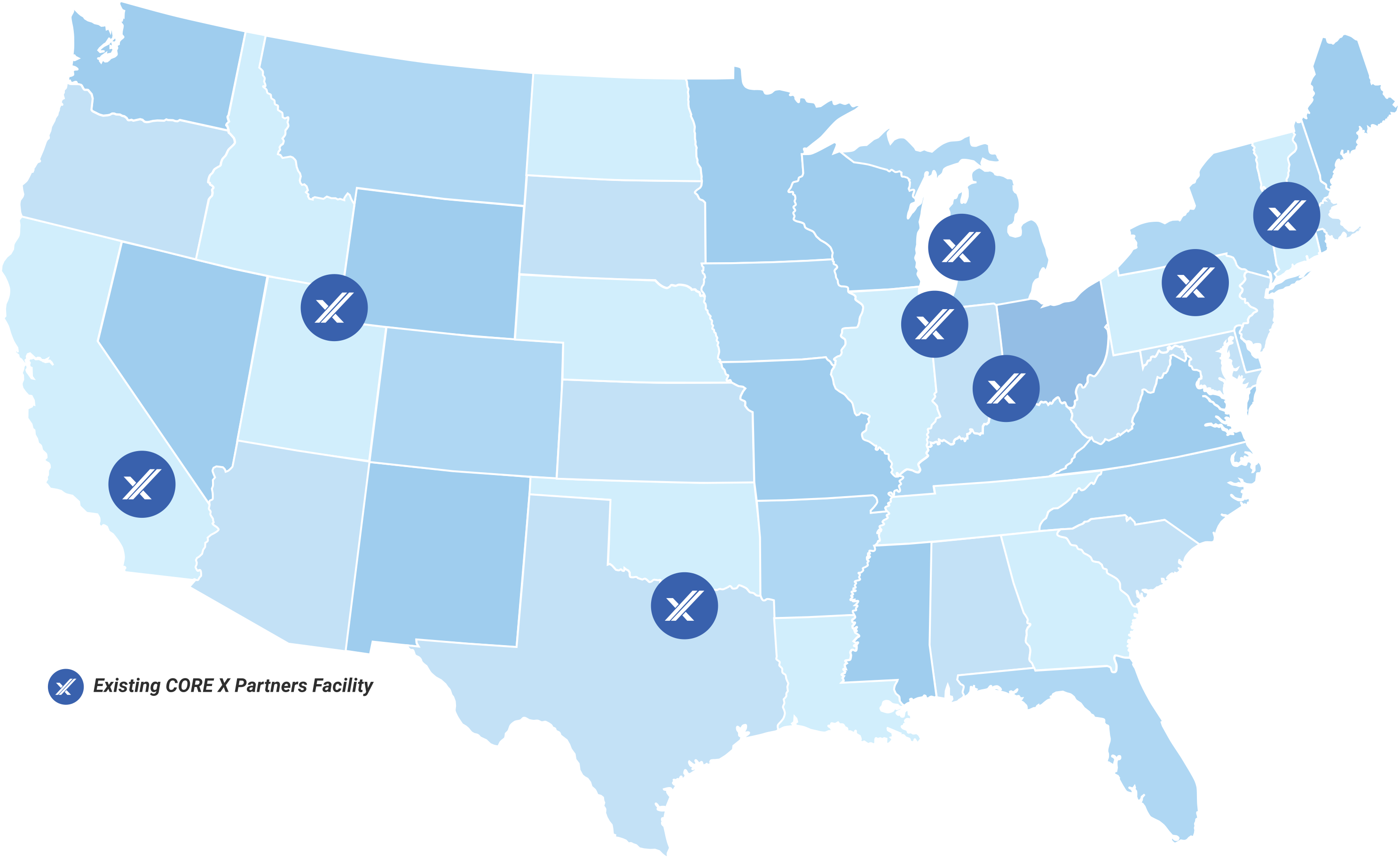
CORE X Partners supports temperature-controlled transportation as part of a broader cold chain model that connects storage, staging, freight coordination, visibility, and regional operating support.
Why Long-Haul Frozen Freight Creates Cumulative Quality Risk
A frozen shipment may be stable at departure and still face several exposure points before delivery. Longer routes increase the chance of traffic, weather, road closures, appointment delays, equipment faults, prolonged stops, or unplanned dwell.
Every handoff matters as well. Product may move from freezer storage to staging, from staging to the trailer, through a consolidation point, or into a receiving dock before the trip is complete.
The risk is cumulative. A short loading delay may not cause a problem by itself. Neither may one brief door opening. But several small disruptions across a long route can create unstable conditions that are harder to see if the only measurement is whether the reefer was set correctly.
USDA recommends storing frozen food at 0°F or lower to help retain quality. That is a useful benchmark for many frozen products, but it should not replace the manufacturer’s product-specific shipping specification. Product requirements, shipper instructions, and customer standards should determine the actual operating plan.
The FDA’s Sanitary Transportation rule also places attention on vehicle suitability, temperature control, trailer preparation, and transportation practices for foods requiring temperature control.
Long-Haul Frozen Freight Checklist
A practical frozen freight checklist should follow the shipment from pre-load preparation through receiving and post-trip review. Each step should confirm that the next part of the journey is ready before product moves forward.
1. Establish the Shipment Temperature Specification
Start with the product requirement. The shipper should define the operating temperature, acceptable product condition, monitoring expectations, and any customer-specific requirements before the trailer arrives.
That specification may include:
- Required product temperature at loading
- Reefer operating temperature
- Temperature-monitoring method
- Product-specific excursion limits
- Loading and airflow requirements
- Documentation expectations
- Receiving procedures
- Hold or escalation criteria
The distinction between reefer set point and product temperature matters. A trailer can be operating at the correct set point while product temperature or airflow conditions inside the load tell a different story.
For frozen food, 0°F is commonly used as a quality benchmark, but it should not be presented as a universal requirement for every SKU or shipment. The product specification should control temperature requirements.
2. Confirm Product Is Already at Shipping Temperature
A refrigerated trailer is designed to maintain the required environment during transportation. It should not be used as a substitute for bringing warm or incompletely frozen product down to the required shipping temperature.
Loading warm product creates additional heat inside the trailer. The refrigeration unit must then manage that added heat while also maintaining the trailer environment. On a tightly packed load, recovery may be uneven.
Before loading, teams should confirm that product is already within its required shipping condition. That verification may be based on warehouse records, product temperature checks, or other documented procedures defined by the shipper.
This protects the shipment from starting the journey with a problem the reefer was never intended to correct.
3. Inspect and Pre-Cool the Trailer
Trailer preparation should happen before product reaches the loading door.
The pre-trip inspection should confirm that the trailer and refrigeration unit are suitable for the load. Key checks may include:
- Refrigeration-unit operation
- Trailer cleanliness
- Door seals
- Interior walls and insulation condition
- Floor channels or airflow paths
- Drain condition
- Evidence of damage
- Required pre-cooling
- Reefer set point
- Sensor or monitoring readiness
FDA guidance specifically addresses preparing mechanically refrigerated compartments before loading, including pre-cooling when necessary.
Pre-cooling helps establish the correct trailer environment before loading begins. It does not compensate for warm product, but it reduces the amount of stored heat inside the trailer that the refrigeration system must overcome after the doors close.
Speak With A Cold Chain Specialist
4. Load for Airflow
A trailer can be cold and still develop warm zones if air cannot circulate properly.
Loading plans should preserve the reefer’s intended supply and return airflow. Pallets that block return-air paths, contact trailer walls, extend too high, or restrict floor channels can interfere with circulation.
Common loading problems include:
- Blocking evaporator outlets
- Obstructing return-air paths
- Product pressed tightly against trailer walls
- Damaged or unstable pallets
- Poor floor clearance
- Excessive pallet height
- Mixed configurations that interrupt airflow
- Overloading to maximize cube utilization
The goal is to use trailer space efficiently without compromising temperature performance.
This is one reason every frozen-freight touchpoint matters. Frozen freight quality depends on what happens before, during, and after the highway portion of the move.
5. Place and Verify Temperature Monitors
Temperature monitoring should provide useful evidence of what happened during the shipment. A reefer reading shows information about the refrigeration system. It does not always show conditions in every part of the load.
Depending on the product and risk profile, a shipper may use:
- Reefer telemetry
- Ambient temperature data loggers
- Multiple sensor locations
- Product-level probes
- Door-event monitoring
- GPS and stop-duration data
For long-haul freight, sensor placement matters. A single logger may not identify localized warm areas near the rear, center, wall, or return-air path.
Before departure, verify that monitoring devices are working, properly placed, and calibrated according to the shipper’s procedures. Establishing a clear departure baseline also makes later exception review easier.
6. Control Dwell and Door-Open Time
A strong transportation plan can be undermined before the truck leaves.
Product that waits too long in staging may face unnecessary exposure. A trailer sitting with doors open while paperwork is completed or dock activity catches up creates another avoidable risk.
Dock timing should coordinate:
- Order readiness
- Product staging
- Trailer arrival
- Trailer inspection
- Loading labor
- Documentation
- Seal application
- Dispatch timing
- Customer appointments
The objective is straightforward: move product when the next step is ready.
Long-haul frozen freight has enough unavoidable variables on the road. Poor dock coordination should not add another one.
7. Monitor the Shipment in Transit
Monitoring becomes valuable when teams can act on what they see. Temperature trends, equipment alarms, unexpected stops, door events, and route delays can all indicate that a shipment needs attention.
A useful monitoring process should define:
- Which conditions generate an alert
- Who receives the alert
- How quickly the alert must be acknowledged
- What the driver or dispatcher should check
- When maintenance support is contacted
- When the shipper or quality team is notified
- When diversion or transfer should be considered
The goal is not to generate as many alarms as possible. It is to identify meaningful changes early enough for someone to respond. Long-haul loads should be monitored for trends, not simply a pass/fail result at delivery.
8. Prepare for Failures Before Departure
Equipment failures and route disruptions cannot always be prevented. The response can be planned.
A frozen freight contingency plan should identify what happens if the reefer fails, the tractor breaks down, weather closes a route, a receiving appointment is missed, or the shipment faces an extended delay.
Before departure, determine:
- Who owns the first response
- Who has authority to approve a repair, transfer, or diversion
- Where replacement equipment may be available
- Which repair resources cover the route
- Which cold storage facilities can receive a diverted shipment
- Who communicates with the customer
- What temperature and event records must be preserved
Access to a nationwide cold storage network can become important when a shipment needs a safe location during an unexpected disruption.
For Midwest routes, cold storage in Crown Point, Indiana through CORE X CROWN provides frozen and refrigerated storage, transportation support, LTL programs, cross-docking, appointment scheduling, and inventory visibility.
The important point is to identify backup options before a truck is already sitting on the roadside.
9. Verify Conditions at Receiving
Delivery does not end the temperature-control process. Receiving teams should review the load before disposition, especially when a shipment experienced a delay, alarm, equipment issue, or extended dwell event.
Receiving verification may include:
- Trailer temperature
- Product temperature, when required
- Temperature-history review
- Seal verification
- Packaging condition
- Pallet condition
- Signs of thawing or refreezing
- Excessive frost or moisture
- Damage
- Documentation review
A temperature alarm does not automatically determine product disposition. Product-specific procedures and quality review should guide that decision. FDA guidance states that carriers may be asked to demonstrate that required temperature conditions were maintained during transportation through agreed monitoring records.
That documentation is especially valuable when a receiving question needs to be investigated rather than guessed at.
10. Review Exceptions and Improve the Lane
The best frozen freight programs use each exception to improve the next shipment.
A temperature event should not end with “the load was accepted” or “the claim was paid.” The team should determine where the event started and whether it is likely to happen again. Useful root-cause categories may include:
- Product loaded outside specification
- Incomplete trailer pre-cooling
- Loading or airflow issue
- Excessive dock dwell
- Reefer fault
- Door event
- Traffic or weather delay
- Missed appointment
- Carrier response issue
- Sensor or data problem
- Receiving delay
Over time, these records can show whether problems are concentrated by carrier, route, facility, season, trailer type, or customer. Metrics worth tracking may include temperature alarms per shipment, average dock dwell, reefer breakdown frequency, alarm response time, and repeat exceptions by lane.
That turns exception reporting into an operating tool instead of a paperwork exercise.
Speak With A Cold Chain Specialist
What a Strong Long-Haul Frozen Freight Program Looks Like
Frozen freight quality depends on disciplined execution across the full trip.
The product should be at the correct condition before loading. The trailer should be clean, prepared, and operating properly. The loading pattern should protect airflow. Monitoring should provide useful data. Dock teams and transportation teams should work from the same timing plan. Drivers and dispatchers should know what to do when something changes.
That is the value of integrated cold chain logistics. Storage, staging, transportation, visibility, and exception response operate as connected parts of the same shipment instead of separate tasks.
For long-haul frozen freight, that coordination matters because the shipment has more time and distance to encounter a problem.
Protect Product Quality Across the Full Frozen Freight Journey
Long-haul frozen transportation works best when every control is defined before the shipment leaves. Temperature specifications, trailer preparation, loading, monitoring, dwell control, contingency planning, receiving, and post-trip review should all support the same product-quality objective.
CORE X Partners helps food manufacturers, distributors, retailers, and foodservice companies coordinate frozen and refrigerated freight through regional operators supported by national logistics resources, temperature-controlled storage, transportation planning, and visibility. That connected operating model gives teams a clearer way to manage long routes and respond when a shipment moves off plan. Contact CORE X Partners to talk with a cold chain specialist about long-haul frozen freight requirements.