Long-haul refrigerated transportation will never be free of risk. Equipment can fail, weather can close a route, traffic can add hours to transit, and a missed appointment can leave a frozen load waiting longer than planned.
The strongest transportation programs do not assume every shipment will run perfectly. They define how the team will respond when it does not.
That is the basis of refrigerated transportation risk management. The objective is to shorten the time between a disruption and the right corrective action while protecting product condition, documentation, and customer commitments.
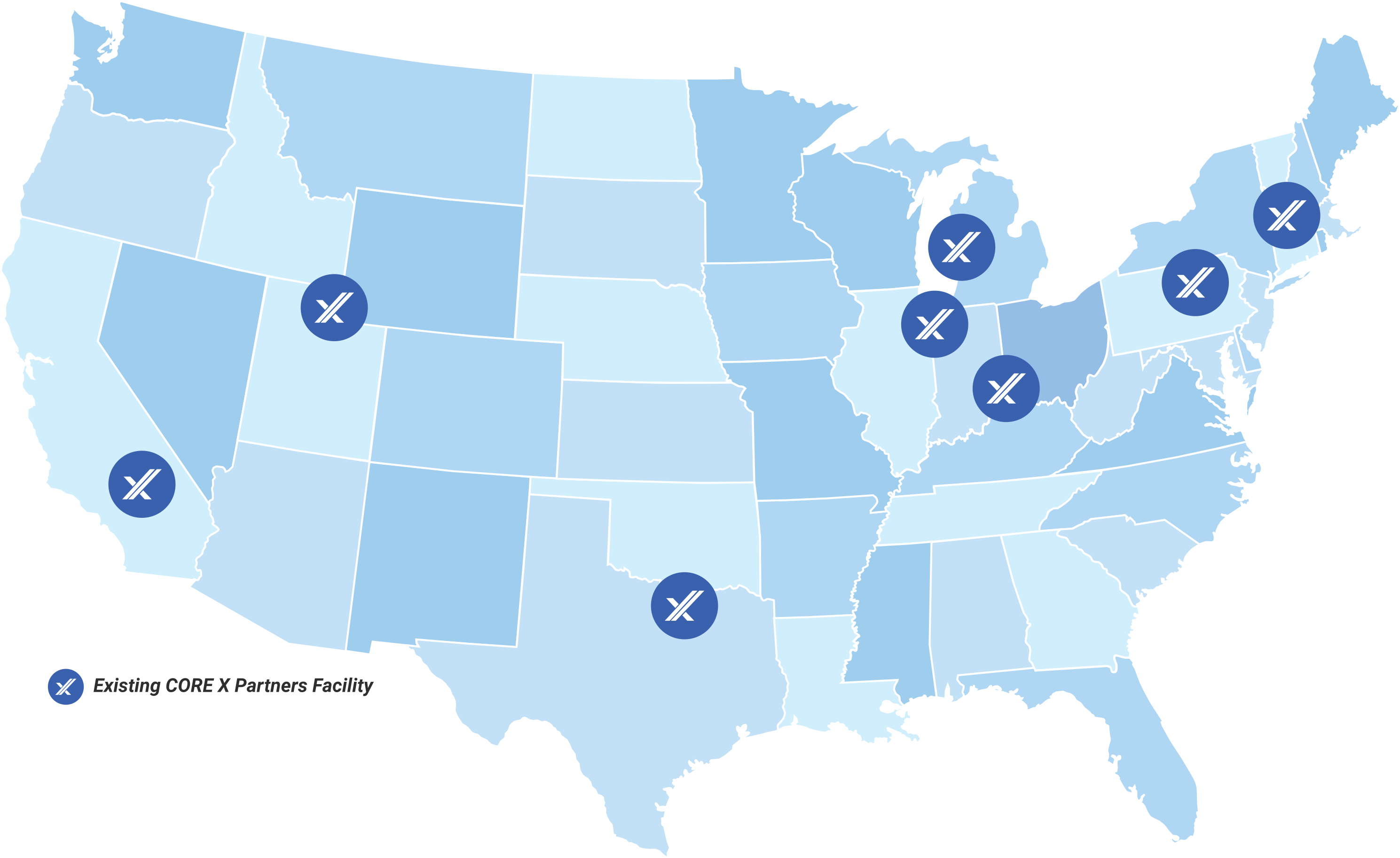
CORE X Partners supports integrated refrigerated transport and logistics through coordinated freight planning, temperature-controlled storage, shipment visibility, and regional operating support.
Build the Recovery Plan Before Dispatch
A frozen freight contingency plan should exist before the truck leaves the dock.
Waiting until a reefer stops working or a driver misses an appointment forces the team to make decisions under pressure. A stronger approach is to identify likely failure scenarios, assign ownership, and establish backup options before each lane is in motion.
The planning process should answer three basic questions: What could interrupt the shipment? Who has authority to act? What recovery options are available along the route?
Those answers should be clear enough that drivers, dispatchers, warehouse teams, quality personnel, and customer-service teams know what happens next.
Plan for the Most Likely Failure Scenarios
The first step is to identify the disruptions that are realistic for the lane. Long-haul risk can come from the equipment, the route, or the receiving schedule, and each type of problem requires a different response.
Reefer or Tractor Failure
A refrigeration-unit fault can become a serious problem if the team loses time deciding who to call or where the load can go.
The response plan should identify repair resources, replacement equipment, and nearby temperature-controlled facilities. It should also define who receives reefer alarms and who decides whether the shipment can continue.
A tractor failure creates a different problem. The trailer may still be maintaining temperature, but the load is no longer moving toward the customer. Recovery may require a replacement tractor, trailer transfer, or revised delivery plan.
Both events need defined procedures before dispatch.
Weather and Road Closures
Severe weather, flooding, accidents, construction, and road closures can add hours to a route.
Long-haul freight planning should account for seasonal risk and known problem areas, especially on routes where alternate roads are limited. Dispatchers should know when rerouting makes sense and when the better decision is to move the shipment to a secure temperature-controlled location.
Route risk becomes more important when the shipment is already close to a customer appointment window. A delay that is manageable from a temperature perspective may still create a receiving problem if the destination cannot accept the load.
Missed Appointments and Terminal Delays
Frozen freight can remain temperature controlled and still encounter risk when the schedule breaks down.
A missed retail appointment may create several hours of additional dwell. Terminal congestion can delay a transfer. Border, inspection, or administrative delays can create similar pressure.
The contingency plan should define where the driver waits, whether the reefer has adequate fuel, who contacts the receiver, and when another appointment or facility should be arranged. Schedule failures should be treated as operating events, not only customer-service issues.
Speak With A Cold Chain Specialist
Establish a Clear Escalation Process
Once likely failure scenarios are understood, the next step is deciding how the organization will respond. Temperature events need defined escalation levels, and everyone involved should know who has authority to make each decision.
Define Temperature-Event Escalation Levels
Not every temperature change requires the same response.
A practical cold chain emergency plan should use escalation levels based on product requirements and company procedures. One event may simply need monitoring. Another may require investigation. A confirmed equipment issue may call for immediate intervention, while a more serious event may require the product to be held for quality review.
These are operating categories, not universal temperature thresholds.
The actual limits should be based on the product specification, shipper requirements, customer standards, and quality procedures. A frozen entrée, ice cream shipment, and refrigerated dairy load may require different escalation criteria.
An over-sensitive process can create unnecessary alarms. A vague process creates the opposite problem by allowing a meaningful event to continue without action.
Define Driver and Dispatcher Responsibilities
Drivers are often the first to see equipment alarms, road conditions, or changes in the trailer environment. They need clear instructions for what to verify and who to contact.
Dispatchers should know when to call maintenance, escalate to the shipper, arrange replacement capacity, or begin planning a diversion.
Neither role should be left guessing about decision authority when time matters.
Define Shipper and Quality Responsibilities
The shipper may need to determine whether a temperature event is still within the product’s acceptable range. Quality personnel may review temperature history, product condition, the duration of the event, and corrective actions before making a disposition decision.
Those decisions should be documented. Transportation teams should not be expected to make product-release decisions that belong to the shipper or quality function.
Assign Customer and Receiver Communication
A delay may affect appointment timing even when the product remains within specification.
The receiver may need an updated ETA, a new appointment, or documentation explaining the event. Assigning responsibility for that communication helps prevent conflicting updates and gives the customer one clear source of information.
Build Recovery Options into the Route
A contingency plan is only useful if there is a practical way to recover the shipment.
Depending on the lane, that may mean access to refrigeration repair, replacement equipment, a rescue carrier, a transload point, or temperature-controlled storage. Those options should be identified before the truck is already disabled hundreds of miles from origin.
Access to nationwide cold storage facilities can help when a frozen or refrigerated load needs a temporary diversion point. A nearby facility may provide a controlled environment while equipment is repaired, a trailer is replaced, or a customer appointment is rescheduled.
That flexibility becomes especially important on long-haul lanes where returning to the origin facility is not practical.
Manage Delays Without Creating Additional Exposure
A delayed shipment does not automatically need to be opened.
Repeatedly opening trailer doors to check product can introduce warm air and create another variable. If the reefer is operating normally and reliable temperature data is available, remote monitoring may provide better information than an unnecessary physical inspection.
When an inspection is required, teams should consider current reefer status, temperature trends, expected delay duration, outside conditions, and whether the trailer can remain sealed safely.
The response should correct the original problem without creating another source of exposure.
Document and Review Every Significant Event
Good refrigerated transportation risk management continues after the immediate problem has been resolved. The incident record should help quality teams understand what happened and give operations leaders enough information to prevent a repeat.
Document Corrective Actions
A frozen freight delay or reefer failure should leave a clear record. Documentation should capture when the event occurred, where the shipment was, what the equipment was showing, how the team responded, what repairs or transfers were completed, and how the product was ultimately handled.
Temperature data, alarm history, driver observations, repair records, customer communication, and disposition decisions should be preserved when relevant.
FDA guidance states that if a potential material temperature-control failure could render food unsafe, the food should not be sold or distributed until a qualified individual determines that it was not rendered unsafe.
Speak With A Cold Chain Specialist
Conduct a Post-Incident Review
Recovery should not end when the load reaches the customer.
A post-incident review should determine the root cause, whether the event could have been prevented, how quickly the team responded, how the carrier performed, and what the disruption ultimately cost.
Patterns are especially important. One reefer breakdown may be random. Repeated equipment issues with the same carrier deserve attention. A single missed appointment may be unavoidable, while recurring delays at the same receiver may point to a scheduling or inventory-positioning problem.
The review should result in a change when a preventable weakness is found. That could mean adjusting the route, changing an escalation procedure, reallocating freight, revising a carrier requirement, or adding another recovery location.
Measure Refrigerated Transportation Resilience
Traditional freight scorecards often focus on rate and on-time delivery. Refrigerated transportation risk management requires a broader view.
A practical resilience scorecard may include:
| Measure | What It Shows |
|---|---|
| Alarm acknowledgment time | How quickly someone responds |
| Time to corrective action | How quickly recovery begins |
| Reefer breakdown frequency | Equipment reliability |
| Recovery time | Time required to regain control |
| Temperature events | Frequency of out-of-spec conditions |
| Claims or rejected loads | Financial and customer impact |
| Repeat root causes | Whether corrective action is working |
These are internal performance measures rather than universal industry benchmarks. Each company should establish expectations around its products, customers, lanes, and service requirements.
Over time, these measures can reveal whether certain carriers, routes, seasons, or facilities create more recovery risk than others.
Evaluate Transportation Partners for Recovery Capability
Carrier qualification should include the provider’s ability to respond when the route does not go according to plan.
A transportation partner should be able to explain how after-hours support works, what repair coverage is available, how replacement capacity is arranged, and how reefer alarms are escalated. Shippers should also understand whether rescue capacity and alternate temperature-controlled facilities are available along important lanes.
These capabilities are especially important for long-haul frozen freight because the shipment may be hundreds of miles from the origin facility when a disruption occurs.
A provider that can move frozen LTL, truckload, and consolidation freight across a broader network may have additional recovery options when equipment, route, or volume requirements change.
Resilience should also be part of the cost calculation. Cold chain logistics should account for breakdowns, delays, accessorial charges, recovery freight, claims, and service failures along with the quoted linehaul rate.
Connect Risk Management to the Broader Cold Chain
Transportation failures often expose weaknesses outside transportation. A delayed trailer may reveal that there is no nearby storage option. A missed appointment may show that warehouse staging happens too early. A reefer alarm may uncover an unclear escalation procedure. A recovery transfer may highlight gaps in lot or temperature documentation.
Those issues are easier to manage when storage, transportation, visibility, and exception response are connected. CORE X’s regional model provides local operating support with access to broader cold chain resources. That matters when the recovery plan requires another facility, transportation option, or operating team rather than a single carrier response.
For Midwest routes, CORE X CROWN in Crown Point, Indiana provides frozen and refrigerated storage, transportation support, cross-docking, and regional access near the Chicagoland market.
Build a More Resilient Refrigerated Transportation Plan
A frozen freight contingency plan should make the response easier when equipment, routes, or schedules fail. Teams need clear escalation authority, practical backup locations, complete documentation, and a process for reviewing what happened after the shipment is complete.
The strongest programs measure response as closely as they measure the original disruption. That gives operations leaders a better view of whether the cold chain can recover quickly enough to protect product, service, and customer commitments.
CORE X Partners helps food manufacturers coordinate refrigerated transportation with temperature-controlled storage, freight planning, visibility, and regional operating support. Our national network gives customers additional options when a shipment needs repair, diversion, replacement capacity, or another path forward. Contact CORE X Partners to build a more resilient cold chain for frozen and refrigerated freight.