Awesome Image

How Mid-Sized Food Brands Should Design Their North America Cold Chain Logistics Solutions

North America Cold Chain Logistics

Expanding frozen and refrigerated distribution across North America requires more than adding new cold storage locations. As mid-sized food brands grow beyond their original markets, network design becomes the decisive factor in controlling cost, protecting temperature integrity, and maintaining service performance.

Cold chain logistics solutions must align demand geography, storage placement, transportation lanes, and operating standards into a coordinated framework that scales predictably.

When logistics infrastructure evolves reactively, fragmentation follows, freight costs rise, service variability increases, and temperature risk accumulates across handoffs. Designing the cold chain logistics network deliberately from the beginning allows brands to expand regionally and nationally without compounding operational complexity.

Talk To A Cold Chain Specialist


Understanding What Cold Chain Logistics Solutions Encompass


Cold chain logistics solutions represent the architectural decisions that determine how product flows from production to retail or foodservice destinations. They extend beyond warehouse selection or freight procurement. At scale, they include:

  • Strategic placement of temperature-controlled storage
  • Defined transportation corridors and service-level targets
  • Inventory positioning by SKU velocity and temperature profile
  • Coordinated LTL and truckload planning
  • Shared operating standards across facilities

For mid-sized brands, these decisions dictate whether growth strengthens margins or erodes them. A scalable frozen and refrigerated network must function as a connected system rather than a collection of independent sites.

Mapping Demand Before Building the Network


Network expansion should begin with demand mapping, not facility selection.

Mid-sized food brands frequently expand into new regions based on retail wins, distributor partnerships, or sales momentum. However, without a clear view of shipment density, order cadence, SKU velocity, and seasonal patterns, adding facilities can create unnecessary overlap or inefficient freight lanes.

Effective demand mapping examines:

  • Customer concentrations by retailer, distributor, and DC
  • Geographic delivery clusters and population density
  • Case volume and shipment frequency by region
  • Differences in velocity between frozen and refrigerated SKUs
  • Promotional surges and seasonal peaks
  • Cross-border or import/export considerations, where applicable

Understanding these patterns reveals where inventory should reside and how far it can realistically travel within required service windows. A refrigerated SKU serving dense retail clusters may require regional positioning to maintain freshness and appointment compliance, while frozen products with longer shelf stability may tolerate broader distribution reach.

Demand mapping transforms expansion from guesswork into informed network design. It prevents overbuilding in low-density regions and reduces dependence on high-cost LTL lanes that emerge when inventory is positioned too far from customers.

North America Cold Chain Logistics

Hub-and-Spoke vs. Multi-Node Regional Networks


After mapping demand, brands must decide how infrastructure should support it. Two common models dominate cold chain logistics design: hub-and-spoke systems and multi-node regional networks.

A hub-and-spoke model relies on one or two centralized facilities to serve broad regions. This approach offers lower upfront complexity and simplified inventory control. It works well during early expansion stages when shipment density is limited and capital sensitivity is high.

However, as volumes grow, limitations emerge. Longer transit distances increase reliance on refrigerated LTL. Additional handling within carrier networks raises dwell time and temperature exposure risk. Service variability also intensifies when retailers require narrower delivery windows or higher OTIF performance.

A multi-node regional model distributes inventory across strategically placed facilities. While it introduces greater coordination requirements, it shortens delivery distances, reduces LTL dependency, and stabilizes freight performance. For refrigerated products, this often improves freshness consistency and lowers spoilage exposure during peak seasons. Frozen distribution also benefits from improved lane efficiency and reduced accessorial risk.

The decision is rarely binary. Many mid-sized brands begin with hub-and-spoke and transition gradually toward regional hubs once shipment density or service complexity warrants it. The key is recognizing when centralized models begin to drive cost escalation rather than savings.

Designing Storage Placement for 2–3 Day Reach


Service-level expectations across North America increasingly cluster around two- to three-day reach. Retailers, foodservice operators, and distributors often prioritize predictable inbound scheduling within tight appointment windows. Storage placement must reflect these realities.

When evaluating cold-storage facility locations, brands should assess:

  • Population and retailer density within a two-day transit radius
  • Major freight corridors and intermodal connectivity
  • Regional import gateways and inland distribution paths
  • Dwell-time risk in high-traffic metropolitan areas
  • Carrier capacity and lane reliability

Positioning inventory within defined reach zones reduces reliance on long-haul refrigerated LTL, limits handoffs, and stabilizes routing. It also improves response agility when promotions or weather disruptions create unexpected demand spikes.

Importantly, storage placement should not be optimized solely for geographic coverage. It must support freight efficiency and temperature protection simultaneously. A theoretically central location that requires repeated LTL transfers or cross-docks may increase exposure and cost despite appearing logistically convenient.

Contact us


Recognizing the Triggers for Adding a New Node


Cold chain logistics solutions evolve in phases. The decision to add a new regional node should stem from measurable operational signals rather than revenue growth alone.

Common expansion triggers include:

  • Sustained volume growth in a secondary region
  • Rising OTIF penalties from extended transit distances
  • Escalating refrigerated LTL per-case costs
  • Repeated freight expedites to meet retailer requirements
  • Increased spoilage, claims, or temperature deviations
  • Accessorial charges tied to missed appointments or dwell

When these stress indicators converge, the cost of maintaining centralized distribution often exceeds the cost of regional expansion. Adding a node at the right threshold stabilizes transportation economics and reduces handoff risk before margin erosion accelerates.

A Phased Rollout Plan for Scalable Cold Chain Logistics Solutions


Cold chain logistics solutions should scale deliberately, not reactively. Expanding too quickly can introduce unnecessary overhead and coordination complexity, while expanding too slowly allows transportation costs and service risk to escalate. A phased rollout strategy provides structure and measurable checkpoints.

Phase 1: Establish 1–2 Strategic Hubs

Early-stage expansion typically begins with one or two strategically located temperature-controlled hubs positioned to serve dense population corridors. The focus during this phase is on stabilizing service performance while building shipment density.

Key priorities in Phase 1 include:

  • Consolidating inventory into controlled, high-visibility facilities
  • Establishing defined freight lanes with primary and backup carriers
  • Tracking KPIs such as dwell time, OTIF, and claims rate
  • Building disciplined operating standards across handling and staging

At this stage, centralized control simplifies oversight. The objective is to achieve predictable execution while gathering data that informs future expansion decisions.

Phase 2: Add Regional Facilities Based on Volume and Service Signals

As distribution volumes increase and demand clusters strengthen in secondary regions, adding strategically placed facilities reduces long-haul freight exposure and improves delivery consistency.

Regional expansion during Phase 2 is driven by operational data rather than geography alone. Brands evaluate:

  • Shipment density crossing defined volume thresholds
  • Cost inflection points in refrigerated LTL
  • Retailer compliance penalties
  • Recurring expedite frequency
  • Claim or spoilage trends associated with longer transit paths

Adding a regional node at the correct moment shifts the network from reactive freight management to structured, lane-based optimization. Instead of routing isolated shipments from a central hub, inventory is positioned closer to market demand, shortening transit and stabilizing cost.

Phase 3: Optimize, Add Redundancy, and Reduce Risk

In mature multi-region networks, the focus shifts from reach to resilience.

At this stage, cold chain logistics solutions incorporate redundancy planning, secondary lanes, alternate storage contingencies, and refined routing models that manage seasonal surges. Inventory velocity patterns inform slotting decisions, and forecasting inputs align replenishment with promotional cycles.

Optimization efforts often include:

  • Balancing safety stock across facilities
  • Reducing unnecessary cross-regional transfers
  • Refining consolidation programs
  • Aligning warehouse staging practices with freight scheduling

This phase stabilizes margin performance while protecting temperature integrity across larger, more complex footprints.

Preventing Fragmentation as the Network Grows


Growth alone does not create scalability. Integration does.

As facilities multiply across regions, differences in handling practices, documentation, scheduling, and reporting can quietly introduce inconsistency. Fragmentation appears gradually, often first in transportation cost volatility or sporadic compliance issues.

Scalable cold chain logistics solutions prevent this through:

  • Shared operating standards across facilities
  • Consistent temperature setpoints and documentation practices
  • Unified visibility into inventory and freight status
  • Defined escalation paths for exceptions
  • Coordinated storage and freight planning

When storage and transportation operate independently, risk accumulates at every handoff. When they operate as components of a single framework, the network performs predictably even as volume increases.

Design discipline early in expansion prevents costly restructuring later.

North America Cold Chain Logistics

How CORE X Supports North America Cold Chain Logistics Solutions


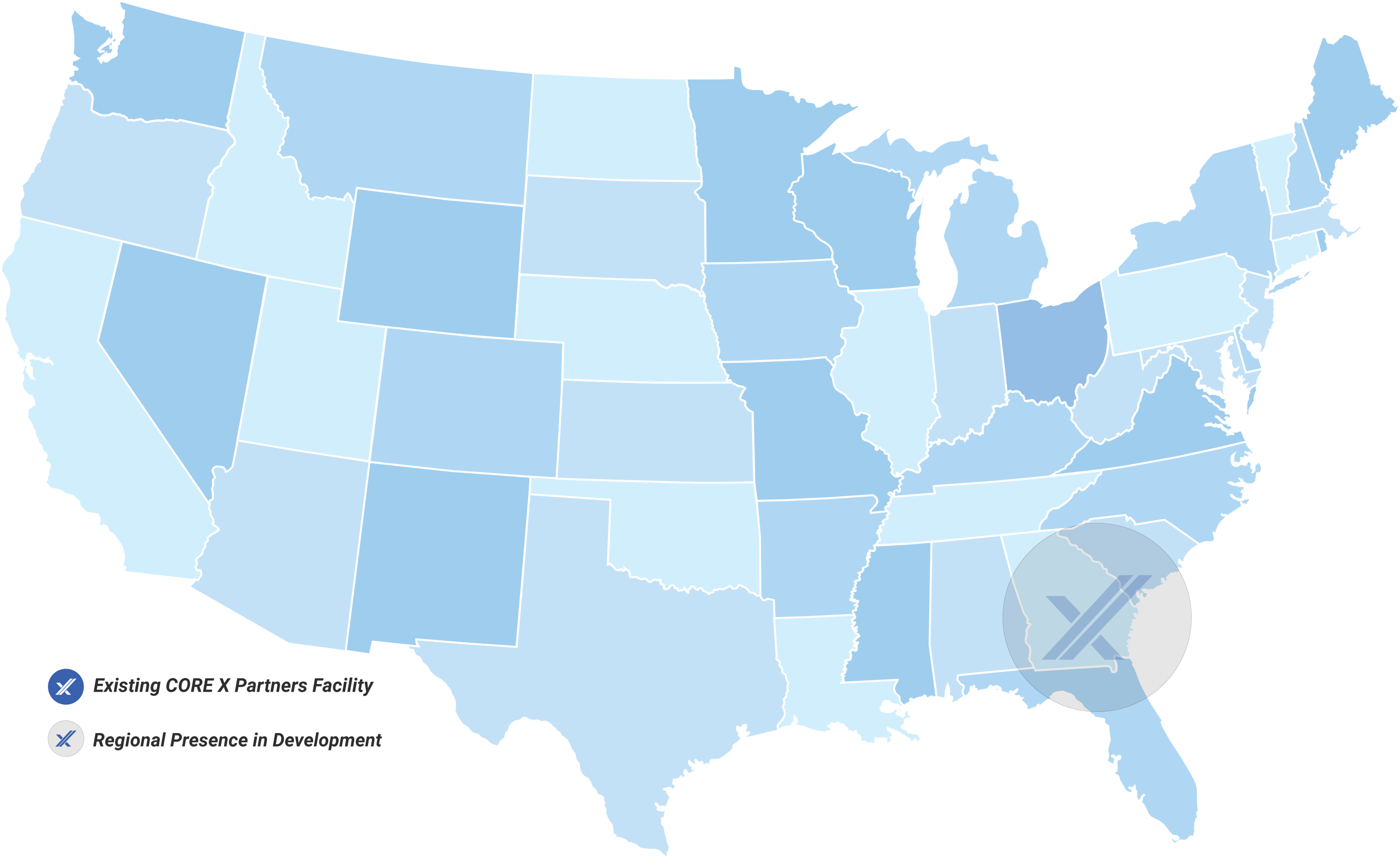
CORE X Partners structures cold chain logistics solutions around coordinated regional execution within a nationwide framework. Temperature-controlled facilities across the Southwest, South, Midwest, and Northeast operate under aligned operating standards while preserving local expertise through the Partnering Regional Operator (PRO) model.

This structure allows brands to expand distribution geographically without sacrificing consistency. Storage placement, freight coordination, and inventory visibility remain aligned under shared systems and oversight.

By connecting regional facilities into a unified operating model, CORE X enables mid-sized food brands to scale frozen and refrigerated distribution across North America while reducing handoff risk and avoiding the fragmented complexity that often accompanies growth.

Local execution remains intact. Network-wide standards ensure continuity.

Designing for Growth Without Overbuilding


Mid-sized food brands that design cold chain logistics intentionally gain structural advantage. Rather than chasing capacity or layering new providers onto an existing footprint, they build networks that expand based on measurable demand signals and transportation economics.

Scalable cold chain logistics solutions require:

  • Strategic demand mapping
  • Data-driven node placement
  • Integrated storage and freight planning
  • Phased expansion discipline
  • Aligned operating standards across regions

When these elements function together, frozen and refrigerated distribution scales predictably across North America without introducing temperature exposure, cost volatility, or operational silos.

CORE X Partners connects temperature-controlled storage, freight, and logistics under a unified operating framework designed for scalable growth. Our nationwide network combines local execution with shared standards and visibility to support consistent performance across regions. Contact CORE X Partners to strengthen your North American cold chain logistics solutions.

RJ Neu

RJ Neu is the President and Regional Partner of CORE X Alliance, where he leads growth strategy and operational alignment across a national cold-storage and supply-chain platform. He brings deep experience in scaling asset-intensive businesses and building disciplined operating models within the cold chain and logistics sectors. RJ’s leadership focuses on strengthening infrastructure, aligning operators and partners, and driving long-term value creation in complex, multi-market environments. He is known for his pragmatic, execution-oriented approach and his ability to translate strategy into operational results. With a strong grounding in real-world operations, RJ contributes to ongoing industry dialogue around growth, scale, and the future of cold storage and supply-chain networks.