A growing food manufacturer usually outgrows a simple warehouse answer before it realizes it.
At first, the need may sound straightforward: find cold space, move finished goods out of production, and keep product protected until it ships. Growth changes that quickly. New SKUs are added. Retail customers bring different requirements. Seasonal peaks create storage pressure. Shipment sizes vary by lane. Orders may need picking, repacking, kitting, documentation, or tighter inventory visibility.
That is where customized cold chain solutions become important.
Customization should not make the operation harder to manage. It should create the right operating model around the manufacturer’s products, temperature needs, order profiles, sales channels, and growth plan. A frozen entrée brand shipping full pallets to retail distribution centers does not need the same setup as a refrigerated dip manufacturer shipping mixed orders to distributors, foodservice customers, and direct-to-consumer buyers.
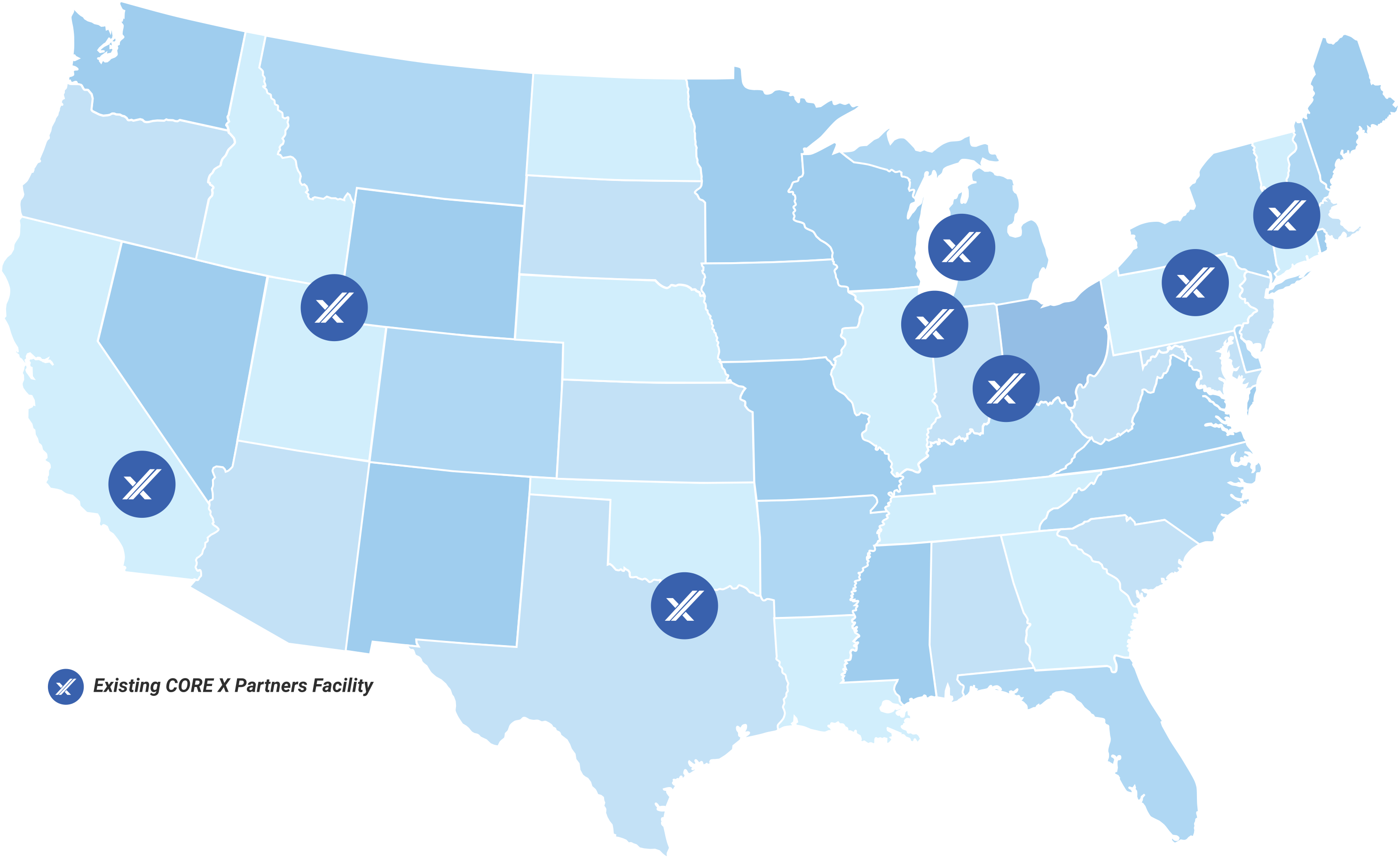
CORE X Partners supports cold storage for food manufacturers through regional execution, temperature-controlled storage, freight coordination, value-added services, and technology visibility across a national cold chain network.
Why Growth Changes the Cold Chain
Cold storage can solve the first capacity problem. It does not always solve the next operating problem.
A manufacturer may need frozen storage today, refrigerated space next quarter, and deep-frozen capacity for a new product line next year. A new retailer may change order volume and delivery timing overnight. A distributor may require different pallet configurations. Seasonal production may push inventory above normal levels for several weeks, then drop back down.
Those changes affect receiving, rotation, staging, picking, transportation planning, documentation, and customer communication. If each need is handled separately, the cold chain can become a patchwork of short-term fixes.
Common warning signs include:
- Production teams losing time to warehouse or fulfillment work
- Finished goods waiting too long for pickup
- Inventory that is available but difficult to allocate by lot, date, or customer
- Different customers requiring different labels, pallet builds, or shipment timing
- Small orders creating freight complexity
- Seasonal inventory creating short-term capacity pressure
- Customer service teams chasing shipment or inventory updates
A scalable cold chain program starts with how product actually moves after production. From there, the manufacturer can decide what mix of storage, handling, freight, fulfillment, and visibility belongs in the operating model.
How to Build a Scalable Cold Chain Program
A scalable program should be built around real operating requirements, not a generic storage plan. These are the core areas food manufacturers should define before growth creates pressure.
Start With the Product and Temperature Profile
The product profile should shape the cold chain design.
Food manufacturers need to define frozen, refrigerated, cooler, dry, and deep-frozen requirements by product category. They should also account for shelf life, pallet configuration, lot control, expiration dating, case count, rotation rules, and customer-specific handling needs.
A basic product profile may include:
- Product category
- Required temperature zone
- SKU count
- Pallet height and configuration
- Cases per pallet
- Shelf life or expiration window
- Lot and date-code requirements
- First Expired, First Out (FEFO) rotation needs
- Special handling, labeling, or documentation requirements
These details affect storage, labor, freight, and customer service. A long-shelf-life frozen product that ships in full pallets has different cold chain needs than a refrigerated product with mixed-case orders and strict delivery windows.
Learn more about How Mid-Sized Food Brands Build a Scalable Frozen and Refrigerated Distribution Network Across North America.
Plan for Normal Volume and Peak Volume
Average volume can hide the real capacity challenge.
A food manufacturer may need 800 pallet positions most of the year and 1,700 during a seasonal production run. A new retail program may create a large initial inventory build, then shift into smaller replenishment orders. A product launch may create a short period of heavy outbound activity, followed by steadier volume.
A scalable cold storage plan should separate baseline demand from peak demand.
| Planning area | Normal operating profile | Peak or growth scenario |
| Active SKUs | 35 | 55 during seasonal launch |
| Pallet positions | 850 | 1,600 during promotion build |
| Orders per day | 18 | 42 during retail rollout |
| Temperature zones | Frozen and refrigerated | Frozen, refrigerated, and dry support |
| Outbound shipment size | 3-10 pallets | Smaller replenishment orders and full truckloads |
| Handling needs | Standard pallet storage | Repacking, kitting, and customer-specific pallet builds |
These are example measurements, not universal benchmarks. The point is to see whether the cold chain can support the business when production, sales, or customer demand moves outside the normal rhythm.
Define Handling Requirements Early
Storage is only one part of the work.
As food manufacturers grow, warehouse activity often becomes more detailed. Product may need to be received, inspected, palletized, broken down, re-palletized, picked, staged, repacked, labeled, kitted, or prepared for a customer-specific program.
Those requirements should be defined before they create daily pressure.
A retailer may require a different pallet pattern than the manufacturer uses in production. A distributor may need mixed-SKU pallets. A foodservice customer may order by case instead of pallet. An eCommerce program may need direct-to-consumer fulfillment, packaging, and more frequent inventory updates.
If these tasks fall back on the manufacturer, production labor gets pulled into warehouse work. Floor space becomes staging space. Supervisors spend time solving fulfillment problems instead of running production.
A food manufacturing 3PL can help match warehouse services to the actual order profile. That may include pallet-in/pallet-out storage, case picking, repacking, kitting, value-added services, or fulfillment support as the business grows.
Match Freight to Shipment Size
Freight strategy should grow with the business.
Many small and mid-size food manufacturers do not ship consistent full truckloads to every market. Some customers may order a few pallets at a time. Others may generate enough volume for dedicated lanes. New regions may start with smaller, less predictable shipments before they become mature markets.
A growing manufacturer may need:
- Less-Than-Truckload (LTL) for smaller shipments
- Consolidation programs for compatible recurring freight
- Full Truckload (FTL) for higher-volume lanes
- Regional transportation support for tighter market coverage
- Freight coordination tied to warehouse readiness and customer appointments
Each mode has a place. LTL can support smaller orders. Consolidation can help recurring compatible shipments move through a more planned program. FTL may make sense when volume, timing, and lane density support a dedicated shipment.
Freight should not be planned apart from storage. Warehouse teams influence whether the order is ready. Transportation teams influence pickup timing, appointment scheduling, route planning, and delivery performance. If those teams operate from different information, product can sit too long, miss a window, or move through unnecessary handoffs.
Account for Sales-Channel Complexity
Growth usually brings new channels, and each channel changes the cold chain.
Retail distribution centers may require strict appointment timing, routing guides, Advanced Shipping Notices (ASN), Electronic Data Interchange (EDI), pallet specifications, and documentation accuracy. Foodservice customers may prioritize replenishment cadence and regional availability. Distributors may need mixed pallets or specific lot rotation. Direct-to-consumer programs may require fulfillment support, packaging standards, and tighter inventory accuracy.
Before adding new customers or regions, manufacturers should map requirements by channel:
| Sales channel | Common cold chain requirement |
| Retail DCs | Appointment discipline, ASN/EDI accuracy, pallet compliance, On-Time, In-Full (OTIF) performance |
| Distributors | Mixed orders, replenishment support, lot/date visibility |
| Foodservice | Regional availability, case-level flexibility, consistent delivery timing |
| eCommerce/DTC | Fulfillment support, packaging requirements, inventory accuracy, order-status visibility |
| Club or promotional programs | Production surge planning, large inventory builds, coordinated outbound flow |
The goal is not to overbuild the operation. The goal is to understand which requirements are becoming part of the business and design the cold chain around those realities.
Build Visibility into the Program
Visibility should be part of the cold chain design from the start.
Manufacturers need to know what inventory is available, where it is stored, which lots are on hold, which products are aging, which orders are staged, and which shipments are at risk. Quality teams may need temperature documentation and lot-level traceability. Customer service teams may need order and shipment updates. Operations leaders may need performance reporting by SKU, customer, lane, or facility.
Useful metrics may include:
- Inventory accuracy
- Order accuracy
- Storage cost per pallet
- Handling cost per case
- Dock dwell time
- OTIF performance
- Freight cost per case or pallet
- Temperature exceptions
- Claims or rejected loads
- Number of logistics handoffs
Outsourcing cold storage or logistics should not mean losing control. For small and mid-size manufacturers, the right 3PL relationship should provide better operating visibility without requiring a large internal logistics department.
Test the Program Against Growth
A cold chain program should be tested before the next growth stage arrives.
Ask what would happen if:
- Volume doubles
- A new retailer adds weekly replenishment orders
- Production becomes more seasonal
- A refrigerated product line is added to a frozen program
- The company expands into another region
- Order size shifts from pallet quantities to mixed-case fulfillment
- Freight lanes become too small for FTL but too frequent for ad hoc LTL
- Customer documentation requirements become more complex
These questions help avoid a cold chain model that only works at today’s size. A stronger model allows the manufacturer to expand in stages, add services as requirements change, and use a national cold chain network when new markets justify the move.
What to Ask Before Choosing a Food Manufacturing 3PL
The right 3PL conversation should focus on how the provider will support the manufacturer’s operating model, not simply whether space is available.
Growing food manufacturers should ask:
- Which temperature zones can support our current and future product mix?
- Can inventory be tracked by SKU, lot, expiration date, hold status, and customer requirement?
- How do you support FEFO rotation and customer-specific shelf-life rules?
- What value-added services are available if our order profile becomes more complex?
- Can you support LTL, consolidation, and FTL as shipment size changes?
- How do warehouse and transportation teams coordinate outbound movement?
- What visibility will our team have into inventory, orders, shipments, exceptions, and performance?
- How do you support seasonal peaks, product launches, or new retailer programs?
- Can the cold chain model expand into additional regions if our customer base grows?
- How do you communicate when an order, appointment, shipment, or temperature issue is at risk?
The answers should show whether the provider can adapt with the business. A growing manufacturer needs a cold chain partner that understands product requirements, customer commitments, and the pressure that comes with expansion.
Build the Cold Chain Around the Growth Plan
A scalable cold chain program does not have to be oversized. It has to be designed with enough flexibility to support the next stage of the business.
That means starting with the product profile, planning for normal and peak volume, defining the required warehouse touches, matching freight to shipment size, accounting for sales-channel differences, and building visibility into the operating model. These decisions help manufacturers avoid the common pattern of adding separate fixes until the cold chain becomes fragmented.
For small and mid-size food manufacturers, the right cold chain partner should make growth easier to manage. Storage, freight, handling, fulfillment, technology, and regional execution should work from the same operating plan.
CORE X Partners helps growing food manufacturers build cold chain programs that match the way their products actually move. Our regional operators provide local execution, while shared technology, freight coordination, value-added services, and nationwide network support give brands room to scale without rebuilding the model at every stage. Contact CORE X Partners to discuss your cold chain requirements and design a scalable operating plan around your products, customers, and growth goals.