Temperature-controlled freight consolidation changes how food manufacturers ship to retailers. Instead of sending multiple less-than-truckload (LTL) shipments that arrive separately, each with its own freight charges and individual accessorial charges, consolidation combines orders from multiple shippers into efficient truckloads.
For frozen and refrigerated items moving to retailers like Walmart, Target, and regional grocers, this approach addresses three challenges: rising transportation costs, strict retailer delivery windows with scorecard penalties, and managing temperature-controlled appointments across multiple distribution centers.
The Cost of LTL Shipping
Temperature-controlled LTL carriers charge premium rates because fewer carriers offer the service. Small orders move through inefficient hub-and-spoke models that involve multiple touchpoints in a traditional LTL carrier’s terminal system. More touches = more cost and more opportunities for service failures.
Some manufacturers try to build their own multi-stop truckloads in soft freight markets. But capacity is tightening. ACT Research’s trucking industry analysis shows capacity beginning to contract after years of overcapacity. DAT Freight & Analytics reports operating costs are 20% higher for new carriers than established ones. Add in new restrictions on non-domiciled commercial driver’s licenses enacted in 2025, and the driver pool shrinks further.
Carriers may now refuse multi-stop loads in favor of single-pickup, single-drop shipments. The multi-stop approach that once saved money is becoming harder to achieve and will become more challenging as more capacity exits the marketplace.
How Consolidation Works
 Temperature-controlled retail consolidation works like a mutual fund for freight. Multiple manufacturers contribute shipments to a consolidation facility. A logistics team combines these shipments into full truckloads headed to the same retail distribution centers, reducing per-pallet costs for everyone involved.
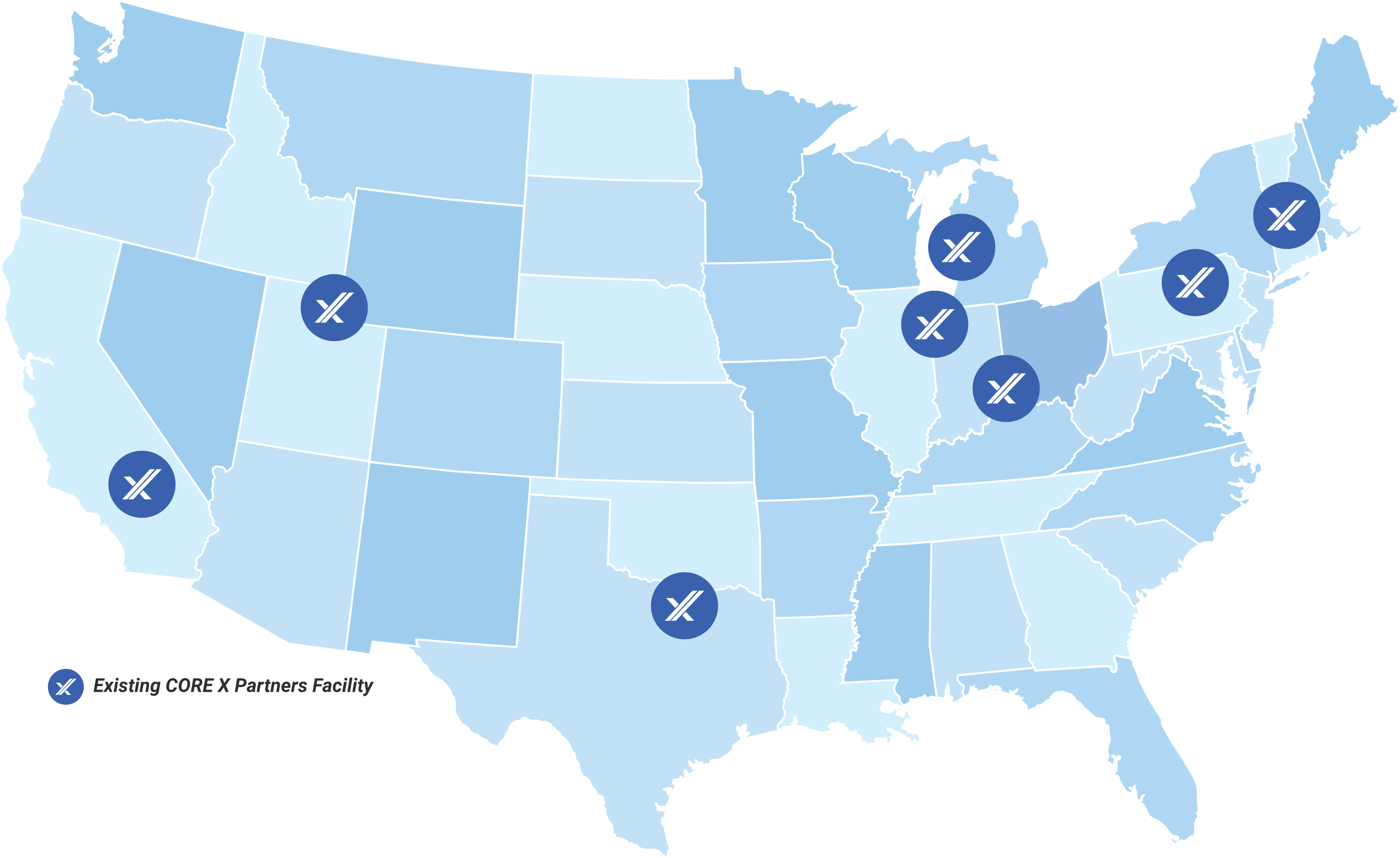
CORE X Partners operates a consolidation program at CORE X CROWN in Crown Point, Indiana. The facility’s automated Movu Robotics system handles efficient pre-staging for outbound shipments. When suppliers ship to the same retail DC, whether Walmart, KeHe, UNFI, Target, or Costco, freight combines into loads that meet delivery requirements.
The facility’s location provides access to major Midwest retail distribution networks, particularly benefiting ice cream manufacturers and other frozen goods suppliers who need reliable temperature integrity during multi-stop deliveries.
Managing the Unexpected
If a driver is delayed on a previous load, it threatens the consolidation schedule. Traditional facilities struggle because inbound freight blocks dock doors and disrupts outbound loading.
Automated systems change this. When a truck arrives late, the system moves staged freight out of the way and adjusts the loading plan based on which trucks are actually present. A control tower team monitors facility and transportation systems in real time, making immediate decisions to keep freight moving.
This flexibility prevents service failures that cause retailer penalties and damage business relationships.
The OTIF Penalty Problem
Major retailers measure supplier performance through on-time, in-full (OTIF) scorecards. Each retailer has its own methodology, applying penalties differently.

Walmart uses Must Arrive By Date (MABD) requirements: 90% for On-Time for prepaid and 95% for In-Full. Miss the MABD, and expect chargebacks of about 3% of cost of goods sold. According to Walmart’s analysis, poor In-Full performance cost $1.7 billion in lost sales during fiscal year 2019.
Target’s fines for OTIF violations are 5% of the cost of goods that are late or shorted. However, the specific penalties for various compliance metrics within the overall OTIF program can vary by violation and recent policy updates.
KeHe Distributors bills separately for late deliveries and appointment violations at each location. Their delivery windows are narrow, and invoicing reflects every service failure.
The real costs accumulate beyond direct penalties:
- Reduced shelf space allocation
- Damaged relationships with buyers
- Lost promotion opportunities
- Potential removal from supplier networks
Consolidation programs systematically track these metrics, identifying problem areas before they threaten the business. This accountability helps mid-sized food companies defend margins and shelf space against larger competitors.
Post-COVID Inventory Enables Consolidation
COVID-19 supply chain disruptions changed inventory practices. Many food manufacturers shifted from just-in-time to “just-in-case” models, holding more safety stock to buffer uncertainty.
This creates an opportunity. Companies that maintain 30-60 days of finished goods inventory in a temperature-controlled facility near major retail markets can ship smaller quantities more frequently. Instead of waiting to fill a truck, they participate in consolidation, combining frequent small shipments with other manufacturers’ freight.
Frozen goods particularly benefit. Items requiring -10°F to -20°F storage can’t wait on a dock. They need facilities with capacity at the right temperature zone, located along retail distribution routes, with logistics expertise to manage complex appointment requirements.
Technology Makes It Work
Effective consolidation requires more than facility space. The technology determines whether customers get consistent OTIF performance or new problems.
Retail distribution centers operate on tight appointment windows, often requiring 24 to 48 hours’ advance notice. Missing the window means rescheduling for days or weeks later, triggering MABD violations and penalties.
Consolidation programs merge appointment scheduling directly into transportation management systems. When the team builds a load, they’re simultaneously confirming appointment availability at the destination DC.
CORE X Partners uses a transportation management system across its freight operations, supporting consistent retail consolidation performance.
The Economics
Temperature-controlled freight consolidation reduces costs through three mechanisms: improved load efficiency, reduced carrier fees, and fewer retailer penalties.
A manufacturer shipping five pallets with refrigerated LTL might pay $200 to $300 per pallet, depending on routes and conditions. The same five pallets consolidated into a full truckload typically costs $125 to $175 per pallet—a 30% to 40% reduction.
Savings may increase for frozen goods requiring -10°F or colder, where fewer carriers drive up LTL rates.
Consolidation also provides stability. Industry forecasts for 2025 predict moderate freight volume growth around 1.6%, with capacity gradually tightening from an oversupplied market. When spot market rates spike, consolidators absorb volatility through their carrier networks and contract rates. The pooled volume from multiple suppliers provides negotiating advantages that individual manufacturers can’t achieve.
Who Benefits Most
Small and mid-sized food manufacturers and distributors gain the most from retail consolidation. These companies operate in the LTL world, competing against larger rivals with dedicated logistics teams.
Consolidation helps them compete by:
- Reducing freight costs that pressure thin margins
- Improving OTIF performance that protects retailer relationships
- Providing logistics expertise they can’t afford to build internally
- Creating flexibility to ship smaller quantities more frequently
- Offering data that identifies problems before they become crises
Food brokers and third-party logistics companies also benefit, expanding their service offerings without building infrastructure.
Scale Your Retail Distribution Without Scaling Your Costs
Temperature-controlled retail consolidation reduces freight costs while providing the infrastructure and expertise that allows smaller food companies to defend margins, protect brand reputation, and compete for shelf space against national competitors.
Temperature-controlled retail consolidation addresses the fundamental challenges mid-sized manufacturers face in retail distribution.
Improve your OTIF performance and reduce temperature-controlled shipping costs. Contact CORE X Partners to discuss how our Crown Point consolidation program can improve your retail distribution procedures.