Cold Storage Logistics
What this Blog Is About
This blog category is dedicated to cold chain logistics, with articles that examine how storage, handling, and transportation work together to protect temperature-sensitive products.
Content in this section addresses real-world logistics challenges, including coordination across regions, temperature risk during handoffs, freight consolidation, compliance requirements, and continuity planning. Posts are designed to help supply chain leaders understand how integrated logistics models support reliability and scalability.
Explore the articles below to learn how cold chain logistics strategies can reduce risk, improve performance, and support consistent execution across complex distribution networks.

This infographic visualizes the full transition from a fragmented 3PL network to one coordinated cold chain solution, emphasizing why migration must be phased rather than rushed. The article frames successful migration around structured planning, staged execution, and continuous monitoring.

This infographic explains how CORE X positions its consolidated cold storage network around unified contracts, standardized KPIs, integrated reporting, and coordinated freight planning.

This infographic explains CORE X’s model for combining experienced regional operators with shared standards, centralized systems, coordinated freight planning, and operational visibility.

How Integrated WMS and TMS Reduce Risk in Refrigerated 3PL Operations Refrigerated 3PL operations depend on precise timing, accurate inventory, controlled temperatures, and clean handoffs between warehouse and transportation teams. When warehouse management and transportation management run in separate systems, refrigerated products face more risk from missed pickups, early staging, dock congestion, manual communication […]

Refrigerated 3PL operations depend on precise timing, accurate inventory, controlled temperatures, and clean handoffs between warehouse and transportation teams. When warehouse management and transportation management run in separate systems, refrigerated products face more risk from missed pickups, early staging, dock congestion, manual communication gaps, and unclear exception ownership. Integrated WMS and TMS workflows reduce […]

Supply chain data is abundant, but it is rarely aligned. As distribution networks spread across multiple facilities, carriers, and systems, information gets fragmented across platforms that were not built to connect. Inventory lives in one system, transportation updates in another, and customer data moves through separate portals. This fragmentation limits visibility and affects decision-making, service […]
Cold Chain Warehousing
Integrated Logistics for Refrigerated and Frozen Products
Cold storage logistics refers to the coordination of temperature-controlled storage, staging, handling, and transportation throughout distribution. Every transfer point: receiving docks, staging areas, cross-docks, and outbound loading, introduces potential temperature risk if not managed consistently.
By aligning these functions under shared operating standards, cold storage logistics reduces exposure during handoffs, improves accountability, and strengthens performance across refrigerated and frozen supply chains.
This level of coordination is essential for food manufacturers, distributors, and retailers managing perishable or regulated products across regions.
Nationwide Coverage with Local Execution
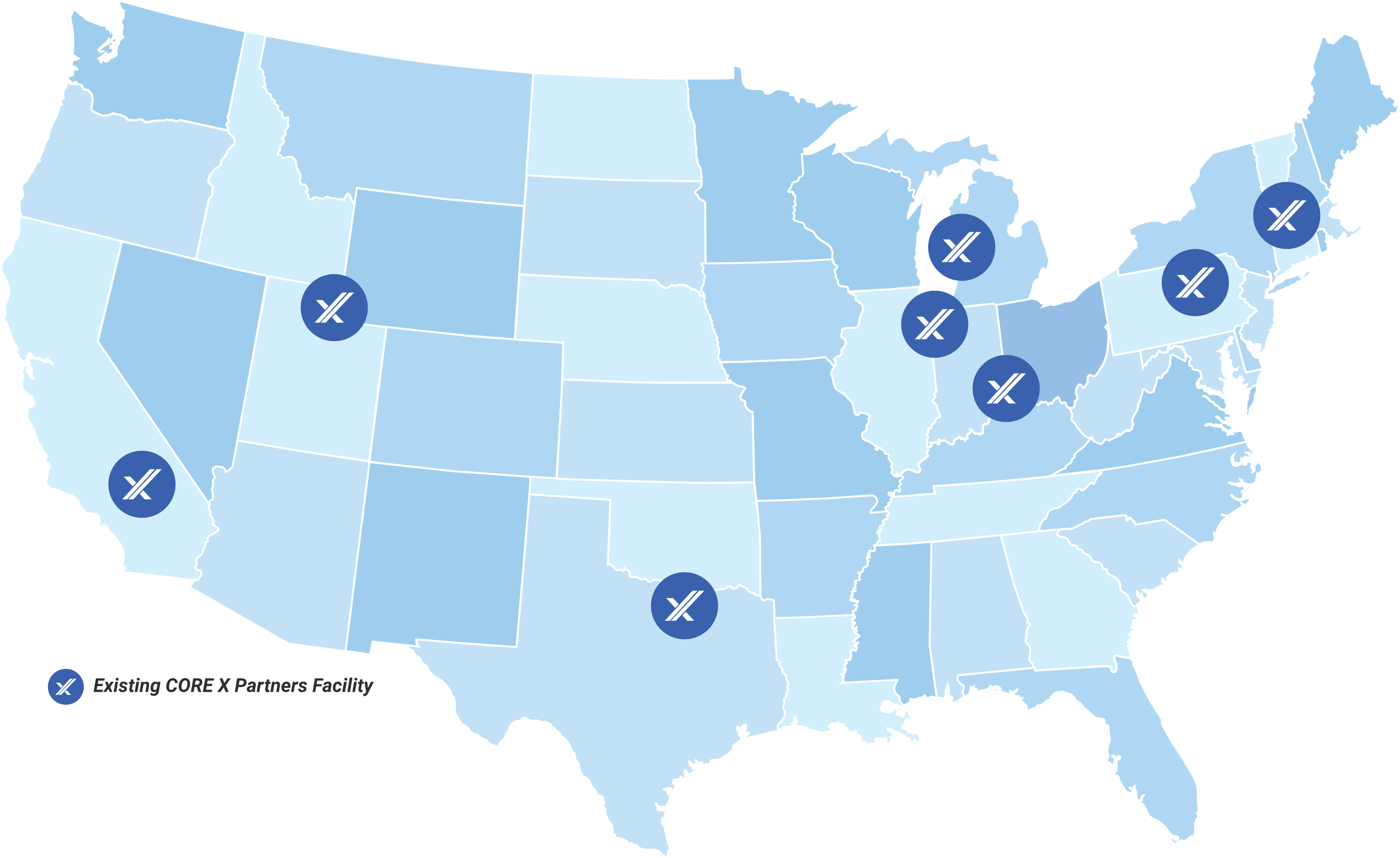
Core X Partners delivers logistics services through a national network of temperature-controlled facilities operated by Partnering Regional Operators (PROs). Each PRO brings deep regional knowledge of infrastructure, routing, and market conditions while operating under centralized quality and operational standards.
This model allows us to:
- Support nationwide distribution with consistent execution
- Respond quickly to local capacity and routing realities
- Maintain direct accountability at the regional level
Customers gain scale without losing the local insight that keeps cold chain operations dependable.
Core Logistics Capabilities That Support Cold Chain Performance
CORE X logistics services are organized around three core capabilities that support temperature-controlled operations across the network.
Integrated Transportation Services
Our transportation services connect inbound and outbound movement directly with cold storage operations. Local shuttles, regional freight, and OTR lanes are coordinated with facility schedules to reduce dwell time, limit handling, and preserve temperature continuity.
Multi-Vendor LTL Consolidation
We provide consolidation services for customers moving LTL shipments across the country, particularly into retail distribution networks. By grouping compatible freight and managing routing and compliance requirements, consolidation improves truck utilization, reduces cost, and supports more predictable delivery performance.
Freight Logistics Solutions
CORE X Freight delivers a true one-stop logistics experience by leveraging a broad carrier network to secure competitive rates and efficient transportation solutions. Our experienced team manages carrier selection, contract negotiation, documentation, and execution, simplifying logistics coordination while maintaining temperature control and service reliability.
Together, these capabilities allow customers to scale distribution without sacrificing visibility or accountability.
Technology That Connects Storage and Logistics
Cold storage logistics require unified systems and real-time visibility. CORE X leverages technology that connects warehousing and transportation across the network, including:
- A unified Warehouse Management System (WMS) aligned with outbound logistics
- EDI integrations supporting customer and retail systems
- Electronic freight tracking and shipment visibility
- Continuous temperature monitoring with defined escalation procedures
- 24/7 customer portal access for shipment status and documentation
These systems reduce fragmentation between storage and transportation while supporting compliance, traceability, and informed decision-making.
Value-Added Services That Strengthen Logistics Execution
Cold storage logistics often succeed or fail in the details between transportation legs. CORE X integrates value-added services directly into temperature-controlled operations to keep freight moving efficiently and compliantly.
Temperature-Critical Handling
- Blast freezing and room freezing (heat removal)
- Re-palletizing and pallet breakdown
- Stretch wrapping and placarding
- Accurate weight capture for load planning
Load Preparation and Distribution Support
- Picking and kitting
- Repacking to meet routing, retail, or customer requirements
CORE X performs these services within controlled environments, reducing unnecessary handling, limiting exposure risk, and improving logistics flow without disrupting the cold chain.
When Cold Storage Logistics Becomes Essential
Organizations typically engage cold storage logistics partners as operations grow more distributed or complex. Common drivers include:
- Multi-region distribution requirements
- Seasonal or variable shipment volumes
- Multiple temperature profiles across product lines
- Increased compliance, audit, or retail expectations
An integrated logistics partner helps apply consistent processes, monitoring, and coordination across locations, reducing complexity while improving scalability.
A Coordinated Approach to Cold Chain Logistics
Protecting product integrity requires disciplined, visible, and accountable logistics execution at every handoff. Our approach reflects a commitment to protecting products, preserving food and the businesses behind it, and providing reliable service through strong regional partnerships.
Core X Partners delivers logistics solutions designed to support dependable refrigerated and frozen distribution across a national network. Our coordinated model aligns storage, handling, and transportation to reduce risk and maintain operational consistency. Contact Core X Partners to discuss logistics support for your cold chain.
Categories
Recent News
Find a Facility