How Integrated WMS and TMS Reduce Risk in Refrigerated 3PL Operations
Refrigerated 3PL operations depend on precise timing, accurate inventory, controlled temperatures, and clean handoffs between warehouse and transportation teams. When warehouse management and transportation management run in separate systems, refrigerated products face more risk from missed pickups, early staging, dock congestion, manual communication gaps, and unclear exception ownership.
Integrated WMS and TMS workflows reduce that risk by connecting refrigerated warehouse activity with transportation planning and logistics. For refrigerated food brands, teams can see what inventory is available, where it is staged, which carrier is assigned, when the reefer trailer is ready, and what needs attention before a service or temperature issue develops.
What WMS and TMS Mean in Refrigerated 3PL Operations
WMS stands for Warehouse Management System. A WMS manages daily warehouse operations from the time products enter a facility until they leave. That includes receiving, storage, picking, packing, shipping, and inventory tracking.
In refrigerated 3PL operations, a WMS typically manages:
- Inventory by SKU, lot, expiration date, and facility location
- Storage zone and temperature-zone assignment
- Pick status and order readiness
- Pallet position and staging location
- Dock readiness and warehouse workflow status
- Inventory holds, allocations, and availability
TMS stands for Transportation Management System. A TMS helps companies plan, execute, track, and improve freight movement, including inbound and outbound transportation.
In refrigerated 3PL operations, a TMS typically manages:
- Carrier assignment
- Route planning
- Pickup and delivery appointments
- Trailer requirements
- Reefer dispatch coordination
- In-transit status
- Delivery confirmation
- Transportation exceptions
These systems manage different parts of the same cold chain process. The WMS confirms that the right product is available, picked, and staged. The TMS confirms that the carrier is assigned, trailer requirements are clear, and the delivery appointment can be met. When the two systems work together, warehouse and transportation teams can coordinate movement with fewer assumptions and less manual follow-up.
Speak To A Refrigerated Fulfillment Specialist
Why Disconnected Warehouse and Transportation Data Creates Cold Chain Risk
Refrigerated products depend on timing. An order cannot be picked too late without risking a missed pickup. It also should not be staged too early if trailer readiness, dock availability, or appointment timing is unclear. Poor coordination between cold storage warehouses and transportation teams can increase dwell time, create dock congestion, and make exceptions harder to resolve.
Disconnected WMS and TMS workflows often create risk at the handoff between storage and freight. That handoff matters because product may be moving from a controlled storage environment to a dock, trailer, cross-dock point, or customer delivery lane.
Common risks include:
- Temperature exposure when product is staged before the trailer or carrier is ready
- Missed pickups when warehouse readiness and carrier scheduling are not aligned
- Inventory errors when order allocation, lot control, or pick status does not match shipment planning
- Dock congestion when outbound loading is not sequenced with route or appointment schedules
- Manual communication gaps when teams rely on calls, emails, or spreadsheets to manage exceptions
- Customer service delays when order status and freight status are not visible in one workflow
Food logistics also depends on clear expectations across warehouse, transportation, loading, and receiving teams. The Global Cold Chain Alliance’s Cold Chain Transportation Best Practices guidance emphasizes the need for shippers, carriers, loaders, and receivers to understand expected practices before temperature-sensitive products move through the cold chain.
For refrigerated 3PL operations, warehouse and transportation coordination must support product integrity, service performance, and accountability across each handoff.
Where WMS and TMS Integration Matters Most
Integrated WMS and TMS workflows create the most value at the points where warehouse activity triggers transportation action. These are the moments when timing, visibility, and exception handling affect risk most directly.
Order Release to Pick Planning
The WMS confirms inventory availability, lot status, expiration requirements, storage location, and temperature-zone assignment before the order moves into active picking. This helps confirm that the right product is allocated before transportation planning is finalized.
When the TMS can use that warehouse information, transportation teams can plan more accurately around order size, ship date, destination, delivery window, trailer requirements, and customer appointment expectations.
Pick Completion to Dock Appointment
Once an order is picked, transportation planning must align with staging time, dock availability, carrier arrival, and customer delivery requirements. If the warehouse team completes picking but the carrier is delayed, product can sit longer than planned. If the carrier arrives before the order is ready, detention and scheduling pressure can increase.
Integrated workflows help align pick completion with dock scheduling and carrier readiness.
Staging to Reefer Dispatch
The handoff from staging to loading is one of the most important risk points in refrigerated logistics. Products should move from controlled storage to staging and loading based on trailer readiness, route timing, and temperature requirements.
Integrated WMS and TMS data help warehouse teams stage freight based on actual dispatch conditions instead of assumptions. This reduces unnecessary dwell time and gives teams better control over product movement.
Shipment Status to Customer Reporting
Once a refrigerated shipment leaves the facility, customer service teams need accurate status updates. A connected workflow gives teams visibility into pickup confirmation, in-transit movement, appointment timing, delivery status, and exceptions.
That visibility improves communication with customers, retailers, foodservice distributors, and internal supply chain teams.
Exception Alerts to Corrective Action
Cold chain problems often get worse when teams do not know who owns the next step. An exception may start as a missed appointment, late carrier, unavailable dock, short-picked order, hold status issue, or delayed shipment update.
When WMS and TMS data are connected, teams can identify the issue earlier, assign ownership faster, and document corrective action more consistently.
How a Refrigerated 3PL Creates a Single Source of Truth
A refrigerated 3PL creates a stronger operating model when warehouse, transportation, and customer service teams work from shared data instead of disconnected updates. The value is operational clarity, not technology for its own sake.
A single source of truth helps teams answer practical questions:
- What product is available?
- Which lot or expiration date is assigned?
- Has the order been picked?
- Where is the product staged?
- Is the carrier assigned?
- Is the reefer trailer ready?
- Has the shipment departed?
- Has an exception occurred?
- Who owns the next action?
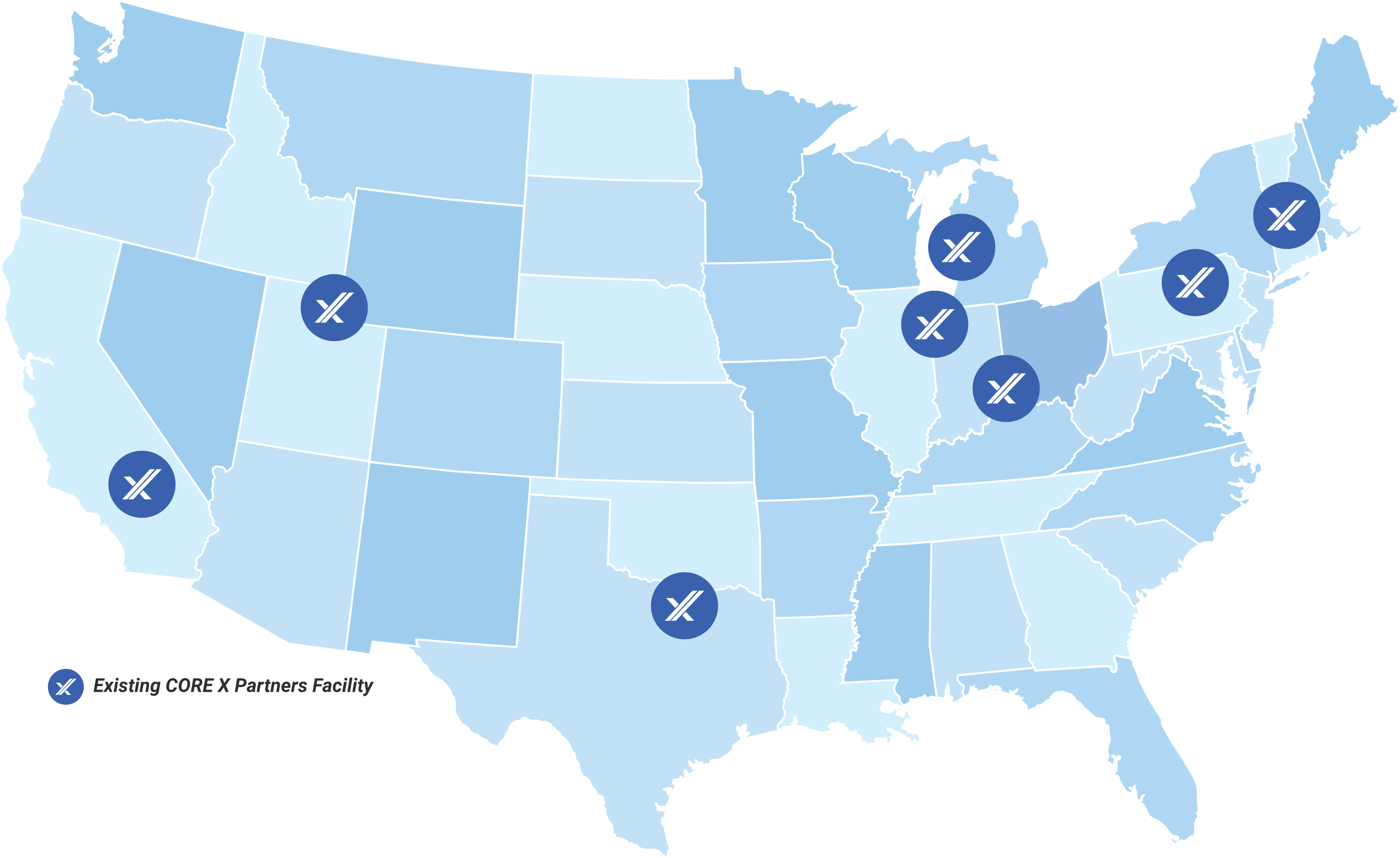
CORE X Partners supports this level of visibility through a national WMS platform, EDI capabilities, 24/7 customer portal access, and customizable business intelligence tools. CORE X also supports freight and logistics operations through integrated transportation, LTL consolidation, freight logistics, private fleet reefer trailers, electronic freight tracking, EDI, and data analytics.
For food manufacturers and distributors, that visibility reduces uncertainty across the refrigerated order lifecycle. Warehouse teams can see what needs to be picked and staged. Transportation teams can coordinate trailers, carriers, and appointments. Customer service teams can report status and exceptions with more confidence.
Refrigerated Product Example: From Frozen Storage to Retail DC
Consider a frozen food order moving from cold storage to a retail distribution center with a strict appointment window. In a disconnected workflow, the warehouse team may pick the order based on the ship date while the transportation team handles carrier assignment and appointment scheduling separately.
If the carrier is delayed or the trailer is not ready, the order may be staged too early. If transportation requirements change, the warehouse team may not receive the update quickly enough.
In an integrated workflow, the process works differently:
- The order is created, and inventory is allocated by SKU, lot, and expiration date.
- The WMS confirms product availability and temperature-zone location.
- Pick planning aligns with the required ship date and appointment window.
- The TMS assigns the proper refrigerated carrier or reefer trailer.
- Warehouse teams stage product based on trailer readiness and dock timing.
- Dispatch confirms pickup and in-transit status.
- Delivery confirmation and exceptions flow back into customer reporting.
This coordination reduces product dwell time, improves appointment performance, and gives customer service teams better information when customers ask for status updates.
KPIs That Show Whether WMS and TMS Integration Is Working
Integrated WMS and TMS workflows should create measurable improvements. The best indicators connect warehouse performance, transportation performance, product integrity, and customer service.
Useful KPIs include:
- Dock-to-dispatch time
- Order accuracy
- Inventory accuracy
- On-time pickup
- On-time delivery
- Temperature excursion rate
- Rejected-load rate
- Missed appointment rate
- Detention hours
- Dwell time by facility or lane
- Exception response time
These metrics help executives and operations teams see whether integration is improving performance. A dashboard may look impressive, but the value comes from fewer delays, fewer errors, better appointment performance, faster exception handling, and stronger confidence in refrigerated product movement.
How CORE X Helps Reduce Risk in Refrigerated 3PL Operations
CORE X Partners supports refrigerated 3PL operations by connecting temperature-controlled storage, freight coordination, transportation visibility, and customer reporting through an integrated cold chain logistics model.
With integrated cold chain solutions, a national WMS platform, freight logistics capabilities, EDI, customer portal access, and business intelligence tools, CORE X helps customers manage inventory and transportation with stronger operational control. This structure supports better coordination between warehouse operations and freight execution, which helps reduce manual communication gaps and improve visibility across each stage of the cold chain.
CORE X’s temperature-controlled transportation and logistics solutions support LTL consolidation, freight logistics, private fleet reefer trailers, electronic freight tracking, EDI, and data analytics. These capabilities help connect the warehouse-to-transportation handoff with the reporting and execution support refrigerated products require.
Reducing Risk Starts with Better Handoffs
Integrated WMS and TMS workflows reduce risk by improving the handoff between warehouse execution and transportation planning. For refrigerated products, that handoff affects temperature control, appointment performance, labor efficiency, customer communication, and product integrity.
When a refrigerated 3PL connects warehouse data, freight planning, carrier activity, and customer reporting, teams can act with better information and fewer delays. This gives food manufacturers and distributors a stronger foundation for managing refrigerated inventory and transportation as one coordinated cold chain process.
CORE X Partners helps food manufacturers and distributors connect refrigerated storage, transportation planning, and logistics visibility through integrated cold chain solutions. The CORE X network supports coordination across warehouse operations, freight execution, and customer reporting. Contact CORE X Partners to improve refrigerated 3PL WMS TMS integration.