Supply chain data is abundant, but it is rarely aligned. As distribution networks spread across multiple facilities, carriers, and systems, information gets fragmented across platforms that were not built to connect. Inventory lives in one system, transportation updates in another, and customer data moves through separate portals.
This fragmentation limits visibility and affects decision-making, service levels, and cost control. Without a clear, unified view, companies struggle to answer basic questions: Where is the inventory? What is the status of an order? Are there risks developing in the network?
A single, reliable source of supply chain data helps companies shift from reactive management to a more controlled, informed approach across the cold chain.
[maxbutton id=”2″ text=”Speak With A Cold Chain Expert”]
Why Supply Chain Data Becomes Fragmented
Fragmentation typically develops as companies grow. New regions, customers, and product lines introduce additional systems, providers, and reporting requirements. Over time, data becomes siloed across multiple platforms.
Common causes include:
- Disconnected systems between warehouses, transportation, and ERP platforms
- Multiple 3PL providers using different WMS and reporting structures
- Manual reporting processes that rely on spreadsheets and delayed updates
- Inconsistent data definitions across facilities and teams
These gaps make it difficult to manage operations as a unified system. Instead of a coordinated cold chain network, companies are left managing separate data streams that do not align.
What a “Single Source of Truth” Actually Means
A single source of truth is not just a reporting dashboard. It is a structured data environment where systems, processes, and definitions are aligned across the entire network.
In a unified model, supply chain data is:
- Consistent across all facilities and systems
- Accessible in real time or near real time
- Standardized in how it is defined and measured
- Integrated across storage, transportation, and order management
This structure allows companies to manage inventory, shipments, and performance as part of a single system rather than isolated operations.

Required System Integrations for Unified Supply Chain Data
Building a unified data environment starts with integrating the core systems that manage supply chain operations. Each system plays a specific role, but they must work together to create a complete picture.
A typical integration framework includes:
- ERP (Enterprise Resource Planning)
Serves as the system of record for orders, financials, and master data. It defines what needs to move through the supply chain. - WMS (Warehouse Management System)
Manages inventory, storage, picking, and handling within each facility. It provides detailed visibility into product location and status. - TMS (Transportation Management System)
Coordinates routing, carrier selection, and shipment execution. It connects warehouse activity with transportation performance. - EDI and Retailer Portals
Enable communication with customers, retailers, and trading partners. These systems manage order transmission, compliance requirements, and delivery confirmations.
GS1 standards help ensure that data can move consistently across these systems, supporting traceability and interoperability. For integration to be effective, data must flow in both directions. Inventory updates, shipment status, and order changes should be reflected across all systems in near real time.
What Supply Chain Visibility Should Actually Look Like
Visibility is often discussed as a goal, but in practice it must be clearly defined. A unified supply chain data model should provide actionable insight across several key areas.
Inventory Visibility
Companies should be able to view inventory across all facilities by:
- Lot and batch
- Location
- Status (available, allocated, on hold)
This level of detail supports traceability, compliance, and accurate order fulfillment.
Order and Shipment Visibility
A unified system should track orders from receipt through delivery. This includes:
- Order status across fulfillment stages
- Shipment tracking across transportation lanes
- Delivery confirmation and exception tracking
This visibility allows teams to proactively manage service performance rather than react to issues after they occur.

Temperature and Compliance Monitoring
For cold chain logistics, data must also capture environmental conditions. Monitoring temperature across storage and transportation is essential for protecting product integrity.
Guidance from U.S. Food and Drug Administration (FDA) emphasizes maintaining proper temperature control and documentation throughout the supply chain. A unified data system should track:
- Temperature conditions during storage and transit
- Alerts for deviations or excursions
- Documentation for compliance and audit readiness
Operational Alerts and Exception Visibility
Effective systems do more than report, they identify issues as they develop.
Examples include:
- Dwell time alerts at facilities
- Delayed shipments or missed appointments
- Capacity constraints or bottlenecks
These alerts allow teams to take action before problems impact customers or product quality.
Building a Standard Supply Chain Reporting Framework
A unified data environment must be supported by a consistent reporting structure. This ensures that performance is measured the same way across all facilities and operations.
A standard reporting framework typically includes:
Service Performance Metrics
- On-time, in-full (OTIF) delivery
- Order accuracy
- Facility and lane-level performance
Cost-to-Serve Metrics
- Cost per pallet or case
- Transportation cost by lane
- Accessorial charges and cost drivers
Claims and Quality Metrics
- Product damage rates
- Temperature excursions
- Claims resolution timelines
Capacity and Utilization Metrics
- Storage utilization
- Throughput and handling volume
- Transportation efficiency
Organizations such as Council of Supply Chain Management Professionals emphasize the importance of standardized KPI reporting for improving supply chain performance and decision-making.
When these metrics are aligned, companies gain a clear view of how their network is operating and where improvements are needed.
[maxbutton id=”2″ text=”Contact CORE X Partners”]
A Practical Approach to Unifying Supply Chain Data
Creating a single source of truth does not require a complete system overhaul on day one. A phased approach allows companies to build alignment while maintaining operational continuity.
A practical approach includes:
- Start with Critical Data Elements
Focus first on inventory, orders, and shipments. These form the foundation of operational visibility. - Standardize Data Definitions
Align how SKUs, lot tracking, and KPIs are defined across systems and facilities. - Integrate Core Systems
Connect ERP, WMS, and TMS platforms to enable consistent data flow. - Build Reporting and Visibility Tools
Develop dashboards and reporting structures that provide actionable insights. - Expand Automation Over Time
As systems mature, introduce advanced analytics, alerts, and predictive capabilities.
This approach allows companies to improve visibility incrementally while building toward a fully integrated data environment.
How CORE X Delivers Unified Supply Chain Data Across Its Network
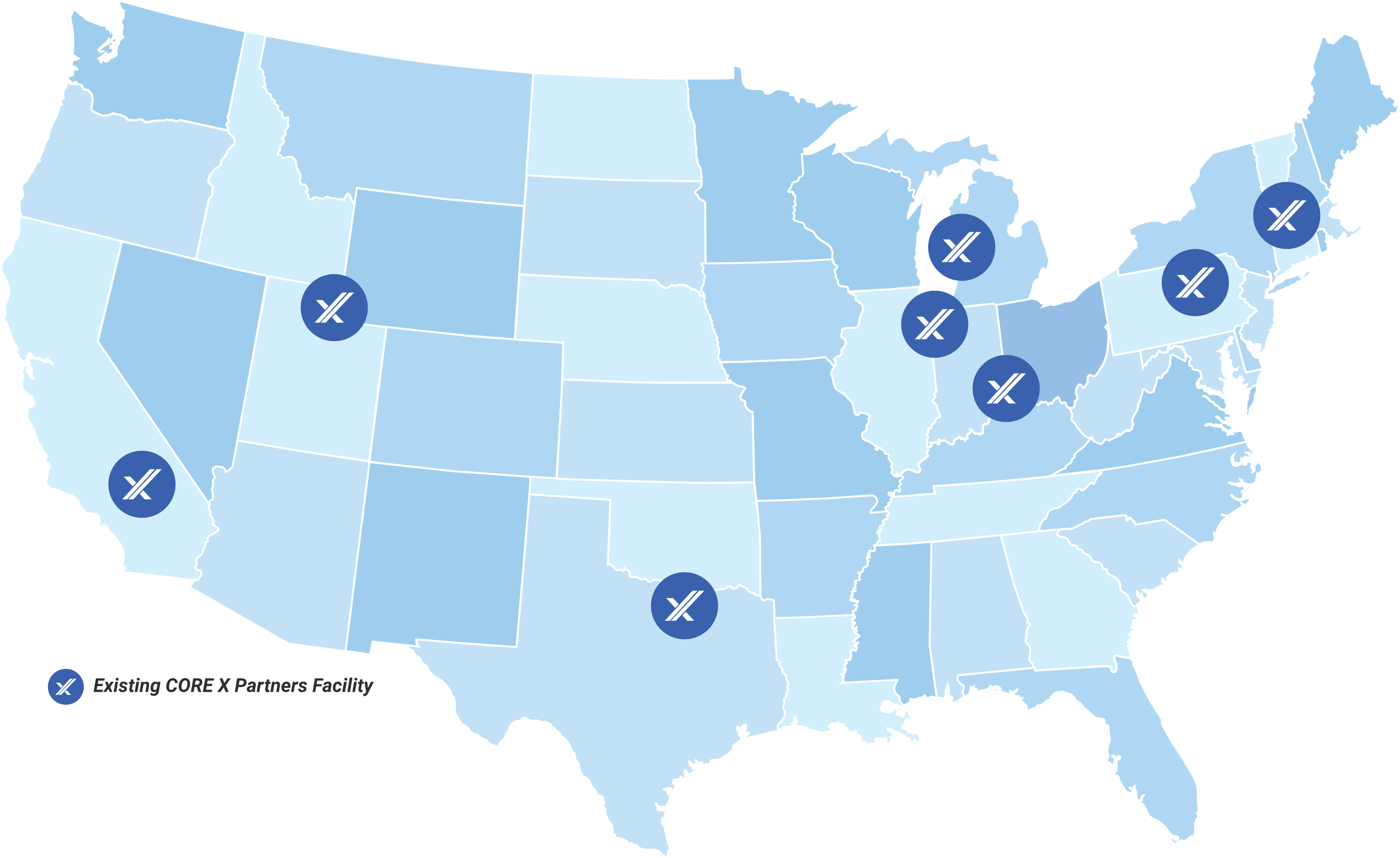
CORE X Partners integrates supply chain data across its nationwide network by aligning storage, transportation, and reporting within a unified operational framework.
Rather than operating independent systems at each facility, CORE X standardizes data structures and reporting across locations. This enables consistent visibility into inventory, shipments, and performance metrics across the entire network.
By integrating temperature-controlled storage with coordinated freight planning and centralized reporting, CORE X provides customers with a clear, accurate view of their operations. This level of visibility supports better decision-making, improved service performance, and more efficient network management.
Local Service. Nationwide Network.

Turning Data into Operational Control
Unifying supply chain data is a foundational step in building a scalable and efficient cold chain logistics network. When systems are aligned and visibility is consistent, companies can move beyond fragmented operations and manage their supply chain as a coordinated system.
A single source of truth provides the clarity needed to control cost, maintain compliance, and deliver consistent service across regions. For organizations managing complex distribution networks, unified supply chain data is not just a technology initiative, it is a critical driver of operational performance.
CORE X Partners delivers integrated logistics solutions that connect storage, transportation, and reporting into a unified operational framework. Our network provides real-time visibility and standardized data to support better decision-making across complex distribution environments. Contact CORE X Partners to strengthen your supply chain data.