
Migrating from multiple 3PLs to a single integrated cold chain solution is a major operational shift. It affects inventory positioning, transportation planning, customer service, and compliance across the entire distribution network. Unlike standard logistics transitions, cold chain cutovers carry additional risk because product integrity depends on consistent temperature control, accurate handling, and complete traceability at every step.
Many consolidation efforts fail not because the strategy is wrong, but because execution is rushed or unstructured. Inventory is moved without proper validation, processes are not aligned across facilities, and communication gaps create service disruptions. For temperature-sensitive products, even small breakdowns can result in product loss, compliance issues, or missed customer commitments.
A successful transition requires a disciplined approach. Migrating from multiple 3PLs must be treated as a phased operational process—one that stabilizes existing performance, standardizes how work is performed, and carefully transitions inventory and operations without disrupting service.
[maxbutton id=”2″ text=”Talk To Us About 3PL Service”]
Why Migrating from Multiple 3PLs Requires a Structured Approach
Cold chain logistics leaves little room for error. Every transfer point—receiving, storage, staging, and shipping—must maintain strict control over temperature, handling, and documentation. When multiple providers are involved, these controls are often inconsistent. During a transition, that inconsistency can quickly become a source of risk.
Without a structured cutover plan, companies may encounter:
- Inventory discrepancies due to mismatched systems or incomplete reconciliation
- Temperature excursions during transfer between facilities
- Missed deliveries caused by misaligned scheduling or routing
- Breakdowns in traceability that impact compliance and audit readiness
Regulatory frameworks such as FDA Food Safety Modernization Act (FSMA) rule on Sanitary Transportation of Human and Animal Food emphasize the importance of maintaining temperature control, proper documentation, and chain of custody throughout the supply chain. These requirements do not pause during a transition; if anything, they become more critical.
Migrating from multiple 3PLs successfully depends on controlling these risks through structured planning, staged execution, and continuous monitoring.
Step-by-Step Roadmap for Migrating From Multiple 3PLs
A phased transition approach reduces disruption and allows operations to stabilize at each stage before expanding the scope of the migration. Rather than moving all facilities and inventory at once, companies should progress through defined stages that build control and confidence over time.

Phase 1: Discovery and Network Assessment
The transition begins with a detailed understanding of the current network. This phase focuses on mapping how inventory, orders, and transportation flows operate across existing providers.
Key activities include:
- Identifying all facilities, SKUs, and inventory levels
- Mapping inbound and outbound shipment flows
- Documenting service levels, lead times, and constraints
- Identifying peak periods and capacity risks
This phase also establishes data alignment. Product codes, lot tracking methods, labeling standards, and reporting formats must be standardized before any inventory is moved. Without this step, traceability gaps can emerge during the transition.
Phase 2: Pilot Lanes or Facilities
Before executing a full cutover, companies should validate the transition model in a controlled environment. A pilot allows teams to test systems, processes, and coordination between storage and transportation.
Pilot scope may include:
- A single facility or region
- A defined set of SKUs or customers
- Limited transportation lanes
During this phase, teams should closely monitor:
- Order accuracy
- Temperature compliance
- System integration between platforms
- Communication between operational teams
A successful pilot confirms that processes are aligned and identifies any issues that need to be resolved before scaling the transition.
Phase 3: Staged Cutover Execution
Once the pilot is validated, the transition can expand in stages. A phased rollout reduces risk by limiting the volume of inventory and orders affected at any given time.
Execution should align:
- Inventory transfers into new facilities
- Outbound order fulfillment schedules
- Transportation planning across lanes
Rather than shifting all operations simultaneously, companies should prioritize regions or facilities based on volume, complexity, and risk level. This approach allows teams to maintain service continuity while gradually consolidating operations.
Phase 4: Stabilization and Performance Alignment
After the physical transition is complete, the focus shifts to stabilization. This phase ensures that the new integrated network is operating consistently and meeting performance expectations.
Key priorities include:
- Monitoring service performance daily
- Resolving exceptions quickly
- Validating inventory accuracy across facilities
- Aligning operations with defined SLAs and KPIs
Stabilization is critical for transitioning from implementation to long-term performance management. Without it, early gains from consolidating cold chain providers may not be sustained.
[maxbutton id=”1″ text=”Speak To A Cold Chain PRO”]
Inventory Migration Planning in Cold Chain Logistics
Inventory is the most sensitive component of any cold chain transition. Errors in inventory handling can lead to product loss, compliance issues, or service disruptions.
A structured migration plan should address several critical areas:
- Lot Control and Traceability
Inventory must retain full traceability across systems. Lot numbers, production dates, and expiration data must transfer accurately to support recall readiness and compliance. - FEFO (First Expired, First Out)
Inventory rotation rules must be preserved during migration to prevent spoilage and ensure proper product handling. - Inventory Holds and Quarantine Status
Products under hold must be clearly identified and maintained throughout the transition to avoid unintended release. - Cycle Counts and Reconciliation
Physical counts should be conducted before and after transfer to confirm inventory accuracy and identify discrepancies early. - Labeling and Identification Standards
Consistent labeling ensures that inventory can be received, stored, and picked correctly within the new network.
Inventory accuracy is often the single biggest determinant of a successful cutover. Without it, downstream operations quickly become unstable.
Standardizing SOPs Across the Network
When migrating from multiple 3PLs, one of the most common sources of disruption is inconsistent operating procedures. Each provider typically follows its own approach to receiving, storage, picking, and shipping. Without standardization, these differences carry over into the new network and create variability in performance.
A successful cutover requires defining and implementing a single operational playbook across all facilities.
Core SOP areas should include:
- Receiving Procedures
Standardized processes for inbound inspection, temperature verification, documentation, and system entry ensure that products are handled consistently from the moment they arrive. - Storage Rules and Temperature Control
Clear guidelines for temperature zones, product segregation, and handling requirements help maintain product integrity across facilities. - Picking and Order Fulfillment Methods
Whether operations rely on full pallet, case pick, or layer picking, methods should be defined and applied consistently to maintain accuracy and efficiency. - Shipping and Staging Processes
Outbound processes, including staging, loading, and documentation, must align with transportation schedules and customer requirements. - Returns and Exception Handling
Standard procedures for returns, damaged goods, and exceptions ensure that issues are handled consistently and do not disrupt overall operations.
Consistency across cold chain locations is more important than optimizing each facility independently. When SOPs are aligned, companies can manage the network as a unified system rather than a collection of individual operations.

Change Management: The Most Overlooked Risk in 3PL Consolidation
While systems and processes are critical, most transition challenges come down to people and communication. Migrating from multiple 3PLs affects internal teams, external partners, and customers, all of whom must adapt to new processes and expectations.
A structured change management plan helps ensure alignment across all stakeholders.
Key elements include:
- Internal Role Alignment
Clearly define responsibilities across operations, procurement, customer service, and logistics teams. Each group must understand its role during and after the transition. - Training and Onboarding
Teams must be trained on new SOPs, systems, and compliance requirements. This includes both internal staff and facility-level operators. - Customer and Retailer Communication
Changes to shipping locations, delivery schedules, or order processes should be communicated proactively to avoid disruption. - Exception Handling and Escalation
Defined processes for managing issues during the transition ensure that problems are addressed quickly and do not escalate into larger disruptions.
Strong communication and training reduce uncertainty and help maintain service continuity during the transition.
Technology and Data Integration During the Cutover
Technology integration is a critical enabler of a successful transition. Without aligned systems, even well-designed processes can break down.
Migrating from multiple 3PLs requires synchronizing data across:
- ERP systems (orders, inventory, financials)
- WMS platforms (warehouse operations and inventory tracking)
- TMS solutions (transportation planning and execution)
- EDI connections (retailers and trading partners)
In addition to system integration, companies should ensure:
- Consistent lot tracking and traceability across all platforms
- Real-time visibility into inventory and shipment status
- Temperature monitoring systems aligned across facilities
- Standardized reporting formats for performance measurement
The goal of cold chain consolidation is to create a single source of truth that supports decision-making across the entire network.
Risk Mitigation Strategies During Transition
Even with careful planning, transitions involve risk. The key is to anticipate potential issues and build safeguards into the process.
Effective risk mitigation strategies include:
- Backup Facility Planning
Identify alternate storage locations that can be used if capacity constraints or operational issues arise. - Redundant Transportation Lanes
Establish alternative carriers or routes to maintain delivery continuity. - Enhanced Temperature Monitoring
Increase monitoring frequency during the transition to quickly identify and address deviations. - Contingency Planning
Develop clear response plans for common scenarios such as delays, inventory discrepancies, or system issues.
Cold chain logistics is inherently risk-sensitive. A proactive approach to risk management helps ensure that the transition does not compromise product integrity or service performance.

How CORE X Supports Seamless 3PL Transitions
CORE X Partners approaches migrating from multiple 3PLs as a structured, phased process designed to minimize disruption and maintain control.
Rather than shifting operations all at once, CORE X aligns onboarding with a staged implementation model that includes discovery, pilot validation, and controlled rollout. Standardized SOPs are applied across all facilities, ensuring consistent handling, storage, and shipping processes throughout the network.
CORE X integrates temperature-controlled storage, freight transportation and logistics services through a coordinated system, supported by centralized visibility and reporting. This approach allows companies to maintain service continuity while transitioning to a more efficient, unified logistics model.
By combining regional expertise with national coordination, CORE X enables companies to consolidate operations without sacrificing performance.
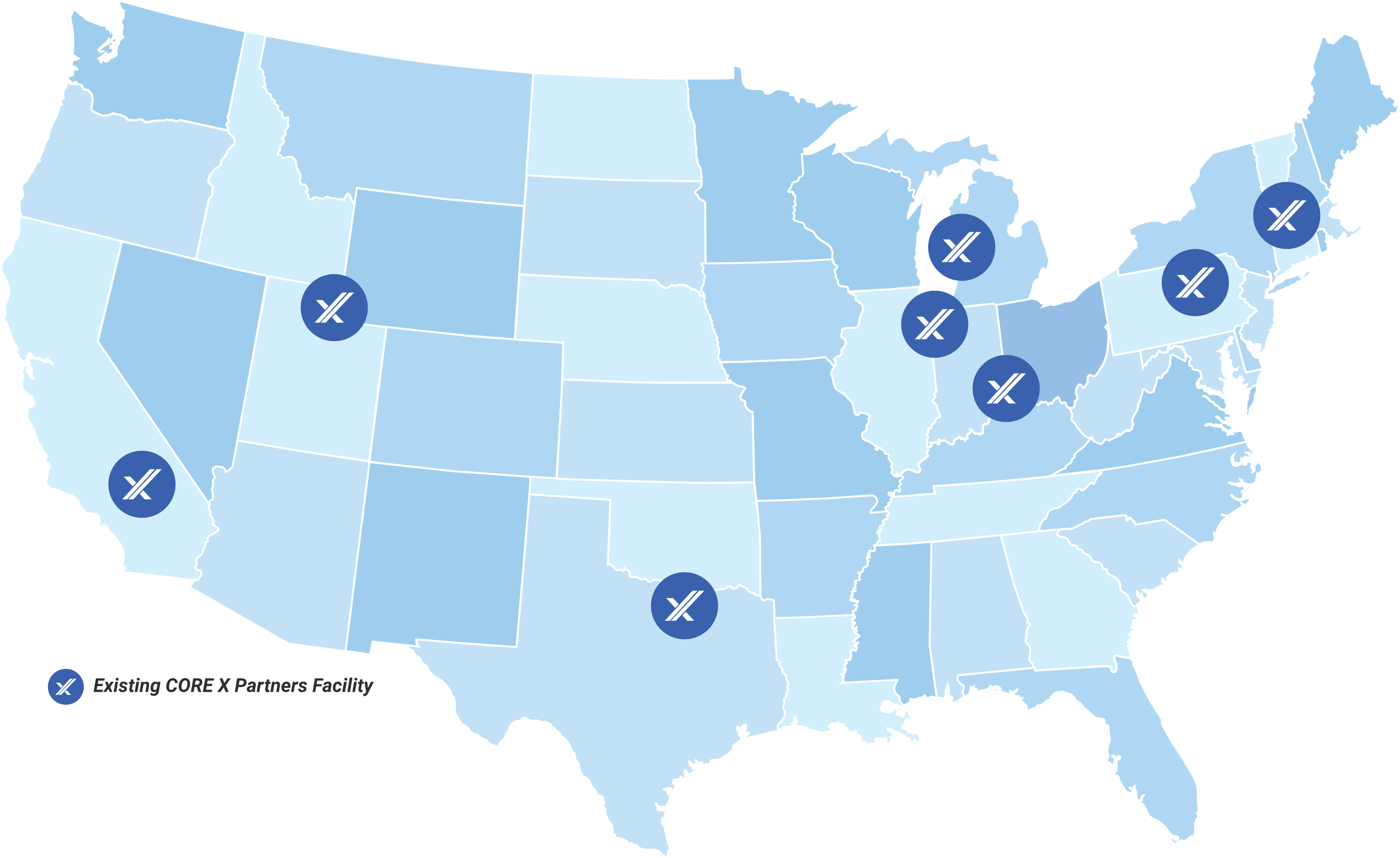
Local Service. Nationwide Network.
Executing a Successful Cold Chain Cutover
Migrating from multiple 3PLs is a critical step in building a more efficient and scalable cold chain logistics network. Success depends on more than selecting the right partner, it requires disciplined execution across inventory management, process standardization, system integration, and stakeholder alignment.
A structured cutover approach allows companies to transition operations while maintaining service continuity, protecting product integrity, and meeting compliance requirements.
When executed correctly, the result is a smoother transition and a stronger operational foundation that supports long-term growth through an integrated cold chain solution.
CORE X Partners delivers integrated storage, transportation, and logistics solutions designed to support seamless cold chain transitions. Our phased approach aligns inventory, operations, and visibility to reduce disruption and improve performance. Contact CORE X Partners to simplify migrating from multiple 3PLs.