Growing food manufacturers often reach a point where warehouse work starts pulling attention away from production.
At first, the team may only need freezer or cooler space for finished goods. Then customer requirements start to change. A retailer needs a specific pallet configuration. A distributor wants mixed-SKU orders. A seasonal promotion requires kitting. An eCommerce program needs picking, packing, and inventory visibility. Suddenly, the manufacturer is not only making food. It is also managing fulfillment work that takes labor, space, equipment, and supervision.
That is where cold storage value-added services can help.
Customization does not only happen by choosing the right temperature zone or storage model. It can also happen inside the warehouse. Picking, repacking, kitting, pallet breakdown, stretch wrapping, blast freezing, staging, and fulfillment support can help food manufacturers scale without building every capability in-house.
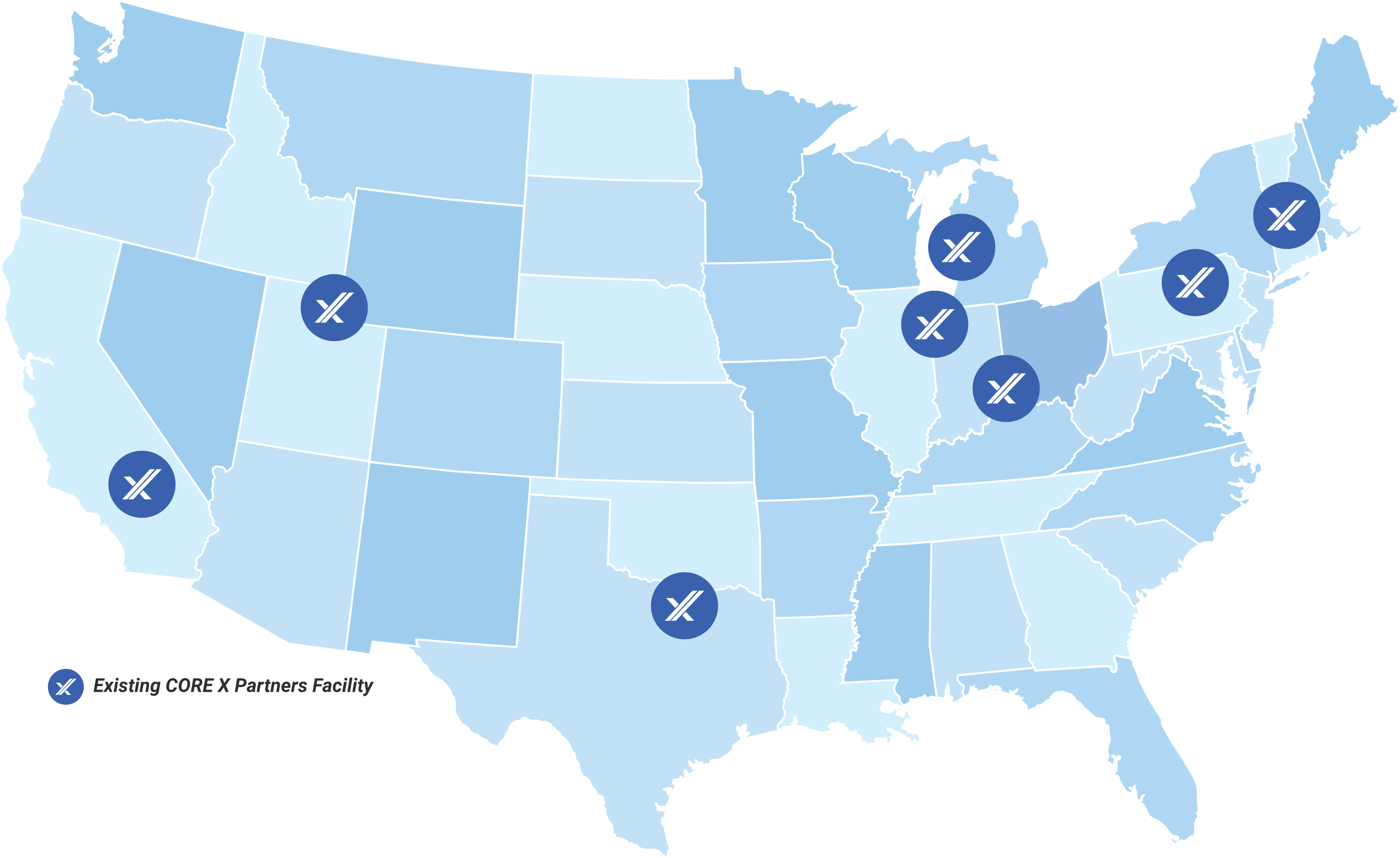
CORE X Partners supports cold storage value-added services through a national cold chain network built for temperature-controlled storage, product handling, freight coordination, and practical support for growing food brands.
When Warehouse Work Starts Competing with Manufacturing Work
Warehouse work becomes a problem when it starts interrupting production.
A manufacturer may begin by handling small fulfillment tasks internally. That can work while order volume is low and customer requirements are simple. As the business grows, those tasks can become harder to absorb.
Common warning signs include:
- Production staff pulled into picking, packing, labeling, or staging
- Finished goods taking up valuable production floor space
- More time spent reworking pallets for customer requirements
- Growing SKU counts creating order accuracy pressure
- Seasonal promotions requiring extra packaging or kitting
- Direct-to-consumer orders creating new fulfillment demands
- Supervisors managing warehouse details instead of production flow
- Internal teams chasing inventory, order status, or shipment exceptions
These issues create hidden costs. Labor is redirected. Equipment is tied up. Space becomes crowded. Mistakes become more likely as customer requirements become more specific.
A food 3PL with value-added services can help manufacturers keep production focused on manufacturing while warehouse teams support the handling, fulfillment, and preparation work that happens after product leaves the line.
Cold Storage Value-Added Services That Support Growth
Value-added services should match the manufacturer’s product mix, sales channels, and customer requirements. The goal is not to add services for the sake of complexity. The goal is to move the right work into the right environment, with the right people, equipment, and visibility.
Picking and Case Picking
Outbound orders do not always move in full pallets.
As manufacturers grow, customers may order by case, mixed pallet, distributor program, store group, or retail requirement. Frozen case picking and refrigerated fulfillment can become more important when order profiles become less uniform.
Picking support may be needed when:
- Distributors order mixed SKUs
- Retailers require specific pallet builds
- Foodservice customers order by case
- Club or promotional programs need staged quantities
- eCommerce or direct-to-consumer channels require smaller order handling
Case picking can reduce pressure on the manufacturer’s internal team. It also helps align outbound orders with customer requirements before product reaches the dock.
The key is accuracy. Picking processes should support SKU control, lot visibility, order documentation, and clear exception procedures when inventory does not match the order plan.
Repacking and Kitting
Customer programs often require product to be configured differently than it was produced.
Food repacking services and outsourced food kitting can support promotional packs, variety packs, special customer programs, relabeling, or packaging adjustments. These services are especially useful when a manufacturer needs to serve different channels without changing the production line for every customer request.
Examples may include:
- Promotional kits
- Variety packs
- Customer-specific pack configurations
- Repacking for seasonal programs
- Labeling or relabeling support
- Bundled product sets
- Packaging adjustments for different channels
These tasks can consume production labor quickly if they stay in-house. They can also create staging pressure when product is waiting for a final customer-specific configuration.
Moving appropriate repacking or kitting work into a cold storage environment can help protect product condition while giving the manufacturer more flexibility after production.
Pallet Breakdown and Re-Palletizing
The way product is received does not always match the way it needs to ship.
A manufacturer may send full pallets to cold storage, but a customer may require mixed pallets, different layer counts, new pallet patterns, specific labeling, or retailer-compliant configurations. Pallet breakdown and re-palletizing help bridge that gap.
These services may support:
- Mixed-SKU outbound orders
- Retailer-specific pallet requirements
- Distributor replenishment orders
- Damage inspection or rework
- Product transfers between programs
- More efficient outbound staging
Without this support, manufacturers may need to handle rework internally or delay outbound orders while teams adjust pallet builds. That can increase handling, dwell time, and customer service pressure.
A strong cold storage partner should understand both the product requirements and the customer requirements. Product still needs the right temperature environment, lot-level traceability, and accurate documentation while handling work is completed.
Blast Freezing and Related Product Handling
Some products need specialized cold storage capabilities to support production flow.
Blast freezing can help manufacturers move product quickly into the required frozen condition when product specifications and process requirements call for it. Related product handling may include temperature-controlled receiving, staging, wrapping, inspection, and movement into the correct storage zone.
This can be especially useful when production volume increases or when manufacturers need more support around a specific product line. The cold storage provider should understand the product’s temperature profile, packaging, pallet configuration, and timing requirements before the work begins.
Specialized handling is most useful when it is planned as part of the operating model. If product needs blast freezing, staging, wrapping, or added handling, those steps should be built into the production and storage flow early.
eCommerce and DTC Fulfillment
Direct-to-consumer and eCommerce programs create a different kind of cold chain work.
Instead of moving full pallets or larger customer orders, the manufacturer may need smaller order picking, packing, shipment preparation, inventory updates, packaging controls, and customer-facing order visibility. These needs can be hard to manage inside a production-focused facility.
Temperature-controlled eCommerce fulfillment can support manufacturers developing direct channels while helping protect product condition, inventory accuracy, and outbound execution.
DTC fulfillment may require:
- Order picking
- Packing and shipping support
- Customizable packaging
- Inventory management
- Lot and SKU visibility
- Temperature-sensitive handling
- Order status updates
- Exception communication
This does not mean every manufacturer should build a direct channel. But when that channel becomes part of the growth plan, fulfillment requirements should be reviewed before internal teams are stretched too thin.
Build or Outsource? What Food Manufacturers Should Compare
The build-versus-outsource decision should account for more than labor cost.
Food manufacturers should compare internal capabilities against outsourced cold storage and warehousing services that can flex as volume changes. The right answer depends on the manufacturer’s product mix, order profile, customer requirements, available space, and growth plan.
A practical comparison should include:
| Cost or capability area | In-house consideration | 3PL value-added services consideration |
| Labor | Hiring, training, supervision, scheduling | Trained warehouse labor aligned to service needs |
| Equipment | Pallet jacks, wrappers, racking, scanners, packing stations | Existing equipment and warehouse processes |
| Space | Production floor or owned warehouse space used for staging | Temperature-controlled warehouse space built for handling |
| Systems | Internal tracking, order updates, inventory visibility | Warehouse Management System support and reporting |
| Flexibility | Harder to scale during seasonal or customer surges | Services can expand with volume and program needs |
| Management time | Production leaders may absorb fulfillment oversight | Operational support can shift to the provider |
| Risk | Errors, delays, temperature exposure, or rework may stay internal | Defined service levels and exception processes |
Outsourcing may not be the right answer for every task. Some work may need to stay close to production. Other work can be handled more efficiently once product has moved into cold storage.
The best decision is usually not all-or-nothing. A growing manufacturer may keep core production activities in-house while using a 3PL for storage, picking, repacking, kitting, fulfillment, and transportation support as needed.
Define Service-Level Requirements Before Work Begins
Value-added services work best when expectations are clear.
Before moving warehouse tasks to a 3PL, food manufacturers should define the required service levels. That prevents confusion once order volume increases or customer requirements become more detailed.
Important requirements may include:
- Order accuracy
- Turnaround time
- Lot and date-code tracking
- First Expired, First Out (FEFO) rotation
- Packaging specifications
- Labeling requirements
- Temperature documentation
- Quality checks
- Exception procedures
- Reporting cadence
- Customer-specific handling rules
Manufacturers should also define who owns communication when something changes. If inventory is short, packaging is delayed, a pallet needs rework, or an order misses the expected ship date, the team needs a clear escalation path.
Good service-level planning protects both sides. The manufacturer knows what to expect, and the provider has the information needed to support the work accurately.
Questions to Ask About Food 3PL Value-Added Services
A provider should be able to explain how value-added services fit into the broader cold chain program.
Food manufacturers should ask:
- Which value-added services can be performed in a temperature-controlled environment?
- Can you support picking, case picking, repacking, kitting, and pallet rework?
- Can services scale during seasonal peaks or promotional programs?
- How do you track SKU, lot, date code, and expiration information during handling?
- What packaging, labeling, or customer-specific requirements can you support?
- Can you support refrigerated fulfillment or direct-to-consumer order handling?
- How do you manage quality checks and exception reporting?
- How do value-added services connect to outbound transportation planning?
- What reporting is available for order accuracy, turnaround time, and inventory movement?
The answers should show whether the provider can support real operating requirements, not only list available services.
Scale Food Manufacturing Support Without Adding Unnecessary Overhead
Growing food manufacturers need more than cold space when customer requirements, SKU counts, sales channels, and order profiles become more complex.
Cold storage value-added services can help shift the right work into a temperature-controlled warehouse environment. Picking, frozen case picking, food repacking services, kitting, pallet rework, blast freezing, fulfillment, and related support can help manufacturers protect production focus while meeting customer expectations.
CORE X Partners helps food manufacturers align value-added services with real food manufacturing cold storage requirements. Our teams support temperature-controlled storage, product handling, fulfillment, freight coordination, and visibility through a national cold chain network backed by regional execution. Contact CORE X Partners to discuss which cold storage value-added services can support your next stage of growth.