Quick Answer
Integrated cold chain providers help manufacturers reduce food waste by keeping cold storage, inventory visibility, staging, transportation, and issue response connected throughout the post-production process.
Finished goods can lose value even when they are made correctly and remain safe to use. A late pickup, temperature variation, poor inventory rotation, missed appointment, short-coded lot, or communication gap can lead to claims, rejected loads, or product that becomes harder to sell.
The right provider reduces that risk by treating cold storage and freight as one coordinated process. Product stays in the right environment until it is ready to move. Inventory can be managed by lot, shelf life, and customer requirements. Dock activity can be planned around trailer readiness and delivery timing. When issues arise, teams can respond sooner and preserve more of the product’s value.
When an eligible product cannot move through normal commercial channels, an integrated provider can also help support donation, redistribution, or another approved recovery path.
What Manufacturers Should Evaluate Before Food Waste Becomes a Cost Problem
Food waste after production is easier to reduce when manufacturers understand where product loses time, value, visibility, or customer acceptance. A product may leave the production line in good condition, but the next steps still matter. Storage conditions, inventory rotation, staging time, dock coordination, transportation timing, delivery appointments, and exception response all affect whether finished goods reach the customer with full commercial value.
Manufacturers should evaluate where waste risk is already showing up across the post-production cold chain. A strong cold chain strategy should help answer several practical questions:
- Where does product lose the most time after production?
- Which SKUs, lots, customers, lanes, or regions create the most waste risk?
- Are cold storage and transportation planned together or managed separately?
- How are aging inventory, short-coded product, and customer shelf-life requirements tracked?
- How quickly can the provider respond when a truck is delayed, a delivery appointment changes, or product is placed on hold?
- Can inventory status, shipment status, temperature concerns, and exception notes be reviewed together?
- What recovery options exist when eligible product cannot move through normal commercial channels?
These questions matter because food waste often occurs when teams work from separate information. The warehouse may know product is staged. The transportation team may know a truck is delayed. Customer service may know that a delivery appointment has changed. If those updates do not connect quickly, product can sit longer, lose shelf life, miss requirements, or become harder to sell.
Integrated cold chain providers help close those gaps by connecting the operating details that affect product value after production.
How Cold Storage and Transportation Integration Reduce Food Waste After Production
Cold storage and transportation integration is the foundation of a waste-reduction cold chain. It helps manufacturers connect what happens inside the warehouse with what happens during outbound movement, delivery scheduling, and customer communication.
In a fragmented model, product may be stored by one provider, freight may be arranged by another, and customer delivery issues may be handled through a separate communication path. Each party may complete its own task, but the handoffs can create blind spots. Product may be picked before the truck is ready. A carrier delay may not reach the dock team quickly enough. Inventory may be aging without being tied to shipment planning. A change to a delivery appointment may not trigger a staging adjustment.
An integrated model works differently. Storage, staging, loading, freight planning, delivery windows, and exception response are managed as part of one operating process. Product readiness can guide transportation planning. Dock activity can be coordinated around trailer availability. Short-coded or at-risk inventory can be flagged before options narrow. If something changes, the provider has a clearer path for response.
That coordination helps reduce waste risk because product spends less time waiting between steps. Teams do not have to guess what is happening next. The manufacturer has better visibility into what is moving, what is delayed, and what needs attention.
Cold storage and transportation integration does not eliminate every disruption. Food supply chains still face production changes, customer requirements, weather, capacity constraints, and transportation delays. The difference is that integrated providers can respond faster and manage those disruptions with more context.
Learn more: How Cold Storage and Transportation Integration Help Reduce Food Waste After Production
Cold Chain Temperature Integrity Protects Product Quality Across Every Handoff
Temperature integrity is one of the first lines of defense against post-production waste. Finished goods may leave the line in the right condition, but they still need to move through storage, picking, staging, dock loading, transportation, and delivery without unnecessary exposure or delay.
Temperature risk does not stop at the warehouse wall. Product may be stored correctly, then face new risks when it is staged too early, loaded into an unprepared trailer, delayed at the dock, held due to a missed appointment, or moved amid an unplanned transportation issue. For manufacturers, the concern is not only food safety. Temperature integrity also affects shelf life, product quality, customer acceptance, claims, and brand confidence.
Integrated cold chain providers help protect temperature integrity by coordinating the conditions and timing around each handoff. Product requirements should be defined by SKU. Staging should be aligned with pickup timing. Trailer readiness should be verified before loading. Dock teams should understand which loads are time-sensitive. Transportation teams should know when product is ready and what conditions must be maintained.
This kind of coordination reduces the “waiting in the middle” that can create waste risk. When storage and transportation teams work from the same plan, product can remain in the right environment until the next step is ready. If a truck is delayed or a delivery appointment changes, the team can adjust before product spends too much time in a transition area.
Cold chain temperature integrity is not one task. It is a series of checks, decisions, and responses that protect product from storage through delivery.
Learn more: Cold Chain Temperature Integrity: The First Line of Defense Against Food Waste
FEFO Inventory Cold Storage Helps Manufacturers Ship Smarter
Shelf life is a major factor in post-production food waste. Product does not always become waste because it is unsafe. In many cases, consumable products become difficult to sell because it no longer meets a customer’s shelf-life requirement, retail timing need, promotion window, or distribution expectation.
FEFO inventory cold storage helps manufacturers manage that risk. FEFO means First Expired, First Out. It prioritizes product closest to expiration so usable inventory moves while it still has commercial value. This differs from FIFO, or First In, First Out, which moves the oldest received product first. FIFO can support basic rotation, but it may not always reflect expiration risk.
For food manufacturers, FEFO works best when it is supported by cold chain data. Teams need visibility into SKU, lot, production date, expiration or best-by date, storage location, customer shelf-life rules, pick status, staging status, shipment ETA, and delivery timing. When that information is connected, manufacturers can make better decisions before inventory becomes short-coded or difficult to move.
FEFO is not only a warehouse rule. It should influence outbound planning. A shorter-dated product may need to move to a closer customer, a different region, or a customer with more flexible date requirements. A longer-dated product may be better suited for a longer transit lane or stricter customer program.
Integrated cold chain providers help turn shelf-life visibility into action. They can flag aging inventory earlier, connect inventory status to transportation planning, and support better communication between operations, logistics, sales, and customer service.
Learn more: FEFO Inventory Cold Storage: How Manufacturers Can Use Cold Chain Data to Ship Smarter
Reducing Dwell Time Helps Protect Product During Staging, Loading, and Transportation
Dwell time is the time product, trucks, or equipment spend waiting between process steps. In cold chain operations, dwell time can happen in staging areas, at dock doors, in the yard, during loading, during cross-docking, while waiting for trailer readiness, or between pickup and delivery appointments.
Some waiting is part of normal operations. The risk comes from avoidable dwell time caused by poor planning, late communication, dock congestion, carrier delays, equipment issues, or disconnected vendors.
For temperature-sensitive products, avoidable dwell time can create real business risk. Product picked too early may sit in staging longer than planned. A late carrier may push back loading. A trailer that is not ready may delay the outbound process. A missed delivery appointment may shorten the customer’s usable selling window. If product is already close to a shelf-life limit, every delay matters more.
Integrated providers help reduce dwell time by coordinating pick waves, dock schedules, trailer readiness, labor planning, and transportation timing. Product should move from storage to staging because the next step is ready, not because one team completed its task and passed the delay downstream.
This type of timing discipline protects more than operational efficiency. It supports temperature integrity, shelf-life preservation, delivery reliability, freight cost control, and customer acceptance.
Learn more: Reducing Dwell Time: Why Staging, Loading, and Transportation Timing Matter
Integrated Cold Chain Logistics Turns Waste Reduction into Margin Protection
Food waste is not only a product loss. For manufacturers, it is a margin problem. By the time product becomes waste, the business has already invested in ingredients, packaging, labor, cold storage, freight, customer service, sales effort, and often replacement planning.
The full cost of waste can include the product itself, packaging, labor, storage, freight, detention, accessorial charges, customer penalties, claims administration, rework, repalletizing, disposal, reclamation, lost sales, and damaged customer relationships. That is why waste reduction belongs in the margin conversation.
Integrated cold chain logistics helps protect margins by reducing the conditions that create financial leakage. When storage and freight decisions are planned separately, one function can create costs for the other. Product may be picked before a truck is ready. A carrier may arrive before the order is staged. A delivery appointment may change without the warehouse team knowing. Inventory may be available, but not positioned for the best freight option.
When cold storage, inventory visibility, dock planning, transportation timing, and customer communication are connected, manufacturers can reduce unnecessary handoffs and make better decisions sooner. Short-coded inventory can be flagged earlier. Freight can be matched to product requirements. Exceptions can be escalated before they create rejected loads or emergency shipping.
The goal is not simply to move product through the cold chain. The goal is to protect the value already built into it.
Learn more: How Integrated Cold Chain Logistics Protects Margin
Cold Chain Providers Can Support Responsible Excess Food Redistribution
Prevention should come first. Manufacturers reduce waste most effectively by maintaining temperature integrity, improving inventory visibility, reducing dwell time, coordinating transportation, and responding quickly to changes in plans.
Still, some products may become difficult to sell through normal commercial channels. Short-coded dates, packaging changes, overproduction, forecast misses, customer order changes, discontinued items, or minor cosmetic issues can leave manufacturers with product that may still be safe and usable but no longer fit the original sales plan.
This is where cold chain providers can support responsible redistribution of excess food. Eligible product may need to be identified, separated from normal commercial inventory, inspected, documented, repackaged, re-labeled, or moved through an approved recovery channel. That process still requires cold chain discipline. Product must remain in the right environment, maintain traceability, and move through a controlled process.
Not every excess product is eligible for redistribution. Eligibility depends on food safety, product condition, documentation, brand rules, recall status, shelf life, and the requirements of the receiving organization. A defined process helps manufacturers make these decisions faster and with better control.
The strongest waste-reduction strategies combine prevention, early detection, and responsible recovery. Integrated cold chain providers help protect product first, then support another path when eligible product can no longer move through the original commercial channel.
Learn more: How Cold Chain Providers Support Excess Food Redistribution
How CORE X Helps Manufacturers Reduce Food Waste
CORE X Partners helps food manufacturers reduce food waste risk by connecting the post-production cold chain. That includes temperature-controlled storage, transportation planning, logistics coordination, inventory visibility, value-added services, and excess food redistribution support.
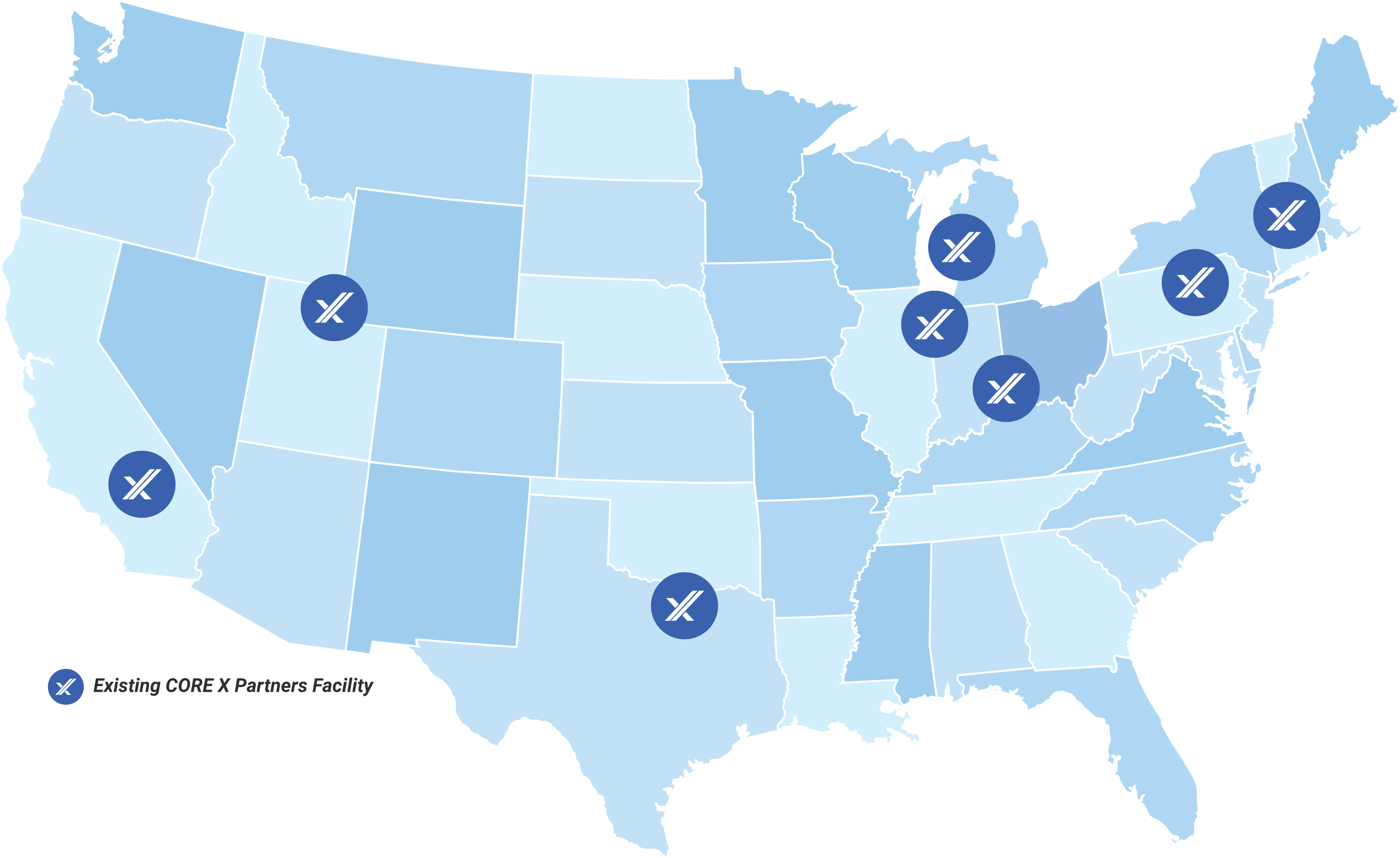
For manufacturers, waste reduction depends on how well the cold chain protects product after it leaves the line. Finished goods need to be stored in the right environment, rotated correctly, staged at the right time, loaded onto the right equipment, delivered within customer requirements, and monitored when plans change. CORE X supports that process through a national cold chain network built around regional expertise and coordinated service.
CORE X helps manufacturers reduce avoidable waste through:
- Temperature-Controlled Storage
- Refrigerated and Frozen Warehousing
- Inventory Visibility
- Lot and Date Tracking
- Cold Chain Logistics Support
- Freight Coordination
- Value-Added Services
- Staging and Loading Coordination
- Customer Communication
- Exception Response
- Excess Food Redistribution Services
The value is not just capacity. It is coordination. Food manufacturers need partners that can help protect product quality, preserve shelf life, and provide better visibility from storage through distribution.
CORE X’s model supports manufacturers that need to scale across regions, respond to changing customer requirements, manage seasonal volume, protect temperature-sensitive products, and reduce the chance that usable food becomes waste. When products require additional handling, CORE X also supports value-added services such as picking, repacking, kitting, pallet breakdown, and related cold chain support.
When eligible product can no longer move through normal commercial channels, CORE X can also help manufacturers evaluate responsible recovery options through excess food redistribution. That gives manufacturers another path for safe, usable product that may be short-coded, affected by packaging changes, or otherwise unsuitable for standard retail sales.
Manufacturer Checklist: What to Ask an Integrated Cold Chain Provider
Food manufacturers should evaluate cold chain providers based on how well they connect storage, transportation, visibility, and response. The right provider should be able to explain how products are protected after production, how decisions are made when product is at risk, and how teams communicate when timing changes.
Key questions include:
- How do you connect cold storage and transportation planning?
- Can inventory status and shipment status be reviewed together?
- How do you manage temperature integrity from storage through delivery?
- How do you monitor staging dwell time?
- Can you support FIFO and FEFO inventory requirements?
- Can you track inventory by SKU, lot, expiration date, and facility?
- How do you flag short-coded or at-risk inventory?
- How are temperature exceptions documented and escalated?
- How do warehouse, dock, transportation, and customer service teams communicate when plans change?
- What reporting is available by SKU, customer, facility, lane, or product category?
- How do you support seasonal volume, customer expansion, or multi-region distribution?
- What options are available when eligible excess product cannot move through normal commercial channels?
These questions help manufacturers identify whether a provider is simply offering cold storage space or supporting a more complete waste-reduction cold chain strategy.
Frequently Asked Questions About Integrated Cold Chain Providers and Food Waste
How does cold storage and transportation integration reduce food waste?
Cold storage and transportation integration reduces food waste by aligning inventory readiness, pick timing, staging, trailer availability, dock activity, freight planning, and customer delivery windows. When storage and transportation teams work from the same plan, within the same network, product spends less time waiting between steps, and teams can respond faster when schedules change.
Why is cold chain temperature integrity important for reducing food waste?
Cold chain temperature integrity helps protect product quality, shelf life, customer acceptance, and brand confidence. A product may be stored correctly but still face risk during staging, loading, transit, or delayed delivery. Integrated cold chain providers help manage that risk by coordinating storage conditions, trailer readiness, dock discipline, transportation timing, and exception response.
How does FEFO inventory cold storage help reduce food waste?
FEFO inventory cold storage helps reduce food waste by prioritizing product closest to expiration. This helps manufacturers move aging inventory while it still has commercial value. FEFO works best when inventory data is connected to customer shelf-life requirements, shipment timing, transportation planning, and exception response.
Why does reducing dwell time matter in cold chain logistics?
Reducing dwell time matters because products can lose time and value while waiting between process steps. In cold chain logistics, avoidable dwell time can happen in staging areas, at dock doors, during loading, while waiting for trailer readiness, or between appointments. Better coordination helps protect temperature integrity, shelf life, delivery performance, and customer acceptance.
How does integrated cold chain logistics protect manufacturers’ margin?
Integrated cold chain logistics protects margin by reducing the conditions that lead to rejected loads, short-coded inventory, expedited freight, detention, claims, rework, and lost sales. Waste costs more than the product itself because manufacturers have already invested in ingredients, packaging, labor, storage, freight, and customer service. Better cold chain coordination helps protect more of that value after production.
How can cold chain providers support excess food redistribution?
Cold chain providers can support excess food redistribution when eligible product cannot move through normal commercial channels. This may include identifying eligible inventory, separating product, supporting quality review, repackaging, coordinating donation or redistribution partners, and helping move product through an approved recovery path while maintaining cold chain discipline.
Build a Stronger Waste-Reduction Cold Chain with CORE X Partners
Food manufacturers need cold chain partners that can protect product value after production, not simply store inventory. CORE X Partners helps connect temperature-controlled storage, transportation planning, inventory visibility, dock timing, value-added services, exception response, and excess food redistribution support through one coordinated cold chain network.
CORE X Partners helps food manufacturers reduce food waste risk through integrated cold storage, transportation coordination, inventory visibility, value-added services, and support for excess food redistribution. Our national cold chain network combines regional expertise, temperature-controlled facilities, logistics support, and practical communication to help protect product quality and preserve shelf life after production. Contact CORE X Partners to learn how integrated cold-chain providers can help manufacturers reduce food waste.