
Consolidating multiple cold storage providers into a single operating model can simplify vendor management, but it also raises expectations for performance. When operations are spread out, issues tend to stay within individual facilities. In a consolidated network, performance is connected. Gaps in one area can affect service, cost, and product integrity across regions.
This shift requires more than a unified contract. It calls for a clear approach to setting expectations, measuring performance, and aligning pricing with how the network actually runs. Without defined service level agreements (SLAs) and transparent pricing, consolidation can hide inefficiencies instead of fixing them.
A strong consolidated cold storage network depends on two core elements: a contract that aligns commercial terms and a shared scoreboard that tracks performance across facilities, lanes, and services.
[maxbutton id=”1″ text=”Talk to a Partnering Regional Operator (PRO)”]
Why SLAs Matter More in a Consolidated Cold Storage Network
Service level agreements become more important as networks consolidate. In multi-provider setups, performance is often measured at the facility level. In a unified network, those same standards need to apply across the board.
SLAs define expectations for storage, handling, and transportation. They also establish accountability. Without consistent SLAs, companies may reduce administrative complexity but lose control over service performance.
In cold chain logistics, SLAs must account for both operational efficiency and product protection. Temperature-sensitive products introduce additional risk, making it essential to measure not only delivery performance, but also handling conditions throughout the distribution process.
Core SLA Framework for a Consolidated Cold Storage Network
An effective SLA framework focuses on a defined set of metrics that reflect day-to-day operations. These should be applied consistently across all facilities and rolled into a unified reporting structure.
Service Performance Metrics
At the core of any SLA framework are metrics that measure execution reliability. These indicators reflect how well the network meets customer expectations and supports downstream distribution requirements.
- On-Time, In-Full (OTIF)
Measures whether shipments arrive on time and in the correct quantity. It captures both timing and fulfillment accuracy. - Order Accuracy
Confirms that the correct products, quantities, and configurations are picked and shipped. Inconsistencies often point to process or system gaps. - Dwell Time
Tracks how long shipments sit at a facility before moving. High dwell time can signal issues with scheduling, labor, or dock operations, and is often a hidden driver of cost.
Temperature and Compliance Metrics
Cold chain logistics requires a second layer of performance measurement focused on product integrity and regulatory compliance.
- Temperature Compliance Rate
Cold chain operations require additional metrics focused on product integrity and regulatory compliance throughout storage and transportation. - Temperature Excursion Tracking
Identifies deviations from required temperature ranges and ensures that corrective actions are documented and resolved. This metric is critical for audit readiness and risk management.
Claims and Exception Management
Even well-managed networks encounter exceptions. SLAs should define how these events are measured and resolved.
- Claims Rate
Tracks the frequency of product damage, loss, or quality issues across the network. - Resolution Time
Measures how quickly claims and exceptions are resolved. - Root Cause Analysis
Ensures that recurring issues are identified and addressed at the process level rather than treated as isolated events.
When these metrics are aligned within a single framework, they provide a comprehensive view of network performance. Rather than evaluating facilities individually, companies gain visibility into how the entire consolidated cold storage network is operating, and where improvements are needed.

Pricing Pitfalls in a Consolidated Cold Storage Network
Consolidation often aims to reduce costs, but pricing structures can introduce new challenges if they do not reflect how the network operates. Differences in rate structures, billing practices, and service definitions make it harder to compare costs or spot inefficiencies.
A common issue is inconsistent pricing across legacy providers. Combining them under one contract without standardization can make cost drivers harder to identify.
Minimum volume commitments can also create inefficiencies. They may secure capacity but can limit flexibility, leading to underutilized space or unnecessary transportation costs if demand fluctuates.
Accessorials, added fees for dock-to-dock transportation such as lift gate fees or detention time, should be clearly defined. Cost visibility should be consistent across all facilities and services.
Effective pricing reflects how the network actually runs. Rates should align with service levels.
Governance Clauses That Keep a Consolidated Cold Storage Network Performing
A unified contract sets terms, but governance determines how the network performs over time. Without it, even well-defined SLAs can lose impact as operations change.
Governance defines how issues are handled, how performance is enforced, and how the network continuously improves.
Key elements of an effective governance framework include:
- Defined Escalation Paths
Issues follow a structured process with clear ownership and response timelines, so problems, such as service failures, delays, or temperature deviations, are resolved quickly and consistently. - Performance Remedies and Accountability
SLAs include consequences when performance falls below targets, such as service credits or corrective action requirements tied to measurable results. - Regular Performance Reviews
Ongoing review cycles keep teams aligned. Most consolidated networks operate with:
-
- Weekly or biweekly operational reviews of lane and facility performance
- Monthly KPI and cost reporting
- Quarterly business reviews (QBRs) to assess trends and risks
- Continuous Improvement Expectations
Governance should include a formal process for identifying inefficiencies and implementing improvements. This ensures the network evolves as volumes, customer requirements, and distribution strategies change.
When governance is clearly defined, the contract becomes a living framework that supports performance, not just a static agreement.

Structuring Flexibility into the Contract
Cold chain networks change over time. Demand shifts, product lines grow, and distribution footprints expand. Contracts need to account for that. Flexibility must be built into the agreement from the outset.
A well-structured contract should account for:
- Seasonal Volume Variability
Many food supply chains experience predictable peaks and troughs. Contracts should define how capacity is adjusted during high-demand periods without introducing excessive cost or service risk. - New SKU Integration
Adding new products often introduces different handling, storage, or compliance requirements. Clear onboarding processes ensure that new SKUs can be added without disrupting operations. - Expansion Into New Regions
As distribution networks grow, companies need the ability to extend services into new markets without renegotiating core contract terms. A scalable network structure supports growth without requiring constant renegotiation. . - Project-Based Value-Added Services
Covers temporary needs like repacking or labeling without creating pricing confusion. This allows for flexibility without creating pricing ambiguity.

From Multiple Contracts to One Scoreboard
Consolidating cold storage providers makes it possible to measure performance consistently across the entire network.
In fragmented environments, providers report differently, if at all. Metrics vary, visibility is limited, and comparisons are difficult. A consolidated network replaces that with a unified reporting structure.
A single scoreboard should provide visibility into:
- Service performance (OTIF, order accuracy, dwell time)
- Cost-to-serve across facilities and lanes
- Claims, exceptions, and resolution timelines
- Capacity utilization and throughput
This reporting framework should integrate data across storage, transportation, and inventory systems, allowing companies to evaluate performance holistically rather than in isolated segments.
The result is clearer insight and better decisions. With consistent data, teams can spot trends, fix inefficiencies, and improve network performance over time.
[maxbutton id=”2″ text=”Contact us”]
How CORE X Structures Contracts and Performance Across Its Network
CORE X Partners supports consolidated cold storage networks through a unified approach to contracts, performance measurement, and operational alignment.
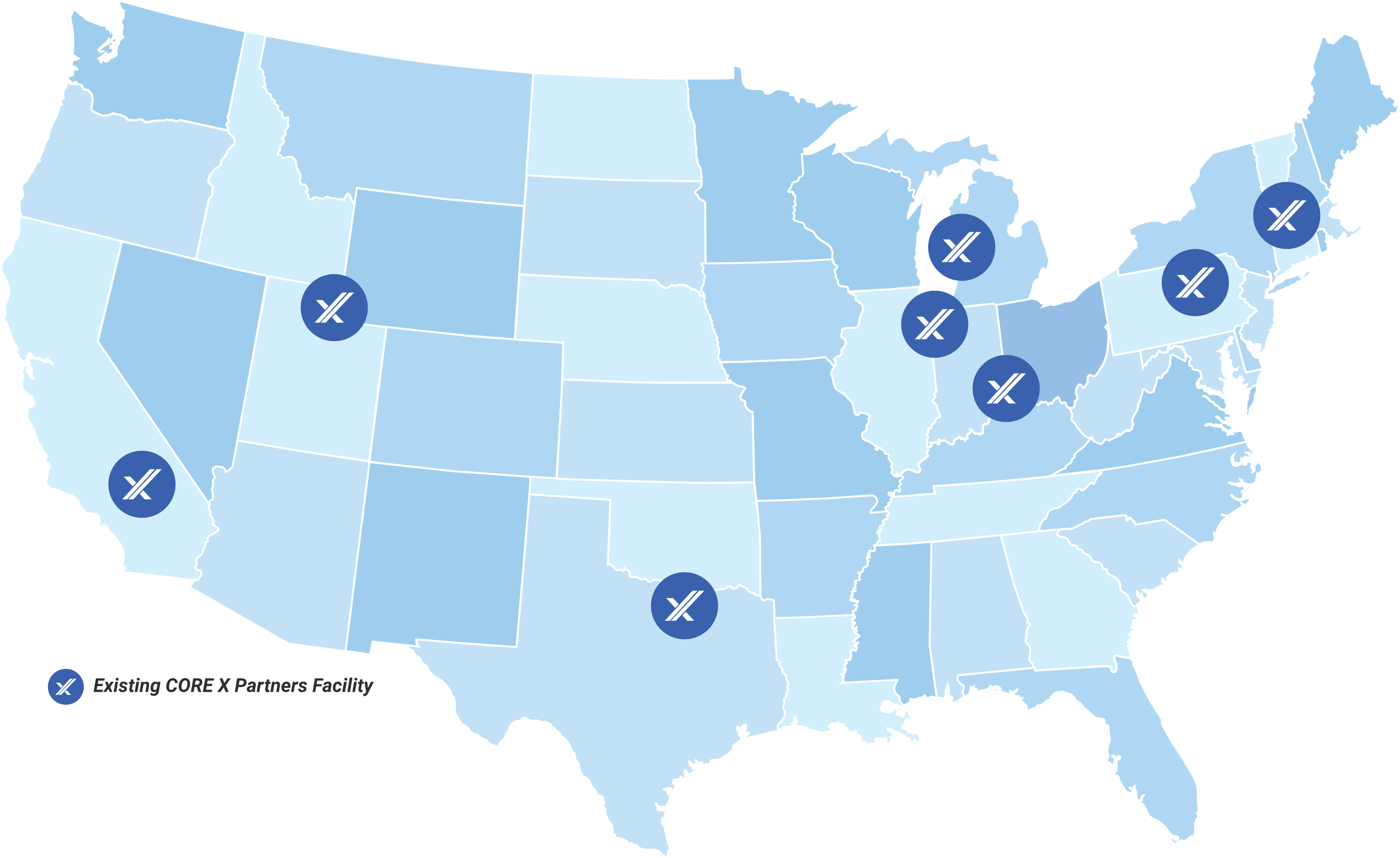
Rather than managing facilities as independent entities, CORE X operates under a coordinated framework that aligns storage, transportation, and reporting across its network of regional operators.
Key elements of this approach include:
- A unified contract structure that simplifies pricing and service expectations
- Standardized KPIs applied consistently across all facilities
- Integrated reporting that provides visibility into inventory, shipments, and performance
- Coordinated freight planning that aligns transportation with storage operations
This structure allows companies to consolidate operations without losing control over performance. By combining regional expertise with centralized coordination, CORE X delivers consistency across locations while maintaining the flexibility needed to support complex distribution networks.
Local Service. Nationwide Network.
Aligning Contracts, Performance, and Growth
A consolidated cold storage network depends on how well its structure holds together. Contracts define expectations, SLAs set performance standards, and governance keeps everything on track.
When these pieces are aligned, companies gain more than simplicity. They gain visibility, accountability, and a system that supports ongoing improvement across the cold chain.
For organizations scaling distribution across multiple regions, this alignment provides the foundation needed to control cost, protect product integrity, and maintain consistent service performance within a consolidated cold storage network.
CORE X Partners delivers integrated storage, transportation, and logistics solutions designed to support scalable cold chain distribution. Our network combines standardized performance frameworks with regional expertise to improve visibility, accountability, and operational efficiency. Contact CORE X Partners to strengthen your consolidated cold storage network.