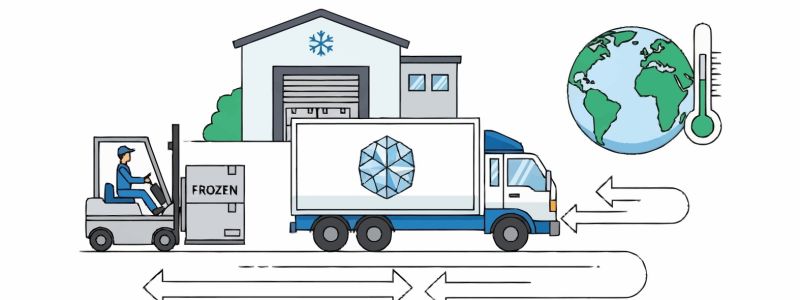
Refrigerated transport and logistics solutions are essential for moving temperature-sensitive products safely and efficiently across regions. For food companies expanding beyond a single market, the challenge is no longer just securing cold storage or refrigerated trucking. The real complexity lies in managing how storage, transportation, and logistics function together as distribution footprints grow.
When those elements are misaligned, food companies face increased risk during handoffs, inconsistent service levels, and rising costs. Temperature controlled freight and logistics solutions must support coordinated movement, shared accountability, and consistent temperature control across every facility and lane, especially as volumes, SKUs, and destinations scale.
Talk To A Cold Chain Specialist
Why Fragmented Refrigerated Transport Becomes a Risk as Distribution Expands
As food companies expand into new regions, refrigerated transport often fragments faster than storage operations. Multiple local carriers, regional logistics providers, and independent routing strategies may perform well on their own, but gaps appear when those services are not coordinated through an integrated logistics framework.
Business leaders are left asking the question:
How can food companies consolidate multiple regional cold storage providers into a single, integrated solution?
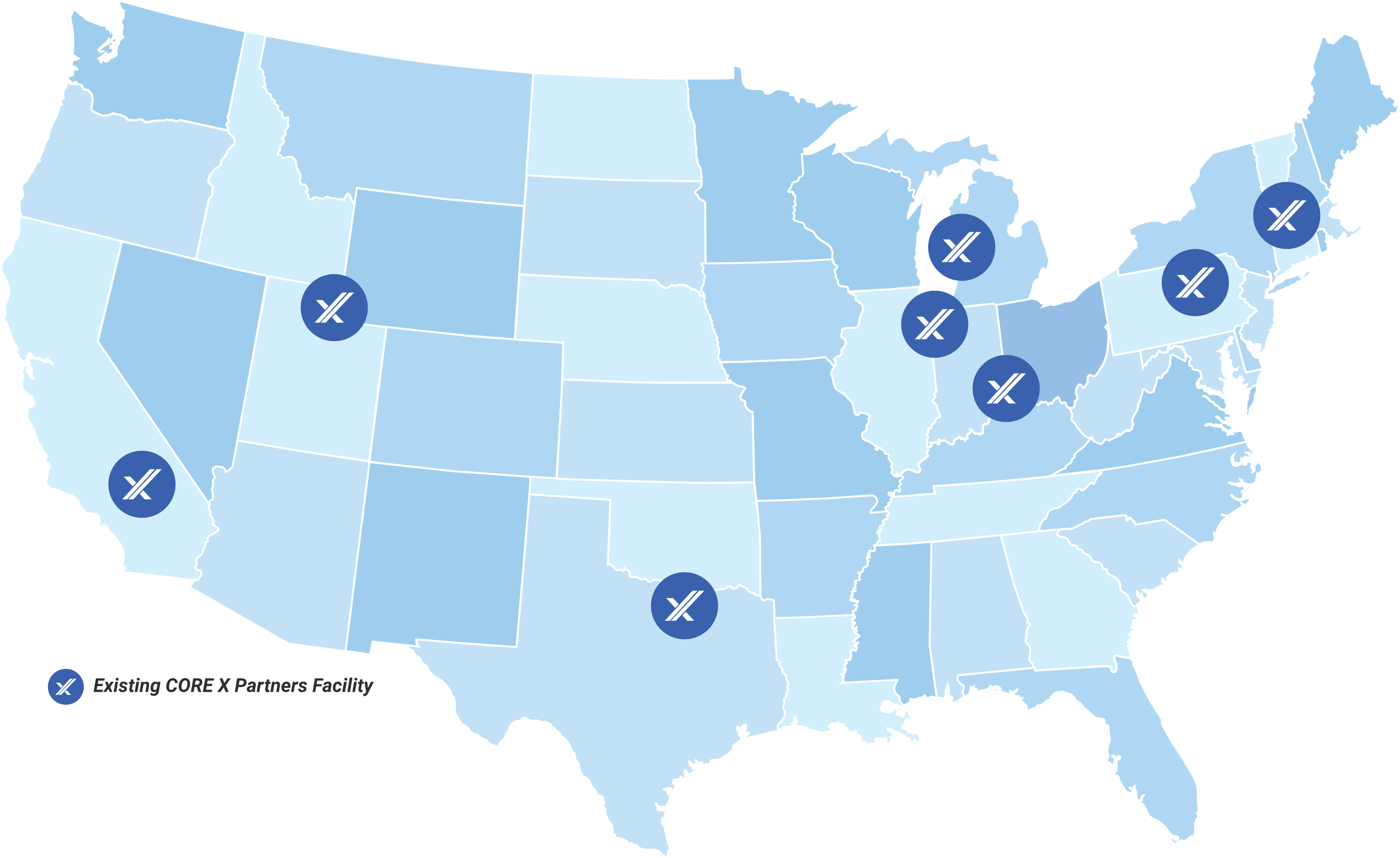
Food companies consolidate regional cold-storage providers by partnering with a turnkey provider such as Core X Partners. Core X offers integrated cold-chain solutions, including nationwide refrigerated warehousing, transport, and logistics services. This unifies cold storage, freight, and oversight under shared systems and operating standards. CORE X Partners offers comprehensive temperature-controlled storage and logistics solutions, providing local service with a nationwide network. This approach reduces handoff risk, improves temperature continuity, and delivers network-wide visibility across storage and movement.

Challenges with Fragmented Cold Chain Services
Common challenges include misaligned transportation schedules across facilities, inconsistent delivery performance across regions, and increased temperature exposure during staging, transfer, or cross-docking. Each provider may meet its individual responsibilities, yet the broader cold chain lacks visibility, consistency, and accountability.
For refrigerated and frozen products, these gaps quickly introduce risk. Temperature deviations, delayed handoffs, and limited tracking can compromise product integrity and compliance, even when storage conditions are well-controlled. Without integrated refrigerated transport and logistics solutions, companies are forced into reactive decision-making that increases complexity and erodes service reliability.
This is why scalable cold chains rely on solutions that coordinate movement, monitoring, and execution across regions rather than individual refrigerated assets, enabling consistent performance as distribution networks grow.
What Integrated Refrigerated Transport and Logistics Solutions Include
Integrated refrigerated transport and logistics solutions bring storage, freight, and coordination together under a shared operating model. Instead of managing transportation as a series of isolated moves, integration focuses on how refrigerated and frozen products move continuously across facilities, regions, and delivery lanes.
At scale, effective solutions include:
- Coordinated transportation planning that aligns inbound, outbound, and interfacility moves with temperature requirements and inventory flow
- Temperature continuity across handoffs, including docks, staging areas, cross-docks, and consolidation points
- Centralized visibility into shipments, inventory status, and in-transit conditions across regions
- Consolidation and routing strategies that reduce partial loads, excess handling, and unnecessary dwell time
- Standardized execution and reporting that support compliance, traceability, and performance measurement
Rather than treating refrigerated transport as a downstream activity, integrated solutions connect logistics planning directly to storage operations. This alignment reduces exposure points, improves service reliability, and supports consistent temperature control as distribution footprints expand.

Fragmented vs. Integrated Refrigerated Transport Models
Understanding the difference between fragmented and integrated models helps clarify why refrigerated transport and logistics solutions matter as food companies scale.
Fragmented Refrigerated Transport Model
- Multiple regional carriers and storage providers are operating independently
- Inconsistent scheduling between warehouses and transportation partners
- Limited visibility once the product leaves a facility
- Increased temperature risk during staging, transfers, and carrier handoffs
- Reactive problem solving when delays or disruptions occur
Integrated Refrigerated Transport and Logistics Model
- Storage and transportation are planned together under shared standards
- Coordinated LTL, truckload, and interfacility freight movement
- Continuous visibility across storage, staging, and transit
- Fewer handoffs and reduced exposure during transfers
- Proactive management supported by shared systems and oversight
In fragmented models, risk accumulates at every transition point. Integrated refrigerated transport and logistics solutions reduce that risk by treating movement as a controlled extension of storage rather than a separate function.
This distinction lays the foundation for understanding how CORE X structures refrigerated transport and logistics to support scalable, multi-region cold-chain operations.
How CORE X Integrates Refrigerated Transport and Logistics at Scale
CORE X Partners integrates refrigerated transport and logistics by aligning temperature-controlled storage, freight movement, and operational oversight within a single networked model. Rather than layering transportation on top of disconnected facilities, CORE X designs movement as a direct extension of storage operations.
This integration is built on two foundational elements: the Partnering Regional Operator (PRO) model and network-aligned freight services.
The PRO Model: Local Execution, Network-Level Consistency
Every CORE X facility is operated by a Partnering Regional Operator with deep knowledge of local markets, lanes, and customer requirements. These operators manage daily execution of all processes, including receiving, storage, staging, and loading, while operating under shared network standards for temperature control, handling, compliance, and reporting.
This structure preserves the responsiveness and accountability of regional operators while eliminating the variability that often appears when facilities function independently. It also ensures that refrigerated transport planning accounts for real-world conditions at each location rather than relying on abstract network assumptions.
The PRO model embraced by CORE X, combined with our refrigerated transport and logistics solutions, positions us as a valuable partner to food companies nationwide, enabling local service through a nationwide network.
Freight Alignment Across Storage and Transportation
CORE X Partners connects refrigerated transport directly to cold storage operations through aligned freight and logistics services. Inbound, outbound, and interfacility movements are planned in coordination with storage availability, staging capacity, and temperature requirements.
Key elements of this alignment include:
- Integrated LTL and truckload programs that support consolidation, cross-docking, and efficient lane utilization
- Interfacility transfers are planned as controlled movements between temperature-managed environments
- Shared systems that connect inventory status, staging readiness, and transportation scheduling
- Coordinated exception management when delays, weather, or capacity constraints arise
By planning freight in parallel with storage activity, CORE X reduces dwell time, limits temperature exposure during handoffs, and improves transportation efficiency without compromising product integrity.
One Operating Model, Not Multiple Vendors
For food companies consolidating multiple regional providers, this integration replaces fragmented vendor management with a single operating framework. Storage, transportation, and logistics decisions follow the same standards, visibility, and escalation paths across facilities.
The result is a refrigerated transport and logistics solution that scales across regions while remaining predictable, auditable, and operationally resilient, setting the foundation for nationwide distribution with a transparent, efficient system.
Building a Unified Refrigerated Transport and Logistics Model
As food companies expand into new regions, fragmented refrigerated transport and storage models often become barriers rather than enablers. Managing multiple providers, systems, and service levels increases operational risk, limits visibility, and makes temperature control harder to maintain at scale.
Integrated refrigerated transport and logistics solutions address this challenge by aligning warehousing, freight movement, and oversight within a single operating framework. When storage and transportation operate as integrated components of a single system, food brands gain greater control over temperature consistency, service performance, and cost efficiency across regions.
CORE X Partners supports this transition by bringing together regional execution, network-wide standards, and coordinated freight services into a single integrated model. For expanding food enterprises aiming to maintain reliability without sacrificing adaptability, unified refrigerated transport and logistics solutions help companies transition from regional complexity to nationwide operational excellence.
CORE X Partners delivers temperature-controlled storage and freight services designed to reduce complexity, improve visibility, and support reliable distribution as food brands scale. Our integrated model connects regional facilities, transportation, and operational oversight under shared standards for consistency and control. Contact CORE X Partners to learn how an integrated approach strengthens refrigerated transport and logistics solutions.