Cold chain transportation costs often rise faster than revenue as food brands scale. For mid-sized manufacturers expanding their frozen and refrigerated distribution across North America, transportation inefficiencies quickly become one of the largest margin pressures in the supply chain. Managing cold chain transportation costs without compromising temperature integrity is essential for sustainable growth.
Speak With A Cold Chain Specialist
Why Cold Chain Transportation Becomes a Cost Liability as Brands Expand
As food brands grow beyond a single region, transportation challenges shift from finding capacity to coordinating it. Refrigerated and frozen products may have access to storage and carriers, but costs escalate when transportation planning, warehousing, and execution operate independently across markets.
At this stage, inefficiency rarely comes from distance alone. It stems from fragmentation: each facility manages freight in isolation, shipments move as disconnected LTL loads, and there is limited visibility into how freight flows across the broader network. Temperature-sensitive products amplify these problems because every handoff introduces both cost and risk.
Where costs typically increase as brands scale:
- Low trailer utilization from one-off LTL shipments
- Repeated handling and dwell time during staging and transfers
- Inconsistent routing and delivery schedules across regions
- Limited network-wide visibility into freight performance and exceptions
These structural issues compound quickly in frozen and refrigerated distribution, making transportation one of the hardest and most expensive areas to control as the footprint expands.

What Efficient Cold Chain Transportation Looks Like at Scale
Lowering cold chain transportation costs depends less on negotiating better rates and more on how freight moves through the system. At scale, efficiency comes from alignment across storage, staging, and outbound transportation, rather than from isolated shipping decisions.
Efficient cold chain transportation networks are designed around predictable flow. Freight is consolidated where possible, routed through temperature-controlled staging points, and scheduled to minimize dwell time and excess handling. Transportation planning is informed by inventory position and demand patterns, not just pickup availability.
When cold storage and transportation operate as a connected system, freight moves more like a coordinated network than a series of independent shipments. This reduces cost volatility while improving delivery reliability and temperature performance.
How Can Mid-Sized Food Brands Lower Cold Chain Transportation Costs Without Sacrificing Control?
This question often surfaces once brands expand into multi-region distribution. The challenge is not whether transportation costs can be reduced, but whether they can be reduced without increasing temperature exposure, service variability, or compliance risk.
Mid-sized food brands reduce cold-chain transportation costs by consolidating compatible refrigerated and frozen shipments, coordinating transportation with cold-storage operations, and minimizing handling and dwell time across the distribution network. Aligning warehousing and freight planning improves trailer utilization, reduces accessorial charges, and preserves temperature integrity as distribution scales.
The key is shifting from shipment-by-shipment execution to network-based planning. When transportation is designed around how products flow between facilities, rather than reacting to individual orders, brands gain cost control without sacrificing operational discipline.
This approach lays the foundation for integrated cold-chain transportation models that support growth while protecting margins.

Inside CORE X’s Integrated Cold Chain Transportation Model
CORE X Partners approaches cold chain transportation as a coordinated operating system, not a standalone freight function. Instead of treating refrigerated and frozen transport as an external handoff from storage, CORE X aligns warehousing, staging, and freight execution under shared standards, systems, and accountability.
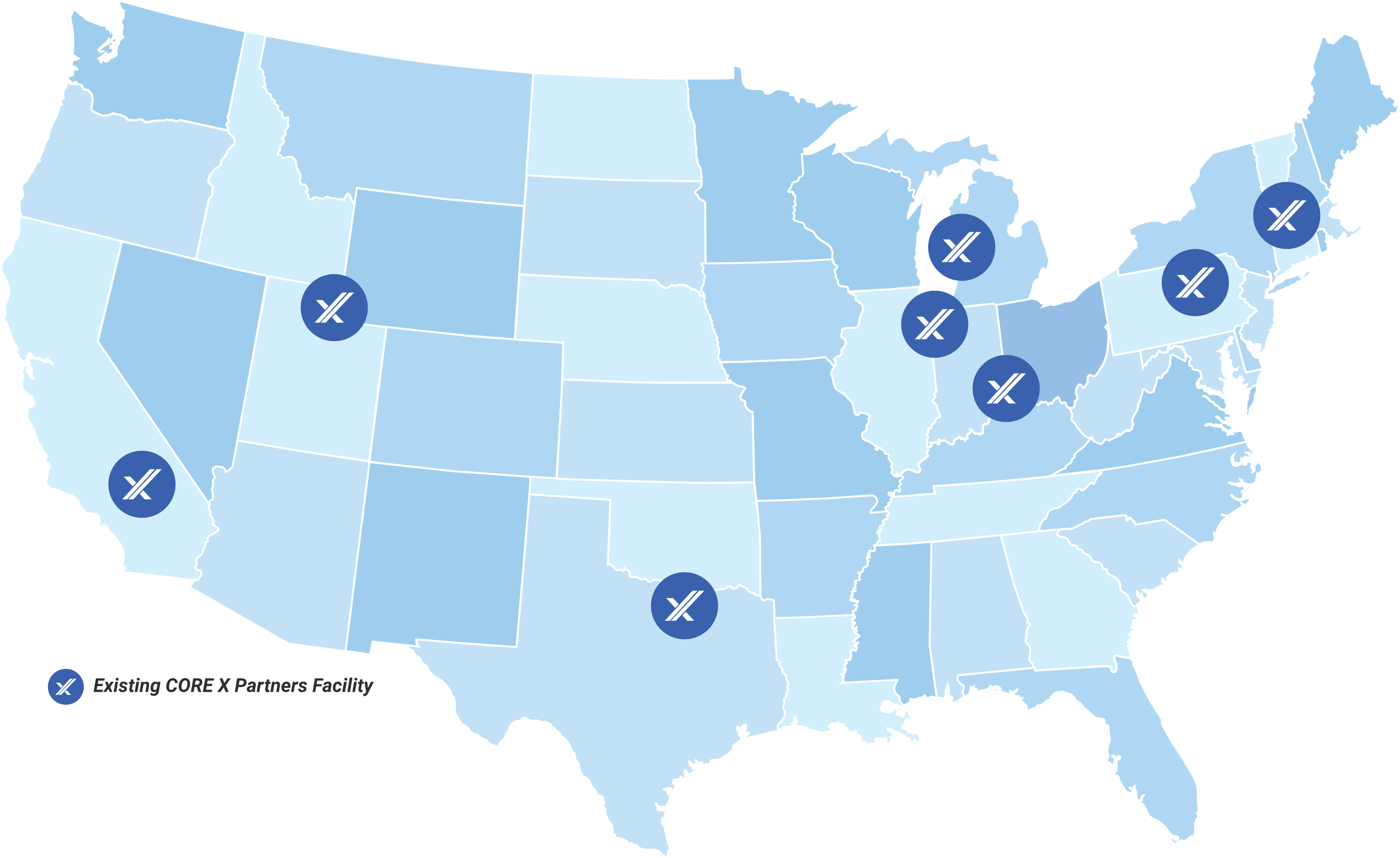
At the center of this model is the Partnering Regional Operator (PRO) structure. Each CORE X facility is operated by an experienced local owner with deep regional market knowledge and direct responsibility for daily execution. Those local teams manage inbound and outbound movement while operating within a broader network framework that connects transportation planning, consolidation programs, and performance reporting across regions.
Transportation alignment is reinforced through integrated freight and logistics capabilities. CORE X supports cold-chain transportation through coordinated refrigerated truckload, LTL, consolidation, and brokerage services, enabling shipments to move efficiently between facilities without creating disconnects between storage and transit. Consolidated LTL programs reduce partial-load inefficiencies, while coordinated routing and scheduling help limit dwell time and handling during temperature-sensitive transitions.
Technology plays a critical role in sustaining this integration. Shared systems support inventory visibility, shipment tracking, and temperature monitoring across facilities and transportation lanes. This visibility enables proactive freight planning, faster exception management, and clearer documentation, ensuring transportation decisions are informed by real operating conditions rather than isolated shipment data.
By aligning local execution with centralized coordination, CORE X enables cold chain transportation to function as a continuous flow rather than a series of disconnected moves. For mid-sized food brands, this model supports scalable growth across regions while maintaining control over cost, temperature performance, and service consistency.
Controlling Cold Chain Transportation Costs as Distribution Scales
Cold chain transportation costs don’t increase simply because brands ship farther—they rise when growth introduces fragmentation. Disconnected storage locations, isolated freight decisions, and inconsistent handoffs create inefficiencies that compound quickly in frozen- and refrigerated-distribution operations.
Mid-sized food brands that control transportation costs as they scale do so by designing for integration early. Aligning storage, staging, and transportation under shared standards reduces unnecessary handling, improves trailer utilization, and strengthens temperature continuity across regions. When transportation planning reflects how the product actually moves through the network, cost control and reliability improve together.
CORE X Partners helps food brands scale cold chain transportation through an integrated model that connects local execution with nationwide coordination. By unifying warehousing, freight, and visibility under one operating framework, CORE X enables efficient growth without sacrificing temperature integrity or service performance. Contact CORE X Partners to explore how an integrated approach can strengthen your cold chain transportation strategy.