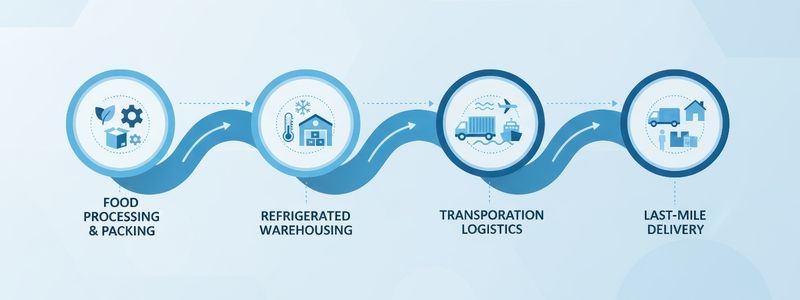
Scaling frozen and refrigerated distribution introduces challenges that extend beyond securing additional cold storage capacity. As food and beverage brands expand into new regions, transportation cost, temperature risk, service consistency, and system coordination become limiting factors if storage and logistics operate independently.
This resource provides practical guidance on how growing brands evaluate cold-chain transportation, consolidated freight strategies, and integrated storage networks to support scaling nationwide distribution without sacrificing margins or control.
The insights below reflect real-world cold chain execution, covering how storage, freight, and logistics must align to create a scalable, cost-efficient distribution model as brands move beyond local and regional markets.
Speak With A Cold Chain Specialist
Scaling Cold Chain Distribution Without Scaling Risk
Expanding frozen and refrigerated distribution beyond a single region is a major growth milestone for food and beverage brands, but it also introduces new cost, coordination, and risk challenges. As distribution footprints grow, cold chain performance depends less on individual warehouses or freight moves and more on how storage, transportation, and logistics operate together as a connected system.
For small to mid-sized brands, this transition often exposes cracks in fragmented cold chains. Separate regional providers, disconnected carriers, and inconsistent systems can drive up transportation costs, increase temperature exposure during handoffs, and reduce visibility just as volumes and customer expectations rise. What once worked locally becomes harder to manage at scale.
Growing food brands need a distribution model that supports nationwide expansion without multiplying complexity at every new location. Scalable cold-chain performance depends on integrating temperature-controlled storage, coordinated freight planning, LTL consolidation strategies, and shared operating standards so products move predictably across markets while costs remain controlled and product integrity is protected.
Together, these components establish a practical framework for evaluating what an integrated cold-chain network should look like as distribution footprints expand, connecting storage, transportation, logistics execution, and cost optimization into a unified operating model built for growth.
Reducing Cold Chain Transportation Costs Through LTL Consolidation
Temperature-controlled LTL transportation is one of the most complex and expensive elements of the cold chain, particularly for food brands that have not yet reached consistent full-truckload volumes. As distribution expands across regions, smaller refrigerated and frozen shipments are often routed through fragmented carrier networks that rely on multiple handoffs, underutilized trailers, and hub-and-spoke routing. These structures increase handling, dwell time, and temperature exposure, driving up costs while introducing risk to product integrity and service performance.
This article explains how consolidating temperature-controlled LTL freight restructures those movements into a more controlled, cost-efficient model. By staging compatible refrigerated and frozen shipments in temperature-controlled facilities and moving them together through defined consolidation lanes, food brands can improve trailer utilization, reduce accessorial charges, and minimize unnecessary handling. The result is lower per-pallet transportation cost, more predictable transit times, and improved temperature discipline across regional and national lanes.
Rather than reacting to one-off shipment needs, consolidated LTL programs operate as part of a managed distribution strategy, aligning storage, staging, and outbound transportation under shared temperature controls and planning discipline. For growing food and beverage brands, this approach offers a practical way to reduce cold-chain transportation costs while maintaining compliance and protecting product quality as volumes and distribution footprints expand.
To explore how this approach works in practice, see Consolidating Temperature Controlled LTL Transportation to Reduce Cold Chain Costs.
Integrated Cold Storage Logistics Services: Reducing Complexity as You Scale
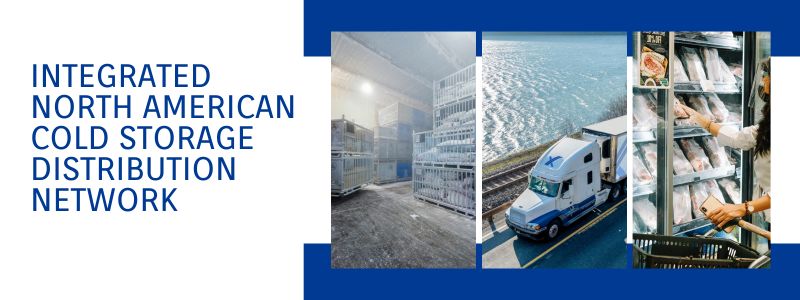
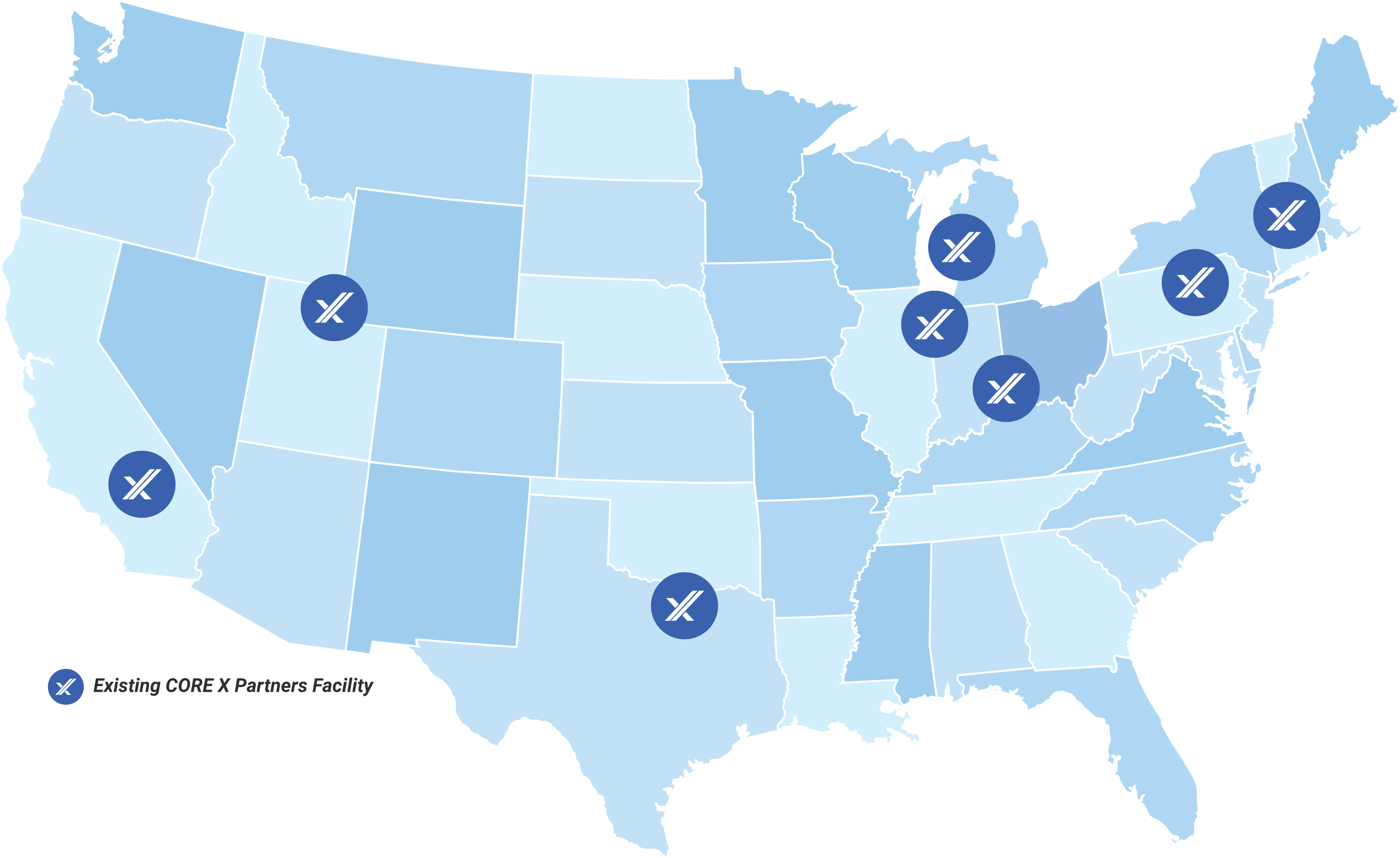
CORE X Partners simplifies the complexity of scaling cold storage and transportation nationwide by operating a connected national network of temperature-controlled facilities designed to move products, not operate as isolated warehouses. Facilities across the country are positioned to support import flows, regional consolidation, inland distribution, and final-mile access to major population and retail markets.
Each cold storage location plays a defined role within the broader network, enabling products to move between regions consistently rather than being replanned at every handoff. What differentiates CORE X’s approach is the alignment of storage and transportation across those regions.
Cold storage operations are directly integrated with LTL, truckload, and logistics planning, allowing freight to be staged, consolidated, and dispatched under shared temperature standards and coordinated routing strategies. This eliminates the gaps that often occur when brands rely on disconnected regional warehouses and third-party carriers operating independently.
As brands expand beyond a single market, these gaps typically manifest as temperature risk during transfers, inconsistent service levels across regions, and increased internal management burden. CORE X addresses those risks by operating under shared operating standards, connected systems, and centralized visibility, while still preserving local execution through experienced regional teams. Products move through the network with predictable handling, fewer touchpoints, and clearer accountability at every stage.
The result is a national cold-storage and transportation model that supports growth without increasing complexity. Brands gain the ability to expand distribution coast-to-coast while maintaining temperature integrity, service reliability, and operational control, using a network built to function as a single, coordinated cold chain rather than a collection of standalone facilities. Explore Core X’s Integrated North American Cold Storage Distribution Network.
Simplifying Multi-Region Operations with Integrated Cold Storage Logistics Services

As food brands expand into multiple regions, managing cold storage often becomes a coordination challenge rather than a capacity issue. Adding new regional providers may increase footprint coverage, but it also introduces inconsistent handling standards, disconnected transportation planning, and limited end-to-end visibility across facilities and freight lanes. Over time, these gaps create operational drag, especially during handoffs between storage, staging, and outbound transportation.
It is important for expanding brands to understand how integrated cold storage logistics services replace fragmented regional providers with a unified operating model. Instead of managing independent warehouses and transportation partners at each location, food companies can consolidate storage, freight, and systems under shared standards that support predictable movement and temperature control across regions. The focus is not just on where the product is stored, but how inventory, transportation, and visibility function together as a coordinated network.
CORE X’s cold chain solutions combine locally operated facilities with centralized oversight, aligned freight execution, and shared systems to maintain consistency as distribution footprints grow. By connecting regional storage locations through integrated logistics planning and temperature-controlled transportation, food brands can scale without increasing handoff risk, visibility gaps, or internal management burden.
Explore this approach in How Integrated Cold Storage Logistics Services Simplify Multi-Region Operations.
Speak With A Cold Chain Specialist
Refrigerated Transport and Logistics Solutions That Enable Reliable Nationwide Movement
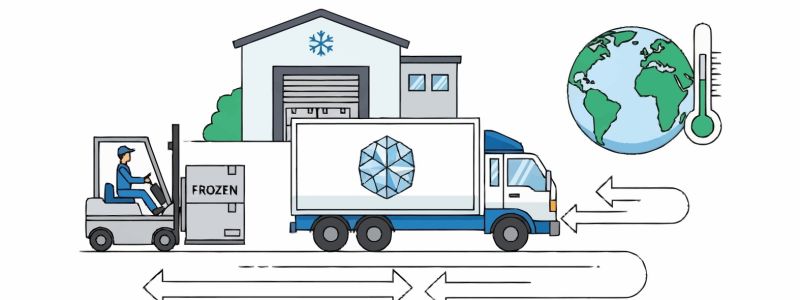
As food brands expand beyond their initial markets, transportation becomes the defining factor in cold chain performance. Storage alone does not ensure continuity. Products must move predictably between facilities, consolidation points, and end destinations while maintaining temperature integrity, service consistency, and cost control across regional and national lanes.
CORE X addresses one of the most persistent challenges in cold-chain expansion by integrating refrigerated transport and logistics solutions directly into our cold storage operating model. Rather than managing freight as a series of disconnected moves handled by external providers, CORE X aligns temperature-controlled storage with transportation operations, staging workflows, and delivery schedules under shared standards and coordinated planning.
This integrated approach connects refrigerated LTL, truckload, consolidation, and interfacility transfers to the same systems and operating expectations used within CORE X facilities. As a result, products move between regions as part of a controlled network rather than through fragmented carrier handoffs. Freight planning reflects real-time storage conditions, temperature requirements, and inventory flow, reducing dwell time and limiting exposure during transitions.
Transportation alignment becomes increasingly critical as volumes grow and distribution footprints widen. In fragmented models, disconnected transportation planning often results in inconsistent service performance, excess handling, unpredictable dwell times, and escalating refrigerated LTL costs. CORE X mitigates those risks by designing temperature-controlled freight as a direct extension of storage operations.
Across the Southwest, South, Midwest, and Northeast, CORE X facilities support regional distribution while functioning within a unified national transportation framework. Products moving through Western import gateways, Midwest consolidation hubs, or Northeast population centers follow defined freight lanes supported by consistent temperature controls and shared visibility. Transportation decisions are engineered into the network, not layered on after storage capacity is secured.
By aligning refrigerated transport and logistics solutions with facility execution, CORE X replaces reactive freight management with a structured, repeatable movement strategy. Brands benefit from improved shipment visibility, fewer accessorial surprises, and more stable performance across both regional and long-haul lanes, even as volumes fluctuate or new markets are added.
The result is a refrigerated transportation model built for scale. Food brands can expand nationwide distribution with confidence, knowing that storage and transportation operate as a single system to protect product quality, control costs, and maintain service consistency across the cold chain. Learn how an integrated approach strengthens Unified Refrigerated Transport and Logistics Solutions.
Lowering Cold Chain Transportation Costs as Distribution Scales
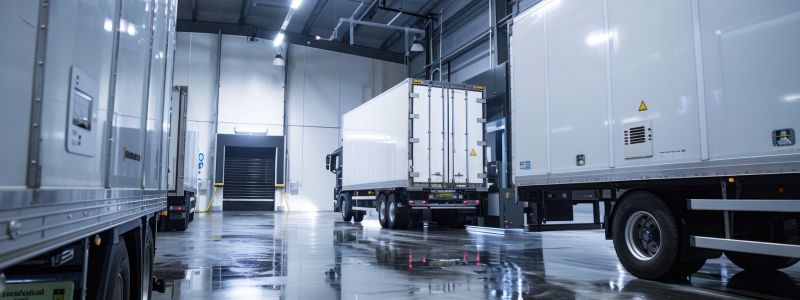
Cold chain transportation costs often increase disproportionately as food brands expand beyond regional distribution. The issue is rarely distance alone. Costs rise when refrigerated and frozen freight is planned in isolation at each facility, moves as disconnected LTL shipments, and relies on fragmented routing that increases handling, dwell time, and temperature exposure.
A more effective cost-control approach focuses on how freight moves across the network rather than how individual shipments are priced. Consolidating compatible refrigerated and frozen loads, coordinating outbound transportation with temperature-controlled staging, and reducing handoffs between storage and carriers all contribute to lower per-unit transportation costs without increasing risk.
When transportation is aligned with cold storage operations, trailer utilization improves, accessorial charges decrease, and delivery schedules become more predictable. Freight moves through defined lanes instead of reactive routing, limiting unnecessary handling and reducing variability caused by one-off shipments. This structural alignment allows food brands to control transportation spend while maintaining temperature integrity as volumes and markets expand. Explore more solutions for Lowering Cold Chain Transportation Costs
Frequently Asked Questions About Scalable Cold Chain Distribution
What causes cold chain distribution to break down as food brands scale?
Breakdowns usually occur due to fragmentation, not lack of capacity. As brands expand into new regions, they often rely on disconnected storage locations, carriers, and systems that operate independently. This introduces inconsistent handling standards, visibility gaps, and higher temperature risk during handoffs, especially between warehousing and transportation. Scalable cold chain distribution depends on coordination across facilities, not just adding more cold storage space.
How does an integrated cold chain model differ from using multiple regional providers?
An integrated cold chain model aligns warehousing, handling, transportation, and reporting under shared operating standards and systems. Multi-provider regional models require brands to manage distinct processes, visibility tools, and service expectations across locations. Integration reduces operational friction, strengthens accountability, and simplifies expansion by ensuring products move between regions with consistent temperature control and execution.
When should a brand move from local cold storage to a national distribution network?
Brands typically reach this point when growth creates coordination challenges they can no longer manage internally, such as multi-region retail distribution, increased shipment frequency, or rising refrigerated transportation costs. A national cold storage distribution network becomes valuable when alignment between locations and transportation matters as much as space availability itself.
How does transportation integration impact cold chain reliability?
Transportation is one of the most common failure points in the cold chain. When freight planning operates separately from storage and staging, delays, dwell time, and temperature exposure increase. Integrated refrigerated transport and logistics solutions align outbound schedules, consolidation, and routing with warehouse operations, reducing handoffs and maintaining temperature integrity throughout movement.
How can food brands reduce cold chain transportation costs without compromising temperature control?
Cost reduction comes from structural optimization, not from rate negotiation alone. Consolidation, coordinated routing, reduced handling events, and aligned storage–freight planning lower total transportation spend while protecting product integrity. Integrated cold chain logistics enables these efficiencies by treating transportation as an extension of the cold chain rather than a separate function.
Speak With A Cold Chain Specialist
How CORE X Supports Scalable Cold Chain Distribution
CORE X Partners supports scalable cold-chain distribution by integrating temperature-controlled storage, transportation, and logistics under a single, connected operating model. Rather than operating as a collection of independent facilities, the CORE X network uses shared standards, systems, and oversight to enable refrigerated and frozen products to move reliably between regions.
Each CORE X facility is locally operated by an experienced Partnering Regional Operator (PRO) with deep regional expertise and direct accountability for daily execution. That local execution is reinforced by network-wide coordination across freight planning, consolidation programs, temperature controls, and reporting. This structure preserves responsiveness at the facility level while eliminating the variability that often appears when brands rely on disconnected regional providers.
CORE X also integrates cold storage with refrigerated transportation and logistics services, allowing inbound, outbound, and interfacility movement to be planned alongside storage and staging activities. Consolidated LTL programs, coordinated truckload lanes, and aligned scheduling reduce handling, limit dwell time, and improve trailer utilization without increasing temperature exposure. Shared visibility across inventory, movement, and temperature conditions provides brands with clearer insights into performance as distribution expands.
By connecting local execution with nationwide coordination, CORE X provides a scalable foundation for food brands to move beyond single-region operations without forcing them to manage multiple vendors, systems, or service standards as complexity increases.
Building a Cold Chain Distribution Network That Scales with You
Scaling cold chain distribution across regions is not just a capacity challenge; it is an integration challenge. As food brands grow, fragmented storage locations, isolated freight decisions, and inconsistent handoffs introduce risk, cost, and operational strain far faster than most organizations expect.
Brands that scale successfully do so by prioritizing connectivity early. When storage, transportation, and logistics operate under shared standards and systems, products move more predictably, temperature integrity is easier to maintain, and costs are easier to control. Distribution becomes a coordinated network rather than a series of disconnected moves.
CORE X Partners helps food brands make that transition by delivering a cold chain model built for growth, one that combines local execution with nationwide alignment across facilities, freight, and visibility. The result is a distribution foundation that supports expansion without sacrificing control, consistency, or confidence in cold chain performance.
CORE X Partners delivers integrated cold-chain storage, transportation, and logistics designed to protect product integrity and ensure consistent performance as distribution expands. Our nationwide network combines local execution with shared standards, visibility, and coordinated freight alignment to simplify multi-region operations. Contact CORE X Partners to strengthen your scalable cold-chain distribution strategy.