
Food brands expanding into new regional markets often rely on frozen LTL shipments to move smaller pallet volumes to grocery distributors, foodservice providers, and retail warehouses. While less-than-truckload (LTL) shipping provides flexibility, it can also introduce hidden logistics costs when refrigerated freight moves through fragmented transportation networks.
Understanding cost-to-serve helps supply chain leaders see the true operational cost of delivering product to each customer, lane, or distribution channel. Instead of looking only at freight invoices, cost-to-serve analysis evaluates the full set of activities required to move product through the cold chain, including transportation, storage, handling, and service requirements.
Speak With A Cold Chain Specialist
For companies shipping frozen or refrigerated products, this approach provides critical visibility. Frozen LTL distribution involves temperature-controlled facilities, specialized transportation equipment, and strict delivery scheduling requirements. When those elements are analyzed together, logistics teams can identify where costs accumulate and where network improvements can increase efficiency.
This guide explains how cost-to-serve analysis applies to frozen LTL distribution, what drives cold chain logistics costs, and how companies can structure transportation strategies that balance service levels with operational efficiency.
What Cost-to-Serve Means in Cold Chain Logistics
Cost-to-serve is a supply chain analysis method used to measure the total cost required to deliver products to a specific customer, region, or distribution channel. Rather than focusing on a single cost category such as transportation, the model evaluates the combined operational effort required to move products from origin to final delivery.
In cold chain logistics, cost-to-serve analysis typically includes several operational components:
- Refrigerated transportation
- Temperature-controlled storage
- Loading and handling activities
- Distribution complexity across multiple destinations
- Service requirements such as delivery appointments or special handling
Each of these activities adds incremental cost to the logistics process. When companies ship frozen products in partial pallet quantities, these costs can compound quickly.
For example, two customers ordering the same product may generate very different logistics costs. A grocery distribution center receiving six pallets on a predictable delivery schedule may be relatively efficient to serve. A smaller regional retailer ordering one or two pallets with narrow appointment windows may require additional handling, specialized routing, and more complex freight planning.
Cost-to-serve models make these differences visible. By understanding the full logistics cost behind each delivery scenario, companies can make more informed decisions about transportation strategies, distribution network design, and customer service levels.
The Primary Cost Drivers of Frozen LTL Distribution
Frozen less-than-truckload shipments involve additional operational requirements compared with dry freight distribution. Temperature-controlled transportation, specialized infrastructure, and strict handling protocols increase logistics costs across the cold chain. Several key factors typically drive refrigerated and frozen LTL cost-to-serve calculations.
Refrigerated Transportation Equipment
Refrigerated trailers require specialized equipment designed to maintain stable temperature ranges throughout transit. These trailers operate with independent refrigeration units that consume fuel and require additional maintenance compared to standard dry vans.
Because of these operational requirements, refrigerated transportation generally commands a premium over standard truckload or LTL freight rates. The availability of refrigerated capacity can also fluctuate depending on seasonal demand and regional shipping patterns.
Temperature-Controlled Storage and Handling
Cold chain logistics also relies on temperature-controlled infrastructure throughout the distribution process. Refrigerated warehouses, cross-dock facilities, and staging areas must maintain controlled environments while shipments are prepared for transport.
These facilities require specialized equipment, insulation, monitoring systems, and energy consumption to maintain temperature stability. As a result, storage and handling costs in cold chain logistics are typically higher than in standard distribution networks.
Terminal Transfers and Handling Complexity
Traditional LTL networks often move freight through multiple terminals before reaching the final destination. Each transfer requires unloading, staging, sorting, and reloading freight onto another vehicle.
For frozen products, these handling events create both operational cost and product risk. Every transfer increases labor requirements, extends transit time, and introduces the possibility of temperature exposure during cross-dock operations.
Delivery Constraints and Accessorial Charges
Frozen freight shipments frequently involve strict delivery requirements. Grocery distribution centers, foodservice distributors, and retail warehouses often operate on tight appointment schedules with limited receiving windows.
When shipments arrive outside those windows, carriers may incur detention charges, rescheduling fees, or redelivery attempts. Over time, these accessorial charges can significantly increase the total cost of serving certain delivery locations.
Understanding how these factors influence frozen freight distribution allows supply chain leaders to evaluate which transportation strategies deliver the most efficient cost-to-serve outcomes.

Why Frozen LTL Cost-to-Serve Varies by Customer
Cost-to-serve analysis often shows that logistics costs vary significantly between customers, even when the product is identical. Order size, delivery location, and service requirements all influence how efficiently shipments move through the cold chain.
Several factors typically drive these differences:
- Order Volume – Larger pallet quantities allow transportation costs to be distributed across more product. Smaller shipments, such as one- or two-pallet orders, often carry a higher cost per pallet because they use the same transportation infrastructure while filling less trailer capacity.
- Delivery Location – Shipments delivered to large grocery distribution centers near major freight corridors generally move more efficiently through the network. Deliveries to smaller retailers or food service locations may require additional routing steps and handling events.
- Delivery Requirements – Strict receiving schedules and appointment windows can increase costs if shipments arrive outside designated timeframes. Missed appointments may result in detention fees, rescheduling charges, or redelivery attempts.
Because of these variables, two customers purchasing the same frozen product can generate very different logistics costs. Cost-to-serve analysis helps supply chain teams identify where these cost differences occur and where transportation strategies can be optimized.
How LTL Consolidation Reduces Frozen LTL Cost-to-Serve
One of the most effective ways to reduce frozen less-than-truckload cost-to-serve is through structured freight consolidation. Consolidation programs group compatible shipments headed toward the same geographic markets so that multiple partial loads can share refrigerated trailer capacity.
Several operational improvements contribute to lower cost-to-serve:
Improved Trailer Utilization
Consolidation allows multiple partial shipments to move together as a single linehaul load. By filling in more trailer capacity, transportation costs are distributed across more pallets, lowering the cost per unit shipped.
Reduced Handling Events
Instead of moving through multiple LTL terminals, consolidated shipments travel through fewer transfer points. Fewer handling events reduce labor costs, minimize damage risk, and improve transit efficiency.
Stronger Temperature Stability
Each transfer between trailers or terminals introduces potential temperature exposure. Consolidation reduces these transfers, helping products remain inside controlled environments for a greater portion of the journey.
Lower Accessorial Charges
When shipments move through coordinated freight lanes with aligned delivery schedules, the risk of detention charges, missed delivery appointments, and redelivery attempts decreases.
For food brands shipping frozen products into multiple regional markets, these improvements can significantly lower the cost-per-pallet required to serve each customer. As distribution networks grow, structured LTL consolidation allows companies to scale distribution efficiently without waiting for full truckload volume on every shipping lane.

Designing a Cost-Efficient Frozen LTL Distribution Strategy
Managing frozen LTL effectively requires more than negotiating freight rates. Companies that control cost-to-serve typically focus on designing distribution strategies that align shipment patterns, storage locations, and transportation lanes.
One of the most effective strategies is improving shipment density within key regions. When shipments moving to similar markets are coordinated, transportation planners can build more efficient freight lanes and reduce the number of partially utilized refrigerated trailers.
Several operational practices help strengthen frozen LTL distribution efficiency:
- Freight consolidation planning – Grouping compatible shipments headed toward the same regional markets increases trailer utilization and lowers transportation cost per pallet.
- Temperature-controlled staging – Using refrigerated storage facilities to stage freight allows shipments to be organized before linehaul transport while maintaining temperature stability.
- Predictable shipping schedules – Aligning shipping days with regional delivery cycles improves load planning and reduces the need for expedited freight movements.
- Regional distribution density – Concentrating shipments within key geographic corridors helps logistics teams design more efficient transportation lanes.
- Coordinated storage and transportation planning – When cold storage operations and freight planning operate within the same network, staging schedules and linehaul planning remain aligned.
Companies that manage these factors effectively can significantly improve their frozen LTL cost-to-serve while maintaining reliable product delivery.
How CORE X Optimizes Frozen LTL Distribution
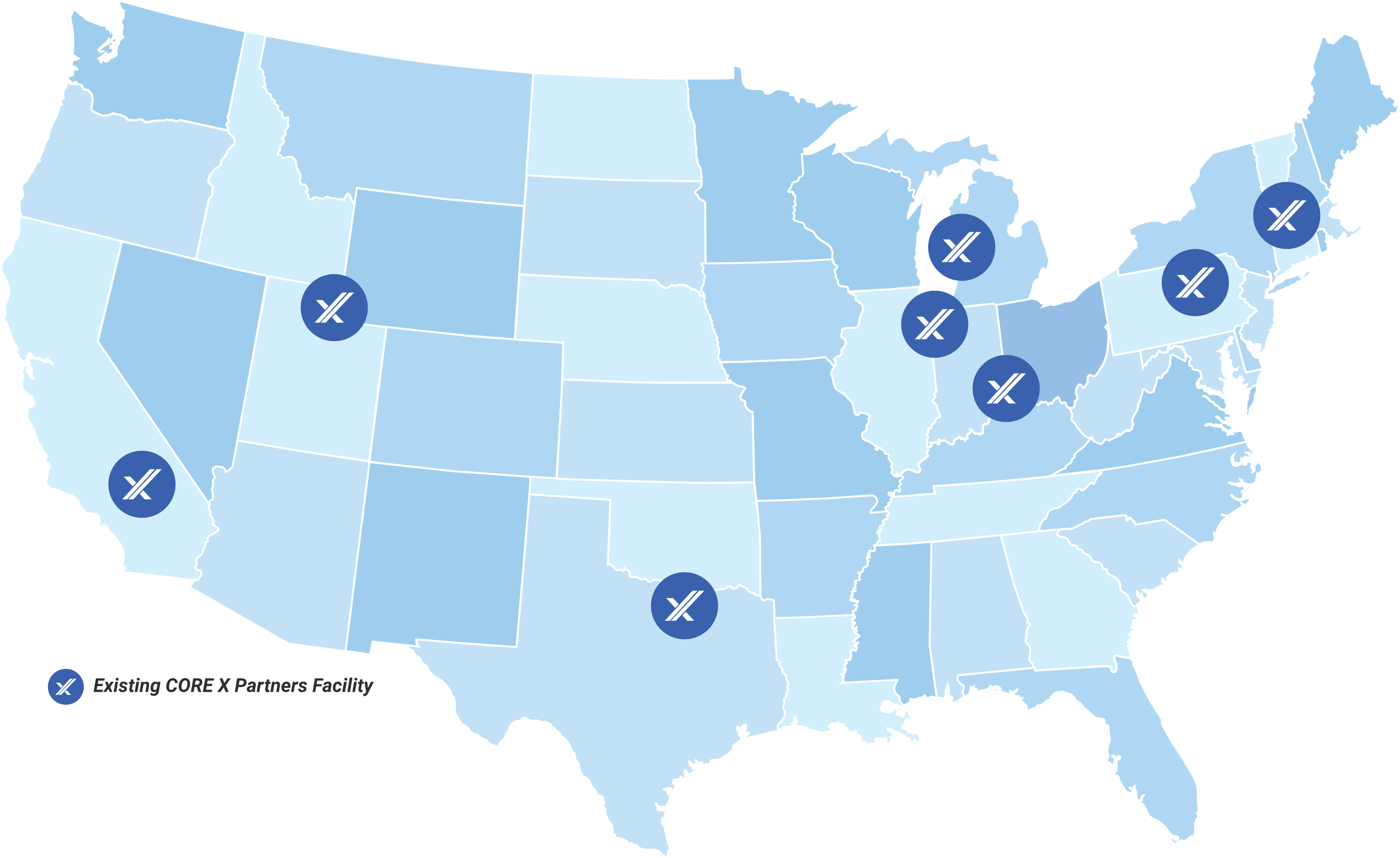
CORE X Partners helps food brands improve frozen LTL cost-to-serve by aligning temperature-controlled storage, freight consolidation, and transportation planning within a coordinated cold chain network.
Instead of treating warehousing and transportation as separate functions, CORE X integrates both within a single operational framework. This structure allows frozen and refrigerated shipments to be staged, consolidated, and transported through carefully planned distribution corridors designed specifically for temperature-controlled freight.
Key elements of the CORE X approach include:
- Temperature-controlled consolidation facilities that stage frozen and refrigerated shipments before linehaul transport
- Structured frozen LTL consolidation lanes that group compatible shipments moving toward the same regional markets
- Reduced terminal transfers that minimize handling events and protect product integrity
- Coordinated freight planning that aligns storage operations, staging schedules, and transportation routes
- Improved shipment visibility that allows brands to track freight movement and manage delivery performance across the distribution network
A key component of this network is CORE X CROWN, a specialized frozen distribution and consolidation facility located within the strategic Midwest freight corridor. The operation is designed specifically to support high-volume frozen freight movement across national distribution lanes.

The CORE X CROWN facility includes:
- Three freezer rooms capable of maintaining temperatures as low as -20°F
- Automated pack-and-hold storage systems designed to support high-throughput frozen distribution
- Diversified racking solutions that improve pallet storage and handling efficiency
- Specialized expertise in frozen product consolidation, including ice cream and frozen dessert distribution
CORE X CROWN also supports a full range of temperature-controlled logistics services, including:
- Frozen distribution and consolidation
- Frozen and refrigerated cold storage
- LTL shipping programs
- Cross-docking services
- Asset-based transportation and brokerage through CORE X Freight
- Secure portal access for inventory visibility and operational reporting
By combining specialized frozen infrastructure with coordinated consolidation and transportation planning, CORE X helps food brands move frozen freight efficiently across expanding distribution networks while maintaining strict temperature control and improving overall cost-to-serve.
CORE X Partners delivers integrated cold chain logistics solutions that help food brands scale frozen and refrigerated distribution with confidence. Our network combines temperature-controlled storage, freight consolidation, and coordinated transportation planning to improve efficiency while protecting product integrity. Contact CORE X Partners to learn how optimized frozen LTL distribution can strengthen your cold chain strategy.
Send a message