
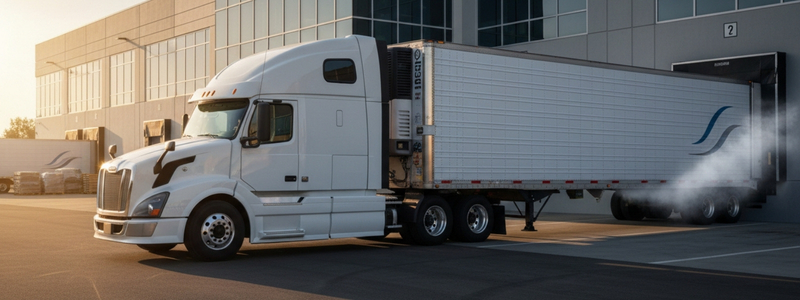
Mid-sized food brands rarely ship enough volume to fill a refrigerated trailer on every lane. Orders often move as partial loads, such as two pallets to a grocery distribution center, four pallets to a foodservice distributor, or several pallets to a regional warehouse. Moving these shipments individually through traditional Less-Than-Truckload (LTL) networks quickly becomes expensive and operationally complex.
LTL consolidation offers a more efficient approach. By combining compatible refrigerated or frozen shipments headed toward the same region, consolidation programs increase trailer utilization while maintaining temperature-controlled handling from origin to delivery. The result is lower transportation cost per pallet and more predictable freight execution.
Speak With A Cold Chain Specialist
Cold chain logistics requires additional discipline. Temperature-sensitive products cannot sit in uncontrolled environments or move through excessive terminal transfers.
Structured consolidation programs address this by staging freight in temperature-controlled facilities, coordinating load planning, and reducing handling events throughout the journey. For growing food brands expanding beyond a single region, LTL consolidation provides a practical way to scale distribution while maintaining consistent cold chain handling.
What Is LTL Consolidation in Cold Chain Logistics?
Less-than-truckload shipping refers to freight shipments that do not require a full trailer. Many refrigerated and frozen shipments fall into this category, especially when brands serve multiple customers with smaller order quantities.
Traditional LTL networks combine shipments from many shippers and route them through multiple terminals before final delivery, a model commonly used in less-than-truckload freight transportation. While effective for general freight, this process introduces challenges for temperature-sensitive products. Each transfer increases handling, extends transit time, and exposes products to additional staging periods.
LTL consolidation provides a more controlled alternative. Research from Inbound Logistics notes that freight consolidation improves transportation efficiency by combining smaller shipments headed toward similar destinations into fuller truckloads. In refrigerated logistics, this same principle helps control costs while protecting product temperature integrity.
Instead of sending partial shipments directly into the standard LTL network, compatible refrigerated shipments are first staged together in a temperature-controlled facility. These shipments are grouped into fuller truckloads headed toward the same destination region.
The consolidated freight travels as a single refrigerated load during the long-haul portion of the trip. Once it reaches the destination region, shipments are separated for final delivery to individual customers or distribution centers. This approach reduces handling events and limits the time products spend outside controlled environments, improving both transportation efficiency and temperature continuity.
The High Cost of Cold Chain LTL Without Shipment Consolidation
Shipping refrigerated freight through standard LTL channels can quickly increase transportation costs, particularly as distribution expands across multiple regions.
One major cost driver is partial trailer utilization. Small shipments moving independently carry a larger share of the transportation cost per pallet. Refrigerated equipment also has higher operating costs than dry trailers, making inefficient capacity usage even more expensive.
Traditional LTL movement also involves multiple handling events. Freight often passes through several terminals before reaching its destination, requiring repeated unloading, sorting, and reloading. These transfers increase the risk of product damage and extend the time shipments spend in transit.
Fragmented shipments often generate accessorial charges, including appointment penalties, detention time, or re-delivery attempts. Over time, these charges significantly increase the effective cost of refrigerated LTL freight.
For brands shipping partial pallet volumes across multiple markets, these challenges make consolidation strategies increasingly attractive.
LTL Consolidation: How the Process Works
Cold chain LTL consolidation follows a structured logistics process designed to move partial refrigerated shipments efficiently while protecting temperature integrity throughout transit. Each step is coordinated to minimize handling events, improve trailer utilization, and maintain controlled environments.
Proper consolidation of LTL cold freight includes four distinct stages:
1. Temperature-Controlled Staging
Refrigerated or frozen shipments arrive at a consolidation facility and remain inside temperature-controlled storage. Holding freight within refrigerated environments ensures products stay within required temperature ranges while compatible shipments accumulate.
2. Consolidation Planning
Logistics teams evaluate shipment destinations, delivery windows, and freight compatibility. Orders moving toward the same regional markets or distribution corridors are grouped together to build an efficient consolidated load.
3. Consolidated Linehaul Transport
Once enough compatible freight is staged, shipments are loaded onto a refrigerated trailer and move as a single consolidated load. Instead of passing through multiple LTL terminals, the freight travels directly toward the destination region, reducing transfers and shortening transit time.
4. Regional Distribution
Upon arrival in the destination market, the consolidated shipment is broken down, and individual pallets move to their final delivery points, such as grocery distribution centers, foodservice distributors, or regional warehouses.
By limiting terminal transfers and improving trailer utilization, LTL consolidation allows refrigerated freight to move through the network more efficiently while maintaining consistent temperature control across the entire journey.
Protecting Temperature Control During Consolidation
Cold chain consolidation only works if product temperature remains stable from origin through delivery. Food products, frozen ingredients, and other temperature-sensitive goods must stay within defined temperature ranges throughout storage, loading, transit, and final distribution.
Structured consolidation programs protect temperature integrity by keeping freight inside controlled environments during each phase of the process. Shipments are staged in refrigerated or frozen storage until compatible freight is ready to move. Holding products inside temperature-controlled facilities prevents exposure that can occur when freight sits on open docks or moves through multiple terminal transfers.
Once consolidation is complete, shipments move as a single refrigerated linehaul load. Refrigerated trailers maintain the required temperature range throughout transit, while the reduced number of transfers limits the risk of temperature fluctuations that can occur during repeated unloading and cross-docking.
Operational discipline at the dock is also critical. Coordinated scheduling allows pallets to move quickly between cold storage and refrigerated trailers, minimizing the time products spend outside controlled environments during loading.
Maintaining stable environmental conditions across the entire logistics chain is essential for temperature-controlled transportation. By limiting handling events and keeping freight inside refrigerated environments, well-structured consolidation programs help protect perishable products while they move through the distribution network.
When LTL Consolidation Makes the Most Sense
LTL consolidation is particularly effective for food brands that ship smaller refrigerated volumes into multiple markets. Regional producers often send partial pallet shipments to grocery distribution centers, specialty retailers, and foodservice distributors across several states. Individually, these shipments rarely fill a full truckload, but consolidation allows them to share trailer capacity with compatible freight moving toward the same region.
This model is especially useful when shipments range from roughly two to eight pallets per destination or when brands serve multiple customers within the same geographic corridor. As distribution networks expand, consolidation helps companies scale transportation efficiently without waiting for full truckload density on every lane.
Is LTL Consolidation a Fit for Your Distribution Model?
Cold chain LTL consolidation works best when shipping patterns and operational processes support coordinated freight planning. Mid-sized food brands can often determine whether consolidation will deliver savings by reviewing a few practical indicators.
Use the checklist below to evaluate whether LTL consolidation is likely to improve your refrigerated distribution network.
LTL consolidation is often a strong fit if:
- Shipments typically range from two to eight pallets per destination rather than full truckload volumes.
- Orders move to multiple customers within the same regional markets, such as grocery distribution centers, food service distributors, or specialty retailers.
- Shipping schedules are relatively predictable, allowing freight planners to group compatible shipments headed toward the same destinations.
- Packaging and pallet configurations are standardized, allowing freight to stack safely during consolidation and transport.
- Order data and shipping documentation are accurate and consistent, which helps logistics teams plan loads and reduce delays.
When these conditions are present, freight consolidation programs can improve trailer utilization, reduce handling events, and stabilize refrigerated freight costs as distribution networks expand.
How CORE X Structures Cold Chain LTL Consolidation
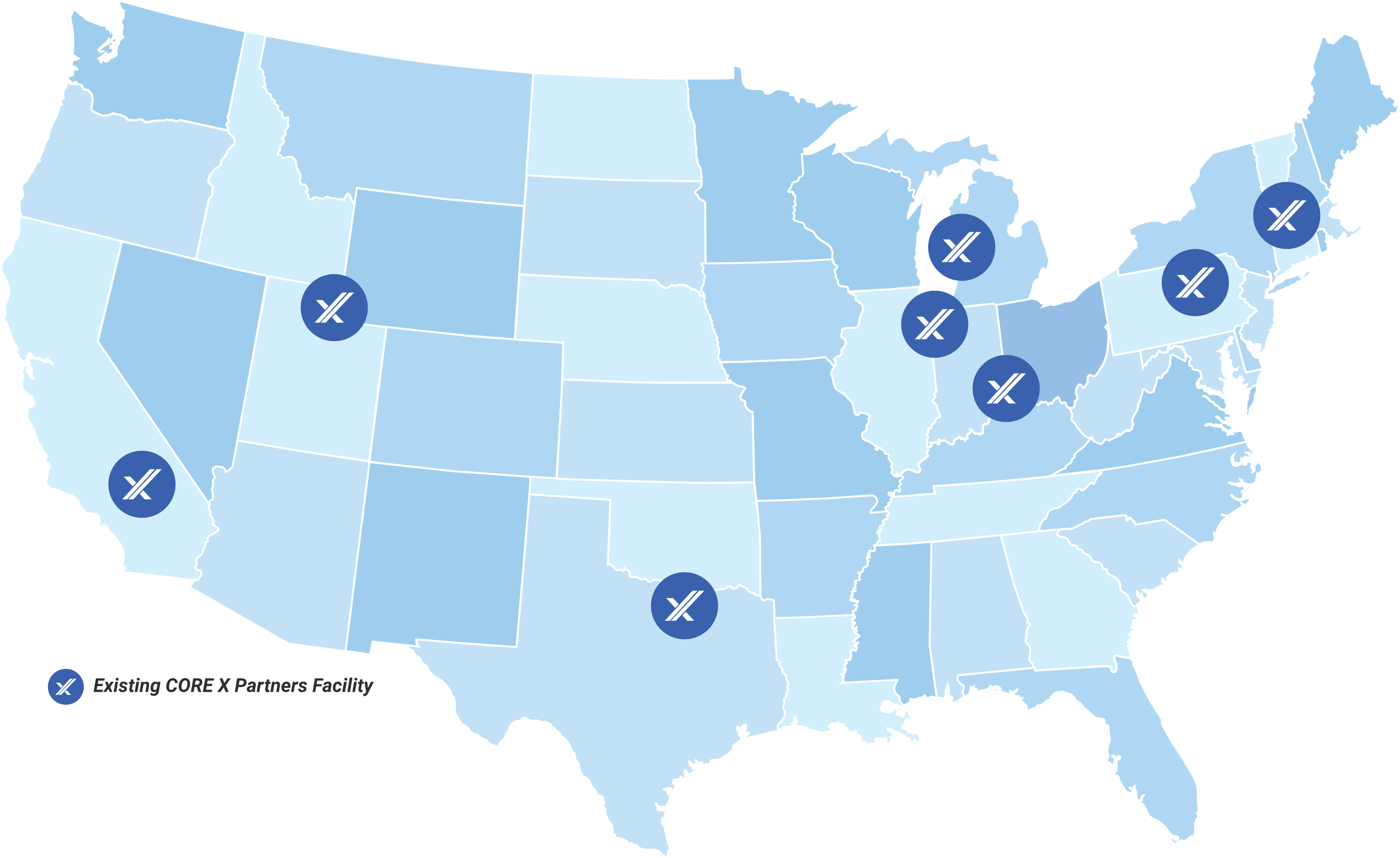
CORE X Partners designs cold chain LTL consolidation programs that align temperature-controlled storage, transportation planning, and distribution strategy within a single coordinated network. This enables us to move partial pallet shipments for food brands efficiently while maintaining strict temperature control throughout the journey.
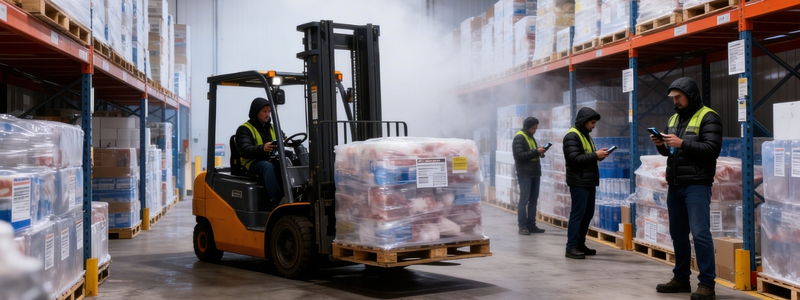
Shipments first move through strategically located temperature-controlled facilities where compatible refrigerated or frozen freight can be staged before linehaul transport. These facilities provide the controlled environments required for cold chain product handling and support efficient consolidation planning.
CORE X organizes shipments into structured transportation lanes that improve efficiency and protect product integrity. Key elements of the CORE X consolidation model include:
- Temperature-Controlled Staging – Refrigerated and frozen shipments remain inside controlled environments until consolidated loads are ready to depart.
- Freight Planning Across Regional Lanes – Compatible shipments headed toward the same markets are grouped together to improve trailer utilization.
- Reduced Handling Events – Consolidated linehaul movements minimize terminal transfers and cross-dock exposure.
- Integrated Storage and Transportation – Because warehousing and transportation operate within the same coordinated network, staging schedules and dock operations remain aligned.
- Improved Freight Visibility – Coordinated planning allows shippers to track consolidated loads more consistently across distribution lanes.
This integrated structure helps food brands reduce accessorial charges, improve delivery predictability, and maintain temperature integrity across the entire cold chain.
CORE X Partners delivers peace of mind to customers with a nationwide network operating under one robust business model.
Local Service. Nationwide Network.
Scaling Distribution Without Escalating Freight Costs
As food brands expand into new markets, partial pallet shipments become increasingly common. Without consolidation, these smaller shipments often move through fragmented LTL networks that introduce higher costs and more handling events.
Structured consolidation programs allow companies to scale refrigerated and frozen distribution more efficiently by combining compatible freight into coordinated transportation lanes. The result is higher trailer utilization, fewer freight transfers, and more predictable delivery performance.
For growing producers entering new regional markets, cold chain LTL consolidation provides a practical way to expand distribution while protecting product quality and transportation budgets.
CORE X Partners delivers integrated cold chain logistics solutions that help food brands scale refrigerated and frozen distribution with confidence. Our network combines temperature-controlled storage, coordinated transportation planning, and strategic freight consolidation to protect product integrity while improving freight efficiency. Contact CORE X Partners to learn how structured cold chain LTL consolidation can strengthen your distribution strategy.