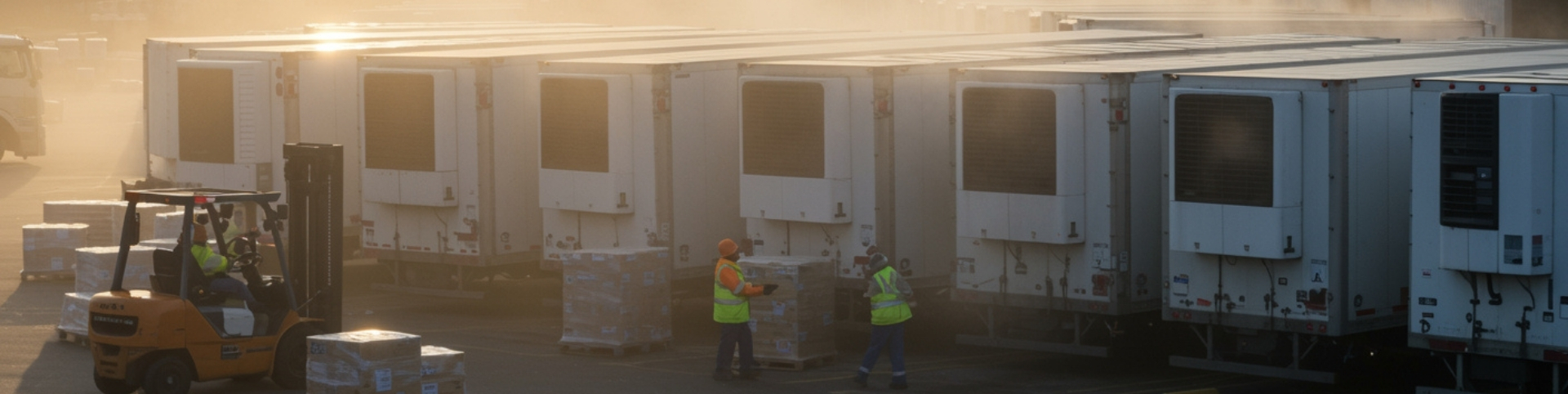
Food brands expanding distribution across multiple regions often rely on less-than-truckload (LTL) shipments to serve grocery distribution centers, foodservice distributors, and regional warehouses. While LTL truck freight provides flexibility for partial pallet shipments, it can also introduce significant cost and operational complexity when refrigerated products move through fragmented freight networks.
Traditional LTL systems typically route shipments through multiple terminal transfers before reaching the final destination. Each transfer requires unloading, staging, sorting, and reloading freight onto another trailer. For frozen and refrigerated products, these additional handling events increase both transportation cost and the risk of temperature exposure.
Talk To A Cold Chain Specialist
Two logistics strategies are widely used to improve efficiency in these situations: pool distribution and cross-docking. Both methods reduce the cost of moving refrigerated freight by improving trailer utilization and minimizing unnecessary handling within the transportation network.
Pooling consolidates shipments moving toward the same region, while cross-docking transfers freight directly from inbound trucks to outbound trucks with minimal storage time. Industry guidance on cross-docking notes that this process reduces handling and speeds distribution by transferring goods directly between vehicles rather than storing them in a warehouse.
When applied correctly within cold chain operations, these strategies help food brands reduce freight spend while maintaining strict temperature control. It is important to understand how pooling and cross-docking provide a practical framework for improving the efficiency of LTL freight and distribution.
The Challenge of Managing Cold Chain LTL Truck Freight
Managing refrigerated LTL truck freight becomes more complex as distribution networks expand. Food brands often ship smaller pallet quantities to multiple customers across several markets, creating a steady flow of partial shipments that move through the cold chain.
Without structured coordination, these shipments often move independently through traditional LTL terminal networks. While this system can accommodate small shipments, it frequently introduces operational inefficiencies that increase transportation costs.
Several challenges commonly appear in fragmented cold chain LTL networks:
- Low trailer utilization – Small shipments move independently instead of sharing available trailer capacity.
- Multiple terminal transfers – Freight may pass through several cross-dock facilities before final delivery.
- Extended transit times – Additional transfers and routing steps increase delivery timelines.
- Temperature exposure risk – Each handling event increases the potential for temperature fluctuations.
- Accessorial charges – Missed appointments, detention time, and re-delivery attempts can increase total freight costs.
These challenges are particularly significant for frozen and refrigerated products because temperature stability must be maintained throughout the transportation process.
Pooling and cross-docking strategies are designed to address these inefficiencies. By reorganizing how partial shipments move through the network, these methods allow refrigerated freight to travel more efficiently while maintaining the environmental controls required for cold chain distribution.
How Pool Distribution Works in Cold Chain LTL Truck Freight
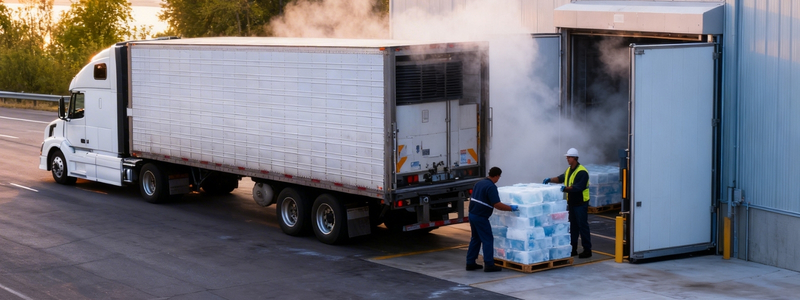
Pooling freight streamlines LTL logistics by combining shipments headed to the same region. Instead of sending multiple small shipments directly to individual customers, freight is transported together to a regional pool point, where it is sorted and delivered locally.
This approach works by pooling compatible shipments headed toward the same destination region. By combining these partial loads into a single refrigerated linehaul shipment, companies improve trailer utilization and reduce the cost per pallet.
A typical pool distribution flow includes four stages:
- Origin Consolidation – Partial shipments from one or multiple shippers are grouped based on their destination region.
- Linehaul Transport to the Pool Point – The consolidated load moves as a single refrigerated shipment to a regional pool distribution location.
- Regional Sorting – At the pool point, freight is separated and organized for final delivery routes.
- Local Delivery – Shipments are delivered to nearby customers such as grocery distribution centers, foodservice distributors, or regional warehouses.
For refrigerated and frozen freight, pool distribution offers an additional advantage. Because the long-haul portion of the trip occurs within a single consolidated shipment, products experience fewer terminal transfers and handling events. This helps maintain temperature stability while improving the overall efficiency of LTL truck freight distribution.
How Cross-Docking Reduces Cold Chain Freight Costs
Cross-docking improves the efficiency of LTL truck freight by transferring shipments directly from inbound trucks to outbound trucks with minimal storage time. Instead of placing freight into warehouse inventory, products move quickly across a temperature-controlled dock and continue toward their final destination.
For refrigerated and frozen distribution, this process reduces both handling events and storage time, two major contributors to cold chain logistics cost.
A typical cold chain cross-dock operation follows a straightforward sequence:
- Inbound Arrival – Refrigerated shipments arrive at a temperature-controlled dock facility from production plants, cold storage facilities, or consolidation points.
- Freight Sorting – Dock teams quickly sort pallets based on destination region, delivery route, or customer location.
- Outbound Load Building – Shipments are transferred directly onto outbound refrigerated trailers that serve regional delivery routes.
- Final Distribution – The outbound loads move to nearby grocery distribution centers, foodservice distributors, or retail warehouses.
Because freight moves quickly through the facility, cross-docking helps reduce several common cost drivers in LTL freight networks:
- Lower handling costs by minimizing warehouse storage steps
- Faster freight movement through the distribution network
- Reduced temperature exposure during transfers
- Improved delivery coordination for regional shipments
In cold chain logistics, cross-docking works particularly well when combined with freight consolidation or pool distribution strategies. Consolidated shipments can move efficiently through regional cross-dock facilities before continuing to their final destinations, improving both transportation efficiency and product protection.
Pool Distribution vs Cross-Docking: When Each Strategy Makes Sense
Pool distribution and cross-docking are often used together in cold chain logistics, but they serve different operational purposes within LTL truck freight networks.
- Pool distribution focuses on improving long-haul transportation efficiency by consolidating shipments moving toward the same regional market. Freight is transported to a regional pool point, where it is sorted and delivered locally.
- Cross-docking, on the other hand, improves the speed and efficiency of regional distribution by transferring shipments directly from inbound trucks to outbound trucks with minimal storage time.
In practice, many cold chain networks use both strategies together. Pool distribution reduces long-haul freight costs, while cross-docking helps organize and accelerate regional deliveries once shipments reach their destination market.
When combined, these methods allow refrigerated freight to move through the network with fewer handling events, improved trailer utilization, and more predictable delivery schedules.
How CORE X Improves LTL Truck Freight Efficiency
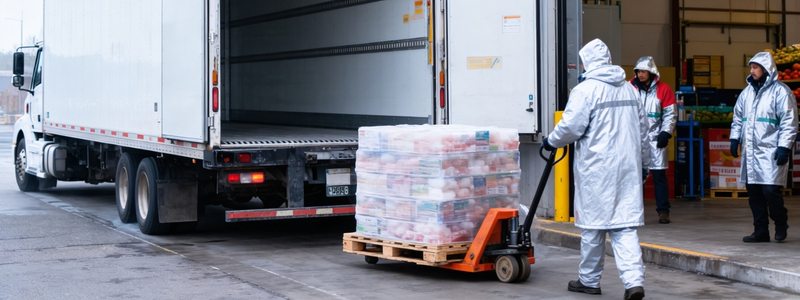
CORE X Partners helps food brands manage LTL refrigerated freight more efficiently by aligning temperature-controlled storage, freight consolidation, and regional distribution within a coordinated cold chain network.
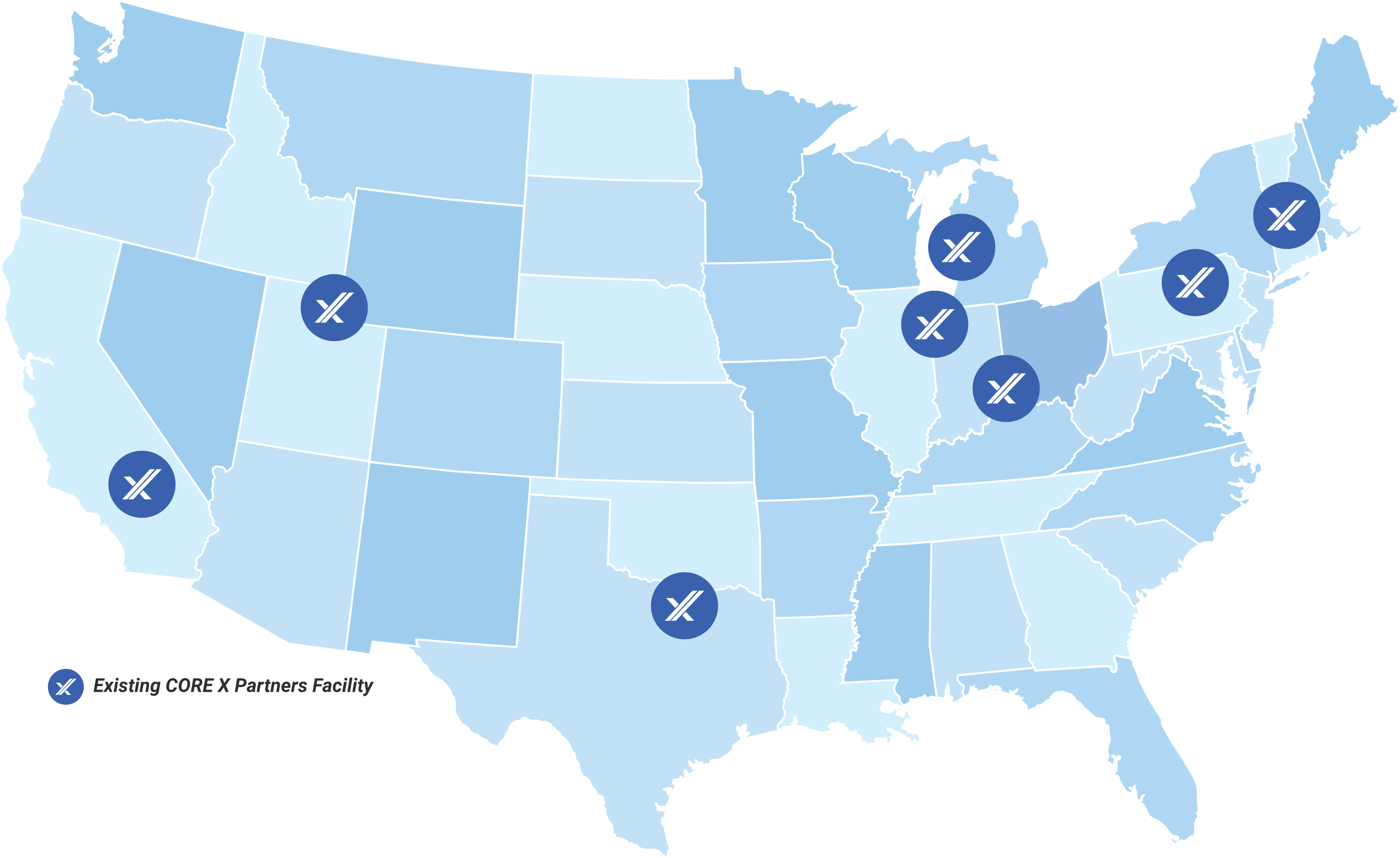
Shipments move through strategically located temperature-controlled facilities where compatible freight can be staged and organized before long-haul transport. These facilities support consolidation, pooling, and cross-docking operations that reduce handling events and improve trailer utilization.
By coordinating storage operations with freight planning, CORE X helps companies move refrigerated shipments through structured transportation lanes rather than fragmented terminal networks. This approach improves delivery predictability while maintaining strict temperature control throughout the distribution process.
For food brands expanding distribution into multiple regional markets, integrated pooling and cross-docking strategies provide a practical way to scale cold chain LTL freight operations while controlling transportation costs.
Pooling and cross-docking provide practical tools for improving the efficiency of LTL truck freight in cold chain distribution. By consolidating shipments and reducing unnecessary handling events, these strategies help lower transportation costs while protecting product integrity.
As refrigerated and frozen distribution networks expand, structured freight coordination becomes essential for maintaining both cost efficiency and temperature control.
CORE X Partners provides integrated cold chain logistics solutions designed to support efficient refrigerated and frozen distribution. Our network combines temperature-controlled storage, freight consolidation, and coordinated regional distribution to improve freight efficiency and protect product quality. Contact CORE X Partners to learn how optimized LTL truck freight strategies can strengthen your cold chain distribution network.
Send a message