Cold chain compliance documentation works best when refrigerated warehouse and transportation records connect before an issue occurs. Refrigerated products move through multiple custody points, and each handoff can create information that matters later: receiving temperature checks, lot details, storage zones, pick times, staging activity, trailer assignment, pickup confirmation, delivery status, and exception notes.
Warehouse Management System (WMS) and Transportation Management System (TMS) integration helps refrigerated 3PL operations build a cleaner record across storage and transportation. The purpose is practical: better documentation, faster investigations, clearer customer reporting, and more reliable audit readiness when a customer, regulator, retailer, or internal team needs answers.
Why Cold Chain Compliance Depends on Connected Records
Refrigerated products rarely move through one simple custody point. A product may move from receiving to storage, storage to picking, picking to staging, staging to loading, loading to transportation, and transportation to customer receiving. Each step creates a record that helps explain what happened, when it happened, where it happened, and who took action.
Documentation gaps often appear when responsibility shifts from one team or system to another. A warehouse record may show that an order was picked, while a transportation record may show that a carrier picked up the shipment. If those records are not connected, the time between staging and dispatch can be harder to reconstruct when a customer later questions temperature, timing, product condition, or delivery status.
Strong cold chain compliance documentation should help teams answer:
- What product moved?
- Which SKU, lot, or expiration date was involved?
- Where was the product stored?
- When was it picked and staged?
- Which trailer or carrier was assigned?
- When did pickup occur?
- Was an exception documented?
- Who owned corrective action?
BRCGS Storage and Distribution is relevant here because it focuses on risk-based product safety management systems and continual improvement across storage and distribution operations.
What Records Matter Across Storage and Transportation
Cold chain compliance documentation should connect the warehouse record with the transportation record, especially for products that require temperature-controlled handling. A refrigerated 3PL should be able to show how product moved through storage, fulfillment, dispatch, and delivery.
Important records include:
- Receiving temperature checks that confirm product condition at inbound receipt
- Storage temperature zone information that identifies where product was held
- SKU, lot, and expiration data that supports traceability, rotation, and customer requirements
- Pick and staging timestamps that show when product moved into the outbound workflow
- Hold or release status that helps prevent restricted product from moving incorrectly
- Trailer assignment and pickup time that connects warehouse release to transportation execution
- Temperature monitoring records, where available, support review of storage or transit conditions
- Delivery confirmation and exception notes that close the record after customer receipt
A practical cold chain documentation flow looks like this:
Receive → store → allocate → pick → stage → load → dispatch → track → deliver → document exceptions
Each step should create a usable record. When WMS and TMS data are connected, teams can review the order history without pulling information from separate emails, spreadsheets, carrier portals, and warehouse reports.
Where Documentation Gaps Usually Happen
Documentation gaps usually appear during handoffs. These gaps may seem small during normal operations, but they become significant when a customer files a claim, a load is rejected, a temperature concern is raised, or an auditor asks for supporting records.
Common gap points include:
- inbound receiving to storage
- inventory hold to release
- picking to staging
- staging to loading
- loading to carrier pickup
- carrier delay to customer notification
- delivery exception to claims review
A disconnected process may still move product, but it can make the record harder to defend later. If the warehouse team knows when a product was staged, but the transportation team manages trailer arrival and pickup separately, the timeline may require manual reconstruction. If exception notes sit in emails instead of a shared record, root-cause analysis becomes slower and less reliable.
Integrated systems help close those gaps by connecting operational events to a common timeline.
How WMS + TMS Integration Strengthens Cold Chain Audit Readiness
A WMS creates the warehouse record. It tracks inventory, location, storage zone, lot details, pick activity, staging status, and outbound readiness. A TMS creates the transportation record. It tracks carrier assignment, routing, pickup, delivery confirmation, freight status, and transportation exceptions.
When these records connect, companies can build a stronger documentation trail across storage and transportation. That matters for internal reviews, customer audits, regulatory questions, claim investigations, and retailer compliance programs.
Integrated WMS + TMS records can support:
- complete shipment history
- faster retrieval of order and transportation data
- stronger temperature exception investigation
- clearer chain-of-custody review
- customer-specific reporting
- more consistent internal reviews
- cleaner root-cause analysis
GCCA’s Cold Chain Transportation Best Practices also supports this handoff-focused approach by helping shippers, carriers, loaders, and receivers understand expected practices before products move through the cold chain.
FSMA, HACCP, and Cold Chain Documentation Expectations
Food companies and refrigerated 3PLs do not need documentation for documentation’s sake. They need records that verify what happened, show how risks were managed, and support review when questions arise.
Hazard Analysis Critical Control Point (HACCP) provides a practical way to think about risk because it focuses on identifying and controlling biological, chemical, and physical hazards throughout the food system. In cold chain operations, that connects directly to temperature control, product handling, traceability, sanitation, and exception response.
Storage and distribution standards add another layer of structure. BRCGS Storage and Distribution reflects best practices for risk-based product safety systems in storage and distribution environments, making it relevant for refrigerated 3PL compliance and audit readiness.
Cold chain transportation practices also matter because refrigerated products move between storage environments, docks, trailers, carriers, and customer receiving locations. GCCA’s transportation best practices provide a cold-chain-specific reference point for expectations across those parties.
The practical point is simple: compliance support improves when records follow the product across each custody point, not only within one facility or one system.
How a Refrigerated 3PL Strengthens Documentation
A refrigerated 3PL can strengthen cold chain compliance documentation when warehouse, transportation, and customer service teams follow shared processes. Documentation improves when the provider defines how records are captured, where they are stored, how exceptions are escalated, and who owns corrective action.
Core documentation capabilities include:
- Standardized operating procedures across receiving, storage, picking, staging, loading, and shipping
- Consistent chain-of-custody records that connect warehouse activity with transportation execution
- Temperature exception escalation with timestamps, ownership, corrective action, and resolution notes
- Centralized reporting across facilities, lanes, customers, and product groups
- Root-cause analysis that connects warehouse activity, transportation status, and customer outcomes
Integrated cold storage logistics services are especially important here. A refrigerated 3PL should be able to connect temperature-controlled storage records with temperature-controlled freight logistics so customers have a clearer view of product movement across the full cold chain.
CORE X supports cold chain compliance planning through temperature integrity, documentation consistency, shared standards, traceability, contingency planning, and risk management across storage and transportation workflows.
Sample Cold Chain Compliance Record Checklist
A refrigerated 3PL compliance record should make it easier to review the full order history. A practical checklist may include:
- order number
- customer
- SKU
- lot or batch number
- expiration date
- storage temperature zone
- receiving date and time
- pick timestamp
- staging timestamp
- hold or release status
- trailer or carrier assignment
- pickup time
- delivery confirmation
- temperature exception notes, if applicable
- corrective action owner
- resolution status
This checklist gives operations, quality, customer service, and leadership teams a more complete view of the shipment. It also supports faster review if a customer asks when a product was picked, how long it was staged, when a carrier arrived, or whether an exception occurred.
Example Mock Audit Scenario
A customer reports a concern with a refrigerated shipment delivered to a distribution center. The company needs to confirm which lot shipped, when it was picked, where it was staged, when the trailer arrived, when pickup occurred, whether any delay happened, and whether an exception was documented.
In a disconnected workflow, teams may need to search warehouse records, transportation updates, emails, spreadsheets, carrier portals, and customer service notes separately. That slows the investigation and increases the chance of missing useful context.
In an integrated WMS/TMS workflow, teams can review the order history, inventory movement, staging timestamp, trailer or carrier assignment, pickup time, delivery confirmation, and exception notes in a connected record.
That record gives the company a clearer answer. It also helps teams identify whether the issue came from inventory handling, staging timing, transportation delay, delivery appointment conditions, customer receiving, or a documentation gap.
What to Ask a Refrigerated 3PL About Compliance Documentation
Food companies evaluating a refrigerated 3PL should ask specific questions about documentation, system visibility, and exception handling. The strongest providers should be able to explain how records connect across warehouse and transportation workflows.
Useful questions include:
- What documentation is captured automatically?
- How are receiving, storage, staging, and shipping records connected?
- How are temperature deviations logged?
- How are carrier delays or access issues documented?
- How long are records retained?
- Can reports be pulled by order, customer, lot, facility, or lane?
- How are customer-specific requirements handled?
- Who owns corrective action when storage and transportation overlap?
These questions help determine whether the provider can support true cold chain audit readiness or only provide isolated warehouse and freight reports.
How CORE X Supports Cold Chain Compliance Documentation
CORE X Partners supports cold chain compliance documentation by connecting temperature-controlled storage, freight coordination, inventory visibility, reporting, and shared operating practices across the cold chain.
CORE X’s cold chain compliance planning focuses on temperature standards, documentation consistency, traceability systems, risk-managed growth, and coordinated support across storage and transportation. This helps food manufacturers and distributors manage compliance-related records before a claim, rejection, temperature concern, or audit request occurs.
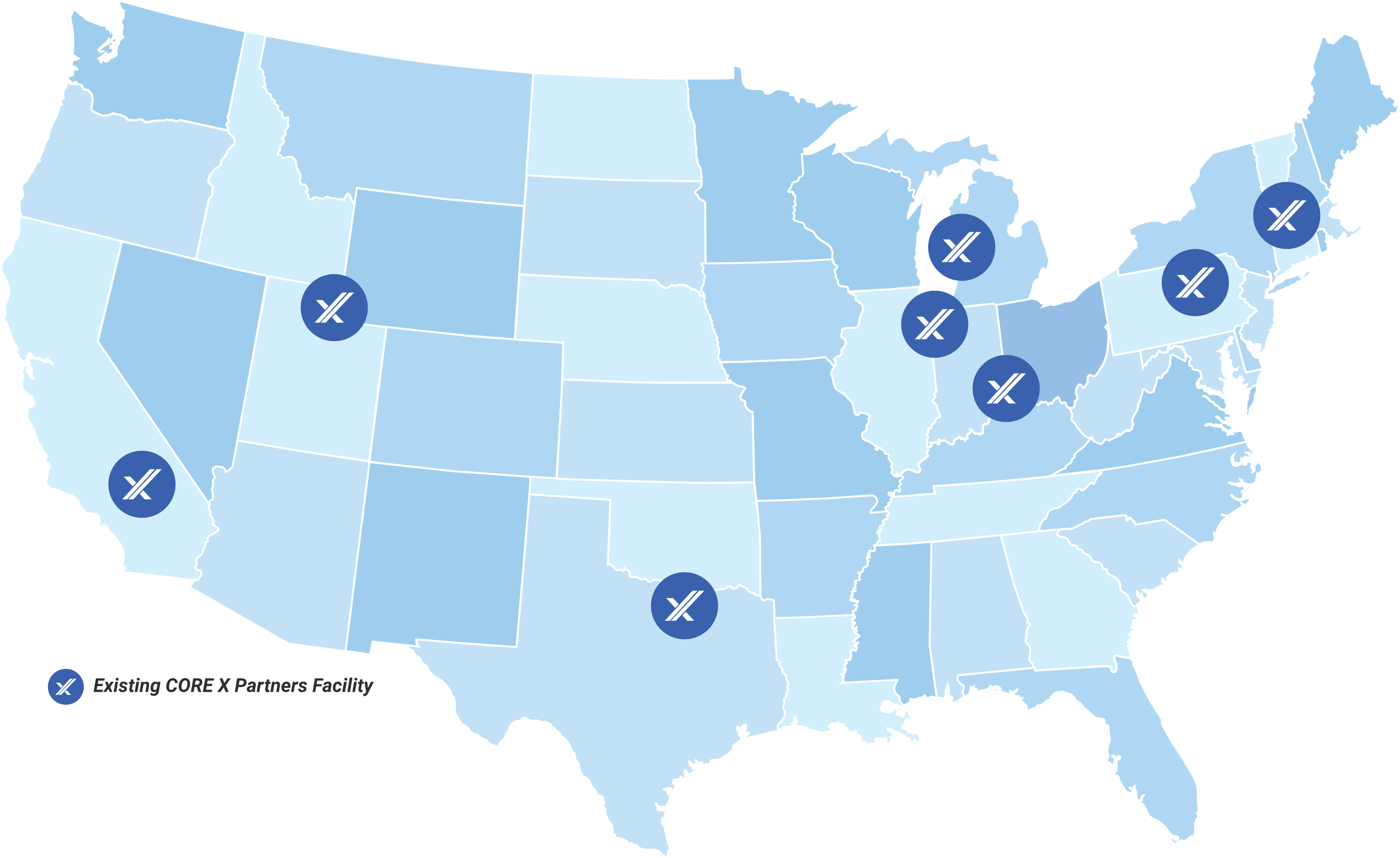
CORE X also supports integrated cold storage logistics services through shared systems and network-wide coordination, helping customers connect product movement, inventory status, transportation activity, and reporting across facilities and lanes.
Better Records Make Compliance Easier Before Problems Occur
Integrated WMS + TMS workflows help refrigerated 3PL operations build better records before there is a problem. Connected documentation supports faster investigations, cleaner customer reporting, stronger exception management, and more confident compliance review.
For food manufacturers and distributors, better records reduce uncertainty. Teams can see what product moved, where it was stored, when it was picked, when it was staged, how it moved, whether an exception occurred, and who took action.
CORE X Partners helps food manufacturers and distributors strengthen cold chain compliance documentation across refrigerated storage and transportation workflows. The CORE X network supports connected records, temperature-controlled cold storage, freight visibility, and shared operating standards across the cold chain. Contact CORE X Partners to improve cold chain compliance documentation.