Cold chain visibility gives executives a clear view of refrigerated warehouse activity, transportation status, service performance, cost exposure, and product risk. Owners, COOs, presidents, and general managers do not need every system detail. They need to know where inventory is, which orders are moving, where exceptions are developing, and who owns the next action.
For food manufacturers and distributors, visibility becomes even more important when refrigerated products move across multiple facilities, carriers, customer delivery windows, and temperature-controlled handoffs. Gartner has identified real-time transportation visibility as a priority for shippers, logistics providers, and their customers, reflecting the growing need for accurate, timely freight and logistics data.
Why Visibility Breaks Down in Fragmented Cold Chains
Cold chain visibility often breaks down when warehouse and transportation data live in separate places. One provider may report inventory through a portal. Another may send spreadsheets. Carriers may provide updates through emails, tracking links, or customer service calls. Executives receive pieces of the story without a complete view of the network.
These gaps create blind spots across the refrigerated supply chain. Inventory may appear available, but the transportation team may not have a confirmed carrier. A load may be picked, but the dock schedule may not align with trailer availability. A shipment may be delayed in transit, but customer service may not know until the retailer calls.
Common visibility gaps include:
- Inventory status separated from shipment status
- Warehouse and transportation teams using different data sources
- Carrier updates arriving after customer service issues begin
- Temperature exceptions reported outside the order or shipment record
- Cost data disconnected from service performance
- Facility performance measured separately from lane performance
Executives often see the impact after the problem has already reached the customer. Chargebacks, rejected shipments, spoilage, expedited freight, claims, and customer complaints often start as small visibility gaps that were not resolved quickly enough.
What End-to-End Cold Chain Visibility Should Include
End-to-end cold chain visibility should connect warehouse activity, transportation activity, product condition, and customer-facing service performance. The goal is to create one operating view across the product, order, shipment, facility, and customer requirement.
A practical visibility model should include:
- Inventory by SKU, lot, expiration date, and facility
- Available, allocated, staged, shipped, and held inventory
- Pick, pack, staging, and dock status
- Carrier assignment and pickup status
- In-transit status and estimated arrival time
- Temperature exceptions and corrective actions
- Delivery confirmation and exception reporting
- Claims, rejected shipments, and customer compliance issues
CORE X Partners support this type of visibility through a unified WMS that tracks inventory status, lot details, temperature records, and product movement. CORE X also uses EDI integration to support data continuity between customer platforms and CORE X systems, helping maintain traceability and operational alignment across the network.
For executives, the value comes from seeing warehouse and transportation status together. Inventory visibility alone does not show whether an order will arrive on time. Freight visibility alone does not show whether the right lot, expiration date, or temperature-sensitive product is ready to ship. Cold chain visibility needs both.
The Refrigerated Logistics Dashboard Executives Actually Need
A refrigerated logistics dashboard should help leaders identify risk, service issues, cost pressure, and quality concerns before they grow. Too much operational detail can bury the signal. The most useful dashboards organize data around the decisions executives need to make.
A strong executive dashboard should include four core categories.
Risk Indicators
Risk indicators show where a shipment, facility, customer, or product group needs attention. These metrics help leaders identify issues before they turn into rejected loads, missed appointments, or claims.
Important risk indicators include:
- Late loads
- Long dwell time
- Missed pickups
- Rejected shipments
- Orders staged longer than planned
- Exceptions without assigned ownership
These indicators help leadership focus on the areas most likely to affect customer service or product integrity.
Service Indicators
Service indicators show whether the cold chain network is meeting customer expectations. These metrics matter for retail, food service, and distributor relationships where appointment timing, order accuracy, and compliance performance can affect future business.
Service indicators should include:
- OTIF
- Appointment compliance
- Order accuracy
- On-time pickup
- On-time delivery
- Customer-specific service performance
These metrics help executives see whether service issues are isolated events or recurring patterns across facilities, lanes, or customers.
Cost Indicators
Cost indicators show where poor coordination is creating expense. Cold chain costs often rise when teams react to problems instead of preventing them. Detention, expedited freight, rework, underused trailers, and accessorial charges can all point to weak coordination between warehouse and transportation planning.
Useful cost indicators include:
- Detention
- Expedited freight
- Underused freight
- Accessorial charges
- Rework
- Claims-related cost
- Cost-to-serve by customer, lane, or region
These metrics help leadership connect operational visibility to financial performance.
Quality Indicators
Quality indicators show where product integrity, handling, or documentation may need attention. In refrigerated logistics, quality issues can develop during storage, staging, loading, transportation, or receiving.
Quality indicators should include:
- Temperature exceptions
- Damage claims
- Shortages
- Rejected loads
- Product holds
- Corrective actions
These indicators help executives understand whether risk is coming from warehouse execution, transportation execution, customer receiving conditions, or process gaps between handoffs.
Cold Chain KPIs That Connect Warehouse and Transportation Performance
Cold chain KPIs should show how warehouse activity and transportation activity affect each other. A late shipment may begin with a carrier delay, but it can also start with slow picking, dock congestion, product holds, missed staging windows, or poor appointment planning.
Executives should look at KPIs in three groups.
Warehouse KPIs
Warehouse KPIs show whether facility execution supports outbound performance. These metrics help identify issues with inventory, labor planning, picking, staging, and dock activity.
Key warehouse KPIs include:
- Inventory accuracy
- Order accuracy
- Pick completion time
- Staging dwell time
- Dock-to-dispatch time
- Holds and release status
Transportation KPIs
Transportation KPIs show whether freight movement supports customer commitments. These metrics help evaluate carrier performance, route planning, appointment management, and freight cost.
Key transportation KPIs include:
- On-time pickup
- On-time delivery
- Appointment compliance
- Detention hours
- In-transit exceptions
- Freight cost by lane or customer
Integrated Cold Chain KPIs
Integrated KPIs connect the warehouse and transportation view. These are often the most useful executive metrics because they show whether the full cold chain process is working.
Integrated KPIs include:
- OTIF
- Temperature exception rate
- Rejected-load rate
- Claims rate
- Exception response time
- Cost-to-serve
- Facility and lane performance by customer
There must be clear expectations among shippers, carriers, loaders, and receivers before products move through the cold chain. That makes handoff visibility especially important when refrigerated products move from warehouse control to transportation control.
How Integrated WMS/TMS Data Improves Executive Decisions
Cold chain visibility improves when WMS and TMS data work together. Warehouse data shows inventory status, pick progress, staging location, dock readiness, and product availability. Transportation data shows carrier assignment, pickup timing, delivery status, ETA, and exceptions.
When these data sources connect, executives can make better decisions about:
- Shipment consolidation
- Facility selection
- Labor planning
- Dock scheduling
- Customer communication
- Carrier performance
- Root-cause analysis
- Cost control
For example, if a customer has repeated delivery issues, leadership can review facility performance, order readiness, dock timing, carrier pickup, lane performance, appointment compliance, and exception history together. That combined view helps teams solve the real problem instead of debating which department owns the issue.
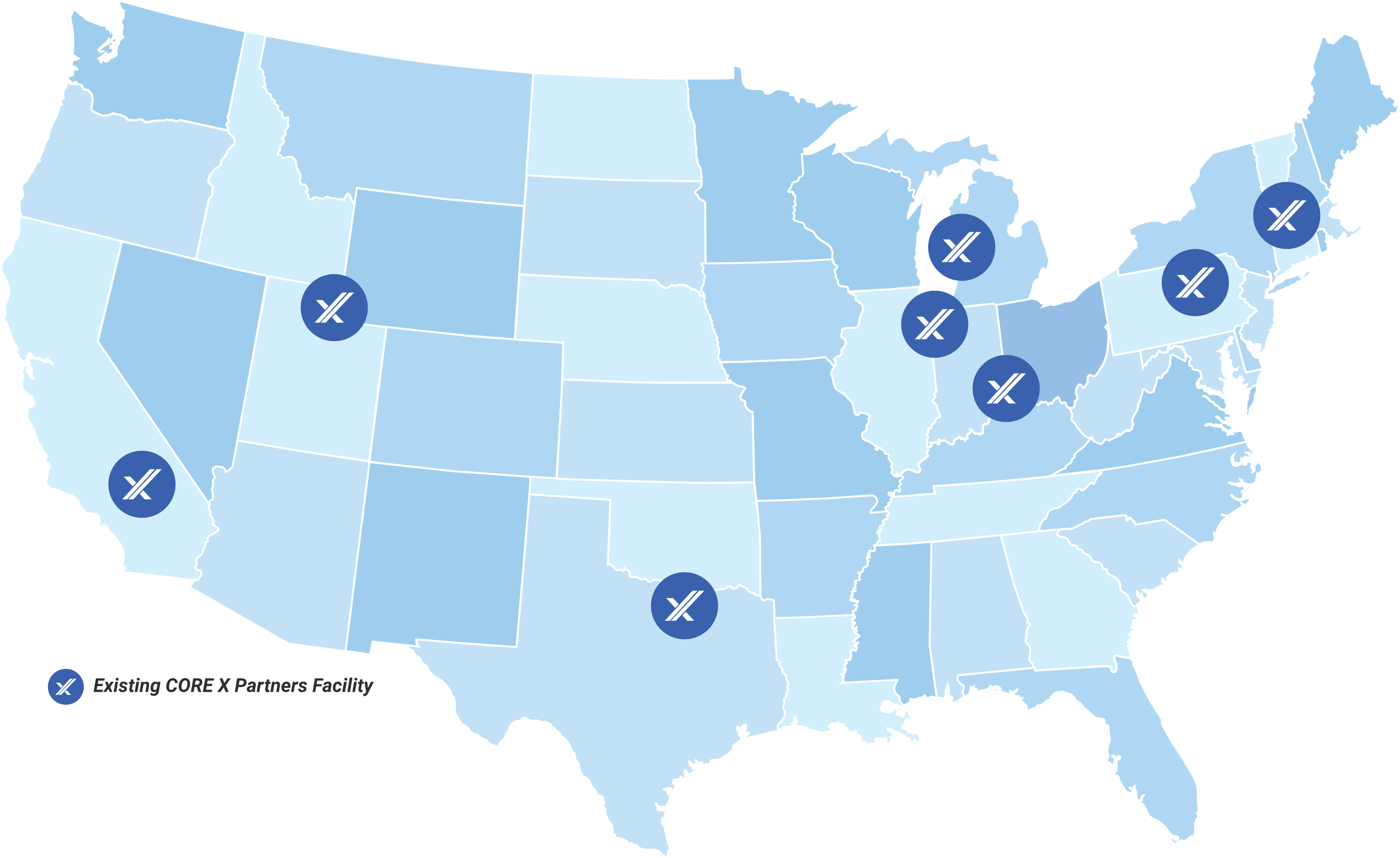
CORE X’s cold storage logistics model emphasizes shared systems and network-wide coordination across storage, transportation, and visibility. This structure supports a more unified view of product flow, customer requirements, and freight execution across regions.
Example Executive Scorecard for Cold Chain Visibility
An executive scorecard should show the relationship between facility performance, transportation performance, customer compliance, cost control, and risk management.
| Scorecard Area | What to Track | Why It Matters |
| Facility Performance | Inventory accuracy, order accuracy, staging dwell time | Shows whether warehouse execution supports outbound service |
| Lane Performance | On-time pickup, on-time delivery, detention | Shows whether transportation plans are reliable |
| Customer Compliance | OTIF, appointment compliance, rejected loads | Shows whether service meets customer expectations |
| Cost Control | Expedited freight, accessorials, cost-to-serve | Shows where visibility gaps are creating expense |
| Risk Management | Temperature exceptions, claims, unresolved exceptions | Shows where product integrity or accountability may be at risk |
This type of scorecard gives executives a fast way to identify patterns. If one facility performs well but one lane consistently misses appointments, transportation planning may need attention. If one customer has high detention and low appointment compliance, teams may need to review delivery windows, route timing, or staging practices. If claims rise across multiple lanes, quality or handling procedures may need review.
Example Exception Log: What Leadership Should Be Able to See
Cold chain visibility should make exceptions clear, timely, and actionable. An exception log helps leadership understand what happened, when it happened, who owns it, and how the issue was resolved.
An effective exception log should include:
- Issue type
- Timestamp
- Facility or lane
- Customer or order
- Product or SKU, when relevant
- Owner assigned
- Action taken
- Resolution status
- Preventive action, if recurring
This type of log supports accountability. Visibility only creates value when someone can act on the information. If a late carrier creates a dock delay, the system should show the delay, assign ownership, and capture the response. If a temperature concern appears in transit, teams need a clear record of the event, action taken, and customer communication.
Key Questions to Ask a Refrigerated 3PL About Visibility
Food companies evaluating a refrigerated 3PL should ask practical questions about reporting, exception management, and data access. The goal is to understand whether the provider can connect inventory and transportation visibility in a way leadership can use.
Helpful questions include:
- Can we see inventory and freight status together?
- How are exceptions escalated?
- What reports are standard?
- Can data be shared through EDI, portal access, API, or recurring reports?
- Who owns issue resolution when storage and transportation overlap?
- Can reporting show performance by facility, lane, customer, and product group?
- How quickly can teams identify late loads, dwell time, rejected shipments, or temperature exceptions?
These questions help separate basic tracking from true cold chain visibility. A refrigerated 3PL should give leadership a clear view of product movement, operational risk, service performance, and accountability across warehouse and transportation workflows.
How CORE X Supports Cold Chain Visibility Across Warehouse and Transportation
CORE X Partners supports cold chain visibility through integrated technology platforms that give quick access to inventory, shipment, and performance information across network facilities.
A unified WMS supports visibility into inventory status, lot details, temperature records, and product movement. EDI integration helps maintain continuity between customer platforms and CORE X systems, while customer portal access and business intelligence tools help customers monitor activity across the network.
CORE X supports transportation visibility through electronic freight tracking and data analytics, helping customers connect warehouse status with freight movement. For food companies managing regional or national distribution, CORE X’s shared systems and network-wide coordination help create stronger visibility across storage, transportation, and customer reporting.
Cold Chain Visibility Should Turn Data into Action
Cold chain visibility should help leaders understand where products are, where risk is building, how service is performing, and which issues need action. The strongest visibility programs connect inventory, warehouse execution, transportation status, exception management, and customer reporting into one practical operating view.
Executives do not need more disconnected reports. They need information that supports better decisions, faster escalation, clearer accountability, and more consistent customer service across refrigerated warehouse and transportation operations.
CORE X Partners helps food manufacturers and distributors improve cold chain visibility across refrigerated warehouse and transportation operations. The CORE X network supports inventory visibility, freight tracking, customer reporting, and shared performance data across cold chain logistics workflows. Contact CORE X Partners to strengthen cold chain visibility.