Food waste does not always start with a bad batch or a production issue. For food manufacturers, waste often shows up after the product is made, packed, and ready to move.
That post-production window matters. Finished goods may sit too long before pickup, move through poorly timed handoffs, lose shelf life in storage, or arrive at the customer with too little time left to sell. In some cases, the product is still safe, but it no longer meets customer requirements. That is when good food can become waste.
Cold storage and transportation integration help close those gaps. When storage, staging, loading, freight planning, and delivery communication work together, manufacturers have more control over what happens after production. Products spend less time waiting, fewer teams have to guess what is happening next, and issues can be handled before they turn into rejected loads, claims, or unsellable inventory.
For manufacturers trying to reduce food waste, the cold chain is not just a place to hold product. It is a system that protects product value from the moment goods leave the line until they reach the next destination.
Why Food Waste Is a Supply Chain Problem After Production
Once product leaves production, the risk shifts. The question is no longer whether the product was made correctly. The question becomes whether it can be stored, handled, staged, loaded, transported, and delivered without losing quality, time, or commercial value.
Several post-production issues can increase food waste risk:
- Temperature fluctuations
- Excessive dwell time
- Poor inventory rotation
- Late pickups
- Missed delivery windows
- Weak exception response
- Rejected loads
- Short-coded inventory
These problems do not always happen in isolation. A late pickup can lead to longer staging time. Longer staging time can create temperature concerns. A missed appointment can shorten the customer’s usable shelf life. A lack of inventory visibility can cause the wrong lot to ship first.
For many manufacturers, the issue is not one dramatic failure. It is the slow build-up of delays, exposure, handling events, and missed signals that reduce shelf life or create rejection risk.
That is why food waste after production should be treated as a supply chain issue. Manufacturing quality matters, but so does what happens next.
What Cold Storage and Transportation Integration Actually Means
Cold storage and transportation integration means warehousing and freight are planned as one connected process.
In a fragmented model, one provider stores the product, a broker books the truck, a carrier handles the load, and another team may manage customer delivery issues. Each party may do its job, but the handoffs can create blind spots. If product is picked too early, a truck is late, or a delivery appointment changes, the manufacturer may have to connect the dots across multiple vendors.
An integrated model works differently. Storage, staging, transportation planning, monitoring, and communication are coordinated through one operating approach. Product readiness is tied to pickup timing. Dock activity is planned around freight schedules. Inventory status and transportation needs are visible together. When something changes, there is a clearer path for response.
That does not mean every issue disappears. Cold chains are complex, and food manufacturing has plenty of variables. But integration reduces the number of disconnected handoffs where small problems can turn into larger waste events.
For manufacturers, that can mean fewer surprises between production release and customer delivery.
How Cold Storage and Transportation Integration Reduces the Risk of Food Waste
Cold storage and transportation integration helps manufacturers reduce waste by fixing one of the biggest weaknesses in the cold chain: disconnected handoffs.
A recent British Food Journal study on cold food supply chains found that many organizations use traceability and data tools, but those tools often have limited impact when they are not integrated into daily operations and planning. The study also points to fragmented information-sharing across supply chain partners as a driver of higher costs, poor coordination, disconnected cold chains, and increased food loss and waste.
For food manufacturers, the takeaway is practical. Technology helps, but only when storage, staging, transportation, and communication work together. That is where integration can reduce risk.
Temperature protection continues beyond storage
Temperature control does not stop at the warehouse wall.
A product may be held correctly in frozen, refrigerated, or temperature-controlled storage, then face new risk during staging, dock loading, trailer movement, transit, or delivery delays. Product condition depends on the full journey, not just the time spent inside the facility.
Integrated cold chain planning helps protect that journey. Storage teams know what product is moving. Transportation teams know when it needs to move. Dock teams can plan around real pickup schedules instead of staging product too early or waiting on unclear truck timing.
That coordination matters because every unnecessary delay can add risk. When transportation is treated as an extension of storage, the cold chain has a better chance of protecting product integrity from one step to the next.
Freight timing follows inventory readiness
Poor timing is a common source of waste risk.
When a product is picked and staged before a truck is ready, it can sit longer than planned. When a truck arrives before the order is ready, the shipment may be delayed or rushed. When a delivery appointment changes and no one adjusts the plan, the product can lose valuable time before it reaches the customer.
Cold storage and transportation integration gives teams a shared view of inventory readiness and freight timing. Inventory allocation, picking, staging, dock scheduling, trailer availability, and delivery appointments can be planned together.
That helps manufacturers avoid the “hurry up and wait” pattern that creates unnecessary dwell time and puts pressure on product quality, shelf life, and customer acceptance.
Dwell time becomes easier to control
Dwell time is the time product spends waiting between steps. In the cold chain, that can happen in staging areas, at dock doors, in the yard, during loading, or between delivery appointments.
Some dwell time is unavoidable. The goal is to reduce delays caused by poor coordination.
An integrated provider can align labor planning, truck arrival times, trailer readiness, and dock activity so product moves with fewer pauses. That can reduce unnecessary handling, limit exposure risk, and support more consistent delivery performance.
For manufacturers, dwell time is more than an operational inconvenience. It can affect temperature integrity, shelf life, freight costs, service levels, and whether a customer accepts the load.
Exceptions are easier to catch and correct
Even strong plans change. Trucks run late. Weather disrupts a lane. A customer changes an appointment. Inventory is not where it was expected to be. A trailer may need attention before loading.
The difference is how quickly the team responds.
In a disconnected supply chain, valuable time can be lost figuring out who has the latest information. The warehouse may not know the carrier is delayed. The broker may not know the product has already been staged. The manufacturer may not know whether the customer appointment is still workable.
An integrated cold chain provider can respond faster because storage, transportation, and customer communication are connected. The team can adjust dock plans, keep products in the proper environment, update freight timing, and communicate next steps before the issue becomes a larger product or customer problem.
Fast exception response is one of the clearest ways integrations helps reduce food waste risk.
Shelf-life decisions happen sooner
Not every waste issue is caused by spoilage. Some products become difficult to sell because too much shelf life has been lost.
That is where visibility matters. Manufacturers need to know which lots are aging, which customers have minimum shelf-life requirements, which shipments are delayed, and which products may need priority handling.
An integrated provider can connect inventory information with outbound planning. Shorter-dated products may need to ship first, move through a closer lane, or be flagged earlier for a customer service decision. The earlier those decisions happen, the more options the manufacturer has.
Shelf-life visibility does more than help the warehouse pick the right product. It helps the business protect usable inventory before it becomes a write-off.
A Manufacturer Example: Seasonal Frozen Entrées
Consider a frozen entrée manufacturer producing a seasonal SKU for several retail customers.
The production run is complete. The product needs frozen storage, accurate inventory rotation, careful staging, and coordinated outbound transportation. Customer delivery windows are tight because the SKU is tied to a seasonal promotion.
In a fragmented model, the warehouse stores the product while a separate broker schedules trucks. Carriers arrive at different times. Updates move through multiple parties. If a truck is late or a customer appointment changes, the manufacturer may not know quickly enough to adjust. Product can sit longer than planned, miss a retail window, or arrive with less shelf life than the customer requires.
In an integrated model, storage capacity, inventory release, picking, staging, truck scheduling, trailer readiness, and delivery timing are coordinated together. If there is a delay, the team can adjust dock plans, keep product protected, and communicate next steps.
The product is not just stored correctly. It moves through the post-production process with fewer gaps.
Metrics Manufacturers Should Track
Manufacturers do not have to measure everything at once. A good starting point is to look at where waste, claims, and rejections show up most often, then trace those issues back to operational causes.
Useful metrics include:
- Waste rate by SKU or customer
- Rejected-load rate
- Temperature excursion count
- Average dock dwell time
- Short-coded inventory value
- Claims as a percentage of shipped value
- OTIF performance by lane
These numbers help show whether waste is tied to inventory age, transportation timing, customer requirements, temperature issues, or handoff problems.
They also help manufacturers move the conversation beyond general concerns. Instead of saying, “We have too much waste,” teams can ask better questions. Which SKUs are most at risk? Which lanes create the most claims? Which customers reject the most short-coded product? Which facilities or appointment windows create the most dwell time?
The clearer the data, the easier it is to reduce the waste.
Why Accountability Matters in the Cold Chain
Fragmented cold chains create gray areas.
When something goes wrong, it can be hard to know where the problem started. Was the product staged too early? Did the truck arrive late? Was the trailer ready? Was the delivery window missed? Did the wrong lot ship? Did a delay go unreported for too long?
An integrated cold chain provider reduces that ambiguity. There is one operating model, a clearer communication path, and better visibility across the post-production journey.
That accountability matters because food waste moves quickly from an operations issue to a business issue. Waste affects margin, customer relationships, service levels, sustainability goals, and brand reputation.
When storage and transportation work together, manufacturers get more than a cleaner handoff. They get a cold chain built to protect product value after production, when timing, visibility, and accountability matter most.
Cold Storage and Transportation Integration Protects More Than Product
Food waste is expensive because it carries more than the cost of the product itself. It can include packaging, labor, storage, freight, claims, replacement production, disposal, customer penalties, and lost sales.
Cold storage and transportation integration helps manufacturers protect more of that value. It connects the people, systems, and timing behind storage and freight so products move with fewer delays and fewer blind spots.
For manufacturers, the benefit is practical: better control after production, clearer communication across handoffs, and a stronger chance that good food reaches the right destination while it still has value.
How CORE X Partners Helps Manufacturers Protect Product After Production
Reducing food waste after production takes coordination across every step after goods leave the line. Storage, staging, freight timing, delivery communication, and exception response all need to work together.
CORE X Partners supports that connection through integrated cold chain solutions that bring temperature-controlled storage and transportation planning into one operating model. That means fewer disconnected handoffs, clearer communication, and better visibility into what is happening between production release and final delivery.
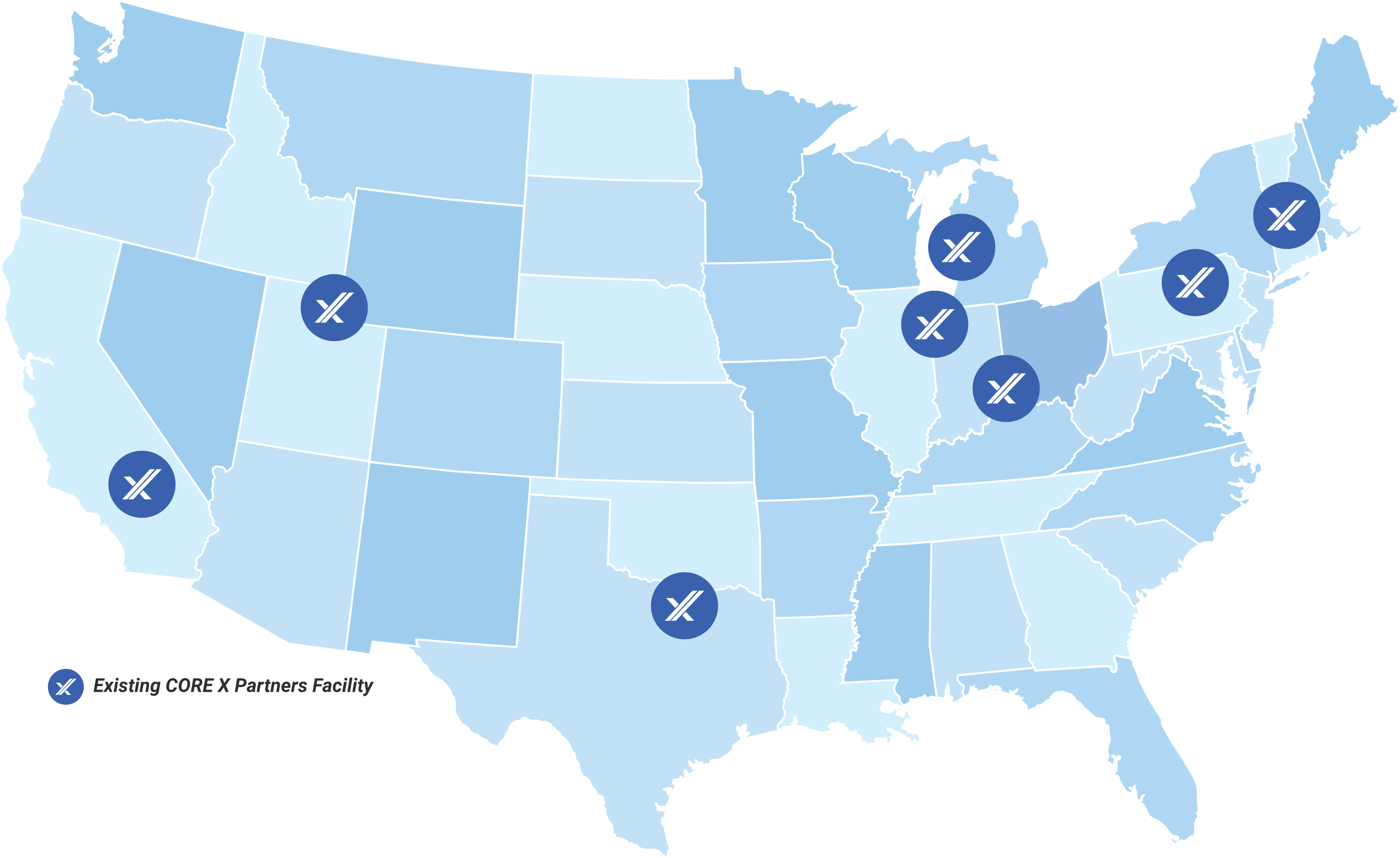
For food manufacturers, this connected approach helps protect product quality, preserve shelf life, and provide a stronger path for keeping usable food moving. With national reach, regional expertise, and a team built around practical cold chain support, CORE X helps manufacturers reduce waste risk where it often starts after production, when timing and accountability matter most.
Looking for a cold chain partner that can connect storage, transportation, and visibility after production? CORE X Partners supports food manufacturers with integrated cold chain solutions built to protect product quality, reduce waste risk, and keep goods moving with confidence. Contact CORE X Partners today for cold storage and transportation integration solutions.