

This article was previously published on 7/8/2024 and updated on 1/9/2026
BRCGS certified companies meet globally recognized food safety standards that help protect product integrity, support regulatory compliance, and build trust throughout temperature-controlled storage and distribution, making certification an important benchmark when evaluating cold chain partners.
What Does It Mean to Be a BRCGS Certified Company?
A company that is BRCGS certified has demonstrated compliance with the BRCGS Global Standard for Storage and Distribution, an internationally recognized framework that ensures food safety, quality, and operational consistency across logistics and cold chain environments. This certification applies specifically to organizations involved in storing, handling, and transporting food and temperature-sensitive products, rather than manufacturing them, making it particularly relevant for cold storage and logistics providers.
The BRCGS certification defines clear requirements for managing food safety risk, protecting product integrity, and maintaining documented operational controls across warehouses, transportation assets, and supporting systems. Certification is granted through an independent, third-party audit and confirms that a company operates under a formal, standardized food safety management program rather than informal or location-specific practices.
BRCGS certification is strengthened by its relationship with the Global Food Safety Initiative (GFSI), one of the world’s largest food safety networks. GFSI is committed to helping people around the world have access to safe food. GFSI serves as an industry benchmark, establishing globally recognized food safety requirements to ensure consistency and comparability across certification programs. The BRCGS Storage and Distribution standard meets GFSI benchmarked certification requirements, meaning it meets those international expectations for food safety systems and oversight.
Because of this benchmarking, BRCGS certified companies are widely recognized by retailers, food manufacturers, and brand owners as meeting a credible and consistent standard for food safety and compliance. As a result, many organizations now look for BRCGS certification when selecting cold chain and logistics partners as part of supplier approval and ongoing risk management.

The BRCGS Storage & Distribution Standard Explained
The BRCGS Storage and Distribution Standard evaluates how effectively food safety and quality controls are built into daily storage and logistics operations. Rather than assessing a single process in isolation, auditors review whether safety systems are consistently applied across facilities, transportation activities, and supporting infrastructure.
Risk-Based Food Safety Management Systems
BRCGS certified cold storage companies must implement a formal, risk-based food safety management system. This requires identifying potential hazards associated with storage and distribution activities and establishing preventive controls to reduce safety or quality risks before they occur.
Operational Controls That Protect Product Integrity
Auditors examine operational practices that directly impact food safety, including handling procedures, hygiene programs, traceability systems, and temperature monitoring. These controls are critical for ensuring that products remain within specified conditions and can be accurately tracked throughout the cold chain.
Facility, Vehicle, and Systems Evaluation
The standard also applies to the physical environment and equipment used in storage and transport for BRCGS certified logistics providers. Warehouses, material handling equipment, and transportation assets are reviewed to confirm they support safe, compliant operations. Supporting systems such as monitoring tools, maintenance programs, and environmental controls are also assessed for effectiveness and reliability.
Documentation, Accountability, and Continuous Oversight
BRCGS places strong emphasis on documentation and accountability. Certified companies must maintain accurate records, conduct regular internal reviews, and demonstrate corrective actions when issues arise. These requirements confirm that food safety practices are not only established but monitored and continuously improved over time.
Together, these elements ensure that BRCGS Storage and Distribution certification represents a comprehensive, system-based approach to food safety, providing buyers with confidence that a provider’s compliance extends well beyond a surface-level audit.
Why Look for BRCGS Certified Cold Chain Partners?
For food manufacturers, distributors, and retailers, selecting a cold chain partner involves balancing safety, compliance, and operational reliability. Working with BRCGS certified companies helps reduce uncertainty in that decision by providing third-party verification that food safety systems are consistently applied and independently audited.
Reduced Food Safety and Compliance Risk
BRCGS certification signals that a provider has implemented structured controls to manage food safety risks across storage and distribution operations. This reduces the likelihood of temperature excursions, contamination, or documentation gaps that can trigger product loss, recalls, or regulatory scrutiny.
Alignment with Retailer and Brand Requirements
Many retailers and brand owners require their logistics partners to hold a GFSI-benchmarked certification as part of supplier approval. BRCGS certification helps cold chain providers meet those expectations, smoothing onboarding and supporting ongoing customer audits.
Consistency Across Facilities and Regions
For companies operating across multiple locations, consistency matters. BRCGS certified companies demonstrate that food safety practices, documentation, and operational controls are standardized rather than dependent on individual site practices. This consistency is especially valuable for national or regional distribution networks.
Greater Transparency and Accountability
Certification requires documented procedures, traceability systems, and corrective action processes. For customers, this translates into clearer visibility into how products are managed and how issues are addressed, reinforcing confidence in the partnership.
A Stronger Foundation for Long-Term Partnerships
Beyond compliance, BRCGS certification reflects a provider’s commitment to continuous improvement and operational discipline. For buyers evaluating long-term cold chain relationships, certification indicates that food safety and quality are embedded in daily operations rather than treated as a one-time requirement.
What the BRCGS Audit Process Involves
BRCGS cold chain compliance certification is earned and maintained through a structured audit process conducted by accredited, independent third-party certification bodies, not by BRCGS itself. These audits are designed to verify that food safety and quality systems are actively implemented, consistently followed, and embedded into day-to-day storage and distribution operations.
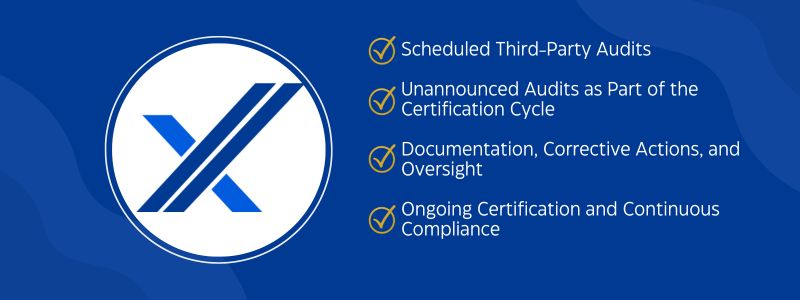
Scheduled Third-Party Audits
Certification begins with a scheduled, on-site audit conducted by an approved certification body. During this assessment, auditors review food safety management systems, operational procedures, facility conditions, employee training, and supporting records. The objective is to confirm that the documented processes align with the requirements of the BRCGS Storage and Distribution standard and function as intended under real operating conditions.
Unannounced Audits as Part of the Certification Cycle
To meet Global Food Safety Initiative (GFSI) benchmarking requirements, BRCGS certified companies must complete at least one unannounced audit within each three-year certification cycle. These unannounced audits are scheduled by the certification body within a defined audit window and occur without prior notice. Their purpose is to validate that food safety systems operate effectively year-round, not only during planned inspections.
Documentation, Corrective Actions, and Oversight
Auditors review monitoring records, internal audit reports, corrective action documentation, and management review activities to confirm accountability and continuous oversight. When non-conformities are identified, corrective actions must be documented and resolved within defined timelines to maintain certification status.
Ongoing Certification and Continuous Compliance
BRCGS certification is not a one-time event. Certified companies are subject to ongoing surveillance, routine re-audits, and continuous compliance expectations. This structure reinforces disciplined food safety practices and ensures that certified organizations maintain consistent operational standards across storage and distribution activities.
By combining scheduled audits, periodic unannounced inspections, and rigorous documentation requirements, the BRCGS audit process provides buyers with confidence that this food safety certification for cold chain reflects sustained performance, rather than temporary preparation.
How Core X Partners Supports BRCGS Certification Across Its Network
Maintaining BRCGS certification across multiple cold chain locations requires more than individual site effort. It demands consistent standards, centralized oversight, and continuous coordination. Core X Partners supports this process through a structured quality and safety program designed to ensure alignment across our national network of temperature-controlled storage and logistics operations.
Each Core X location operates under established food safety protocols that align with the BRCGS Storage and Distribution standard. A dedicated quality and safety leadership team works alongside partner facilities to support audit preparation, corrective action follow-up, and ongoing compliance activities. This approach helps ensure that certification is sustained through daily operations rather than treated as a one-time milestone.
Internal inspections, standardized documentation, and regular performance reviews help reinforce consistent food safety practices across facilities. By supporting both announced and unannounced third-party audits, Core X promotes accountability and continuous improvement at the site level while maintaining network-wide consistency.
This coordinated structure allows customers to work with a provider that applies the same safety expectations across regions, facilities, and service lines.
The Bottom Line on Working with BRCGS Certified Companies
BRCGS certification serves as a reliable benchmark for evaluating food safety, regulatory compliance, and operational discipline within the cold chain. For companies managing temperature-sensitive products, working with BRCGS certified companies helps reduce risk, simplify supplier qualification, and strengthen confidence throughout storage and distribution networks.
For cold chain organizations like Core X Partners, certification reflects a long-term commitment to protecting product integrity, meeting customer expectations, and maintaining trusted food safety systems throughout the supply chain. Through standardized processes, third-party oversight, and continuous improvement, Core X supports BRCGS certification as part of our broader responsibility to protect, preserve, and provide for customers and communities alike.
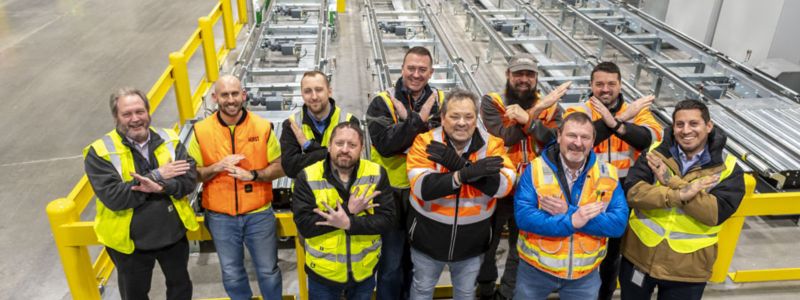
If you’re evaluating cold storage and logistics partners, understanding what BRCGS certification represents can help ensure your supply chain is built on verified safety, consistency, and accountability. We are proud to display BRCGS-certified banners at our Core X Partners’ locations.
Core X Partners provides temperature-controlled storage and logistics solutions built on verified food safety and operational consistency. Through a national network supported by centralized quality and compliance oversight, we help businesses reduce risk and protect product integrity across the cold chain. Contact Core X Partners to work with BRCGS certified companies you can trust.