
Food manufacturers and distributors expanding into new markets often build their cold chain logistics network one facility at a time. Regional providers are added based on immediate needs such as capacity in one market, transportation access in another, or proximity to key customers. Over time, this approach creates a fragmented network of cold storage providers that operate independently rather than as a coordinated system.
This patchworked network introduces several challenges such as increased cost, limited visibility, varied levels of service and transportation planning among disconnected facilities. These inefficiencies compound as distribution networks grow, making it increasingly difficult to maintain consistent cold chain distribution performance across regions.
Moving from a fragmented network to a unified platform allows companies to align storage, transportation, and operational standards under a single strategy. The result is improved visibility, more predictable service performance, and a stronger foundation for scaling cold chain distribution.
When Fragmentation Becomes a Business Risk
Cold chain networks rarely start fragmented. Most companies build their logistics footprint incrementally, adding regional providers to support new customers, markets, or product lines. This approach may work well in early growth stages, although complexity increases as more facilities and partners are added.
At a certain point, fragmentation shifts from being manageable to becoming a measurable business risk. Operational inefficiencies begin to impact service performance, cost control, and overall visibility across the network.
Several common conditions signal that it may be time to consolidate cold storage providers:
- Inconsistent service performance – Variability across facilities leads to variations in product handling (thus inconsistent quality control), missed deliveries, and reduced overall network reliability.
- Lack of network visibility – Inventory, order status, and performance data remain siloed, limiting the ability to manage the supply chain proactively.
- Escalating and unpredictable costs – Fragmented billing structures, accessorial charges, and uncoordinated transportation planning make cost control difficult.
- Capacity constraints in key markets – Gaps in storage or throughput create bottlenecks, especially during seasonal demand surges.
- Operational inefficiencies across sites – Different processes for receiving, storage, and shipping increase handling risk and reduce overall productivity.
When these challenges begin to affect customer service, margins, or growth plans, companies often reach a decision point. Continuing to manage multiple independent providers requires increasing internal resources, while consolidating into a more integrated model offers the opportunity to simplify operations, improve transparency, and regain control.
Making that shift requires confidence in a cold chain partner capable of delivering both regional execution and coordinated national support.
What a “Single Integrated Cold Chain Solution” Actually Means
Consolidating regional providers does not simply mean reducing the number of vendors. A true integrated solution aligns operations, visibility, and performance across the entire network.
At its core, an integrated cold chain logistics platform includes:
- One contract – A unified commercial structure that simplifies pricing, billing, and service expectations across all locations, nationwide.
- One operational playbook – Standardized procedures for receiving, storage, picking, shipping, and handling that ensure consistency across facilities.
- One reporting layer – Shared visibility into inventory, order status, service performance, and key metrics across the entire network.
When these elements are aligned, companies can manage their cold chain logistics as a single system rather than a collection of independent providers. This improves decision-making, reduces variability, and creates a more stable foundation for growth.
The 3 Models for Consolidating Cold Storage Providers
There is no single way to consolidate a fragmented cold chain network. The right approach depends on your distribution footprint, internal resources, and growth plans. Most strategies fall into three models, each with clear tradeoffs.
Single 3PL Model
In a single 3PL model, one provider manages all storage, handling, and often transportation services across the network. This approach simplifies vendor management by consolidating operations under a single contract and operating structure.
Advantages include:
- Streamlined communication and accountability
- Simplified billing and contract management
- Consistent operating procedures across facilities
Limitations to consider:
- Gaps in geographic coverage in certain markets
- Potential gaps in specialized capabilities (e.g., frozen vs. refrigerated)
- Less flexibility if the provider lacks regional strength
This model fits companies with a concentrated footprint but can create risk if one provider cannot support all regions.
Lead Logistics Provider (LLP / 4PL) Model
The LLP or 4PL model introduces a central coordinator that manages multiple storage and transportation providers on behalf of the customer. Rather than replacing regional providers, this model adds a layer to align operations and reporting.
Advantages include:
- Flexibility to retain strong regional providers
- Centralized visibility and coordination
- Ability to optimize network performance without full consolidation
Limitations to consider:
- Increased complexity in governance and communication
- Dependency on the LLP for coordination and execution
- Possible disconnect between planning and operations
This model is often used by larger organizations that can manage a more complex structure.
Network of Aligned Regional Partners Under One Operator
A third approach combines the strengths of regional operators within the structure of a unified system. In this model, facilities follow shared standards for operations, reporting, and transportation, functioning as a coordinated network.
Rather than managing independent providers or relying on a separate orchestration layer, companies gain access to a network designed to operate as a single platform.
Advantages include:
- Strong regional expertise combined with national coordination
- Consistent operating procedures across facilities
- Integrated visibility across storage, transportation, and inventory
- Greater flexibility to scale into new markets
Limitations to consider:
- Requires disciplined alignment of processes and systems
- Depends on strong network governance and shared standards
This model reflects how modern cold chain logistics networks are evolving, balancing local execution with centralized coordination. This approach supports scalable, multi-region distribution without adding unnecessary complexity.
A Phased Approach to Consolidation: Stabilize → Standardize → Optimize
Consolidating a cold storage network is not a one-step transition. Attempting to fully integrate multiple providers at once can introduce operational disruption, particularly when inventory, transportation, and customer commitments are already in motion.
A phased approach allows companies to reduce risk while building a more stable and efficient cold chain logistics network over time.
Stabilize
The first phase focuses on restoring control and addressing immediate operational gaps. This includes identifying service inconsistencies, resolving capacity constraints, and improving communication across providers.
Key priorities typically include:
- Aligning critical service expectations across facilities
- Addressing performance issues affecting customers or deliveries
- Improving coordination between storage and transportation activities
The goal is to create a stable operating environment before introducing broader changes.
Standardize
Once operations are stable, the next step is to establish consistency across the network. Standardization creates the foundation for integration by aligning how work is performed and measured.
Key initiatives include:
- Defining standardized SOPs for receiving, storage, picking, and shipping
- Establishing shared KPIs for service performance and operational efficiency
- Implementing consistent reporting structures across facilities
This phase reduces variability and enables more reliable performance across regions.
Optimize
With a standardized foundation in place, companies can begin optimizing the network for cost, efficiency, and scalability. This phase focuses on improving how freight moves through the system and how inventory is positioned.
Key opportunities include:
- Designing consolidation lanes to improve trailer utilization
- Aligning inventory placement with demand patterns
- Reducing handling events and unnecessary transfers
- Improving cost-to-serve across regions and customers
Optimization transforms the network from a coordinated system into a strategic advantage.
Where Consolidation Creates Measurable Value
The impact of consolidation becomes most visible when operational improvements translate into measurable business outcomes. A well-integrated cold chain logistics network delivers value across both cost and service performance.
Key areas of improvement include:
- Reduced accessorial exposure – Coordinated scheduling and standardized processes reduce detention, re-delivery, and other avoidable charges.
- Improved inventory visibility – Centralized reporting enables better decision-making and proactive management of inventory across locations.
- Fewer handling events – Consolidation and coordinated freight planning reduce the number of transfers, lowering damage risk and improving efficiency.
- Stronger lane density – Grouping shipments into structured lanes improves transportation planning and reduces cost per pallet.
- More predictable service performance – Standardized operations and shared KPIs create consistency across regions.
These improvements allow companies to scale distribution without a proportional increase in complexity or cost.
Why Consolidation Efforts Fail—and How to Avoid It
While the benefits of consolidating regional cold storage providers are clear, execution challenges can limit results if the transition is not managed carefully. Many consolidation efforts fall short due to gaps in planning, alignment, or governance.
Common failure points include:
- Lack of standardized operating procedures – Without consistent processes, facilities continue to operate independently despite consolidation efforts.
- Insufficient data integration – Limited visibility prevents companies from managing the network as a unified system.
- Weak change management – Internal teams and external partners may struggle to adapt without clear communication and training.
- Misaligned performance metrics – Inconsistent KPIs across providers make it difficult to measure success or enforce accountability.
- Overlooking regional nuances – Ignoring local market dynamics can lead to service disruptions or operational inefficiencies.
Avoiding these pitfalls requires a structured approach that prioritizes alignment, visibility, and disciplined execution across all phases of consolidation.
How CORE X Enables Integrated Cold Chain Logistics Networks
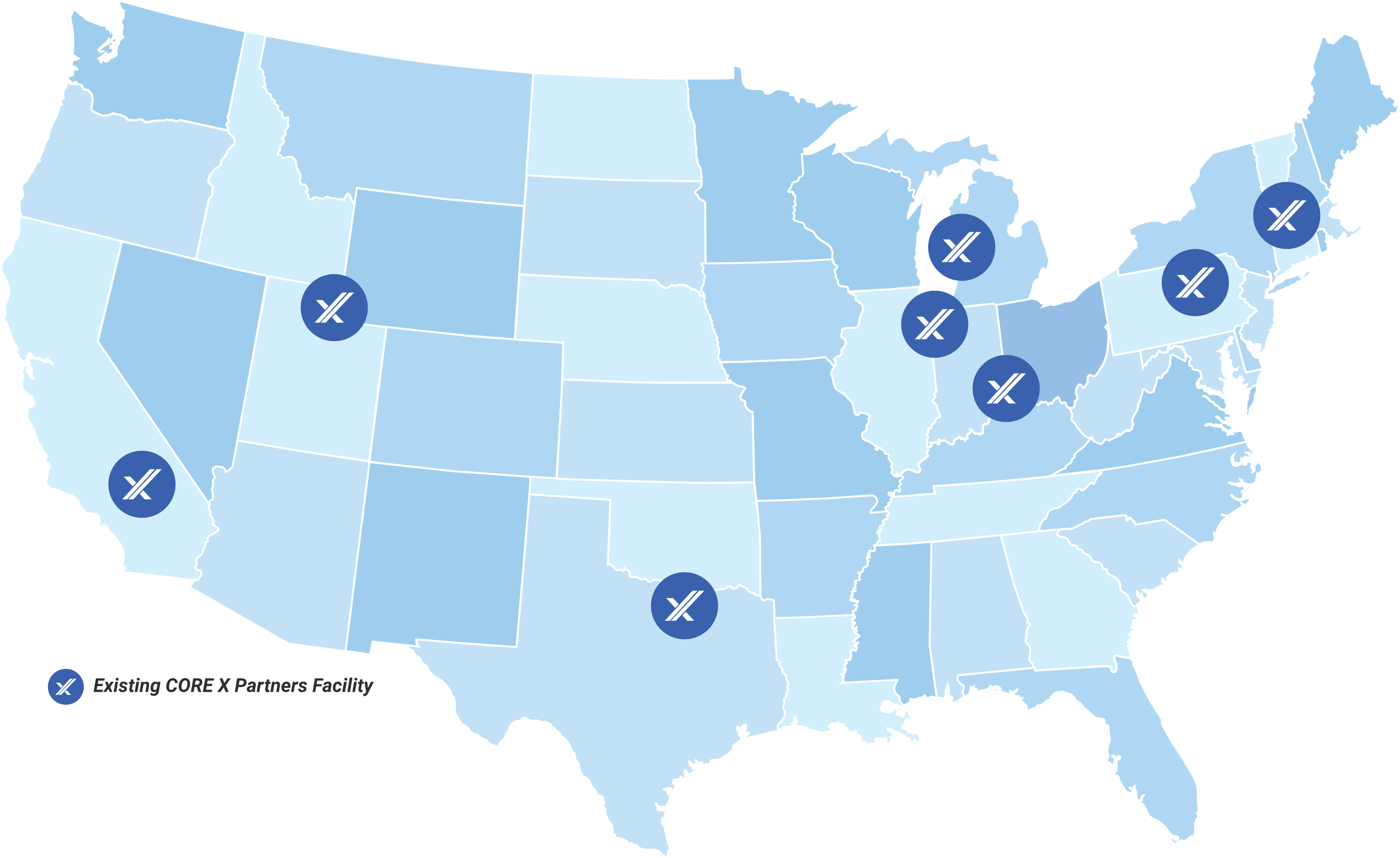
CORE X Partners provides turnkey consolidation solutions by combining regional expertise with a unified operating model designed for national cold chain logistics. Through our network of partnered regional operators, CORE X delivers local execution within a coordinated national framework.
Cold storage facilities operate under shared standards for storage, handling, and reporting, while centralized support aligns transportation planning, consolidation strategies, and performance visibility across the network. This structure allows food manufacturers and distributors to transition from fragmented operations to an integrated platform without sacrificing regional responsiveness.
By connecting temperature-controlled storage, freight coordination, and operational visibility, CORE X enables companies to scale distribution more efficiently while maintaining consistent service performance across markets.
Local Service. Nationwide Network.
Building a Scalable Cold Chain Platform
As food companies expand into new markets, the limitations of a fragmented cold chain become increasingly clear. Managing multiple regional providers may support early growth, but it often introduces operational complexity that impacts visibility, cost control, and service consistency over time.
Consolidating regional cold storage providers into a single, integrated solution allows companies to move beyond reactive logistics management and toward a more structured, scalable operating model. By aligning storage, transportation, and operational standards across a coordinated network, businesses can improve performance, reduce inefficiencies, and support long-term distribution growth.
Whether through a unified 3PL model, a coordinated network of regional operators, or a phased consolidation strategy, the goal remains the same: creating a cold chain logistics platform that delivers consistent execution across every region served.
CORE X Partners supports food manufacturers and distributors with integrated storage, transportation, and logistics solutions designed for scalable distribution. Our network combines regional expertise with centralized coordination to improve visibility, reduce complexity, and maintain consistent service performance. Contact CORE X Partners for integrated storage and transportation solutions when consolidating regional cold storage providers.