Cold freight shipping determines whether expansion strengthens margins or erodes them. As mid-sized food brands scale frozen and refrigerated distribution across North America, freight decisions quickly shift from tactical shipment management to structural network design.
The right mix of LTL, full truckload, and consolidation strategies enables brands to control cost, reduce temperature exposure, and maintain delivery consistency as volume and geographic reach increase.
[maxbutton id=”2″]
Why Cold Freight Shipping Strategy Determines Whether Growth Increases or Reduces Cost
Transportation rarely becomes simpler as distribution expands. Adding regions, retailers, and DCs introduces more lanes, more handoffs, and greater exposure to variability in transit time and capacity.
In early growth stages, many brands manage freight shipment by shipment. Individual LTL bookings, one-off routing decisions, and reactive carrier selection may work when volumes are limited. As shipment frequency increases, however, those same tactics create inefficiencies:
- Repeated partial trailer utilization
- Inconsistent routing patterns
- Rising accessorial fees
- Greater handling and dwell time
- Limited visibility across lanes
Cold freight shipping must evolve from reactive execution to engineered flow. When freight planning aligns with storage locations, lane density, and inventory velocity, transportation becomes a controlled extension of the cold chain rather than a separate cost center.
The shift from tactical shipping to strategic freight mix design is what allows growth to lower per-unit transportation costs rather than increase it.

When Frozen and Refrigerated LTL Works vs. When It Hurts
Frozen and refrigerated LTL plays a critical role in multi-region distribution, particularly for mid-sized brands that do not yet generate consistent full truckload volumes.
When LTL Supports Scalable Growth
Refrigerated and frozen LTL works effectively when shipment patterns are stable and routed through controlled lanes. It is typically well suited for:
- Early-stage expansion into new regions
- Retail replenishment with moderate, consistent volume
- Mixed SKU shipments that do not fill a trailer
- Regional distribution where transit distances remain manageable
In these scenarios, LTL provides flexibility without requiring overcommitment to full trailer capacity.
When LTL Begins to Increase Cost and Risk
As volumes grow, however, over-reliance on fragmented LTL networks becomes expensive. Structural limitations within traditional hub-and-spoke LTL systems introduce added handling and exposure, especially for temperature-sensitive freight.
Common signals that LTL is starting to hurt performance include:
- Repeated partial loads moving into the same region
- Multiple terminal transfers across long-haul lanes
- Increased appointment failures or redelivery risk
- Higher claim rates due to handling-related temperature deviation
- Escalating accessorial and detention charges
Frozen and refrigerated products amplify these vulnerabilities. Each additional transfer increases the chance of temperature fluctuation, loading delays, or documentation errors. At scale, unmanaged LTL usage can quietly erode margins and service reliability.
The solution is not eliminating LTL entirely; it is structuring LTL within a broader cold freight shipping strategy that incorporates consolidation and lane planning.
Consolidation Strategies That Improve Cold Freight Efficiency
Consolidation restructures how cold freight shipping moves through the network. Instead of sending individual LTL shipments independently through carrier terminals, compatible loads are staged, grouped, and moved through defined consolidation lanes.
When executed properly, consolidation changes both the economics and the risk profile of frozen and refrigerated transportation.
Pooling and Shared Consolidation Points
Pooling freight through temperature-controlled consolidation facilities increases trailer utilization and reduces cost per pallet. Rather than shipping three partial loads into the same region, pooled freight fills a consolidated trailer under defined temperature control.
This reduces:
- Per-pallet transportation expense
- Handling frequency
- Exposure during terminal transfers
Multi-Stop and Regional Aggregation
In dense markets, multi-stop truckloads can replace fragmented LTL moves. Delivering to multiple regional DCs on a structured route lowers overall transportation spend while maintaining temperature continuity across all drops.
Cross-Dock and Zone Skipping
Cross-docking within temperature-controlled environments allows freight to bypass multiple LTL terminals, reducing dwell time and limiting temperature risk. Zone skipping shortens transit paths by moving freight directly into regional destinations rather than through multiple intermediate hubs.
These strategies are not tactical adjustments. They are structural redesigns that allow cold freight shipping to scale without proportional cost escalation. This foundation prepares the network for more advanced lane planning, carrier strategy, and cost control, which determines how frozen and refrigerated freight performs across North America as distribution expands.

Lane Planning: Designing Primary and Secondary Freight Capacity
As cold freight shipping scales, lane structure becomes more important than rate negotiation. Sustainable cost control depends on how consistently freight flows between defined origin and destination points.
High-performing frozen and refrigerated networks define:
- Primary lanes with consistent volume, planned routing, and preferred carrier alignment
- Secondary lanes that support seasonal spikes, promotions, or emerging markets
- Surge capacity strategies for peak periods, weather events, and demand volatility
Relying solely on ad hoc carrier selection introduces rate swings and service variability. Instead, scalable networks blend asset-based capacity, brokerage flexibility, and structured consolidation programs under one coordinated strategy.
Primary lanes create predictability. Secondary capacity protects continuity. Together, they prevent cold freight shipping from becoming reactive during high-demand periods, particularly in seasonal surges or summer peak production cycles.
For frozen distribution especially, having defined lanes reduces dwell time between cold storage facilities and supports tighter temperature control across longer distances.
Packaging and Pallet Design: Often Overlooked Drivers of LTL Performance
Cold freight shipping performance is not determined solely by transportation contracts. Packaging configuration and pallet patterns significantly influence both damage risk and temperature protection, especially in LTL environments.
When shipments move through multi-stop or consolidated networks, stability and airflow become critical. Well-designed frozen and refrigerated palletization should account for:
- Consistent pallet height to improve trailer cube utilization
- Stable carton stacking patterns that reduce shifting during multi-stop routes
- Proper airflow spacing to prevent temperature gradients
- Durable packaging that withstands handling during cross-docking
Improper pallet patterns increase claims, product rejection, and temperature deviation risk. In LTL networks, where freight may experience more handling than FTL, packaging resilience becomes part of the transportation strategy.
Mid-sized brands often see measurable claim-rate improvements simply by aligning packaging design with how their cold freight shipping actually moves.
Cost Drivers to Monitor as Volumes Grow
Transportation costs rarely spike overnight. They escalate gradually through repeated inefficiencies that go unnoticed until margins tighten.
Brands scaling across North America should actively monitor the structural cost drivers within their cold freight shipping model:
- Trailer utilization percentage
- Accessorial frequency and detention charges
- Appointment compliance rates
- Average dwell time at facilities
- Temperature claim trends
- Redelivery or rejection incidents
These metrics provide earlier warning signals than total freight spend alone.
When cost spikes are addressed only at the rate level, deeper structural inefficiencies remain unresolved. Effective scaling focuses on removing handling events, stabilizing routing, improving lane density, and aligning storage and freight planning.

Integrating Cold Freight Shipping into a Scalable Network Model
Cold freight shipping performs best when it operates as an extension of temperature-controlled storage rather than a standalone service.
As volume increases, coordination between warehouses, consolidation points, and freight execution becomes more important than isolated shipment optimization. Freight staging, cross-docking, LTL consolidation, and truckload routing should align with inventory position and demand flows.
When storage and shipping operate independently, fragmentation drives cost. When they operate as a unified system, the network absorbs growth more efficiently.
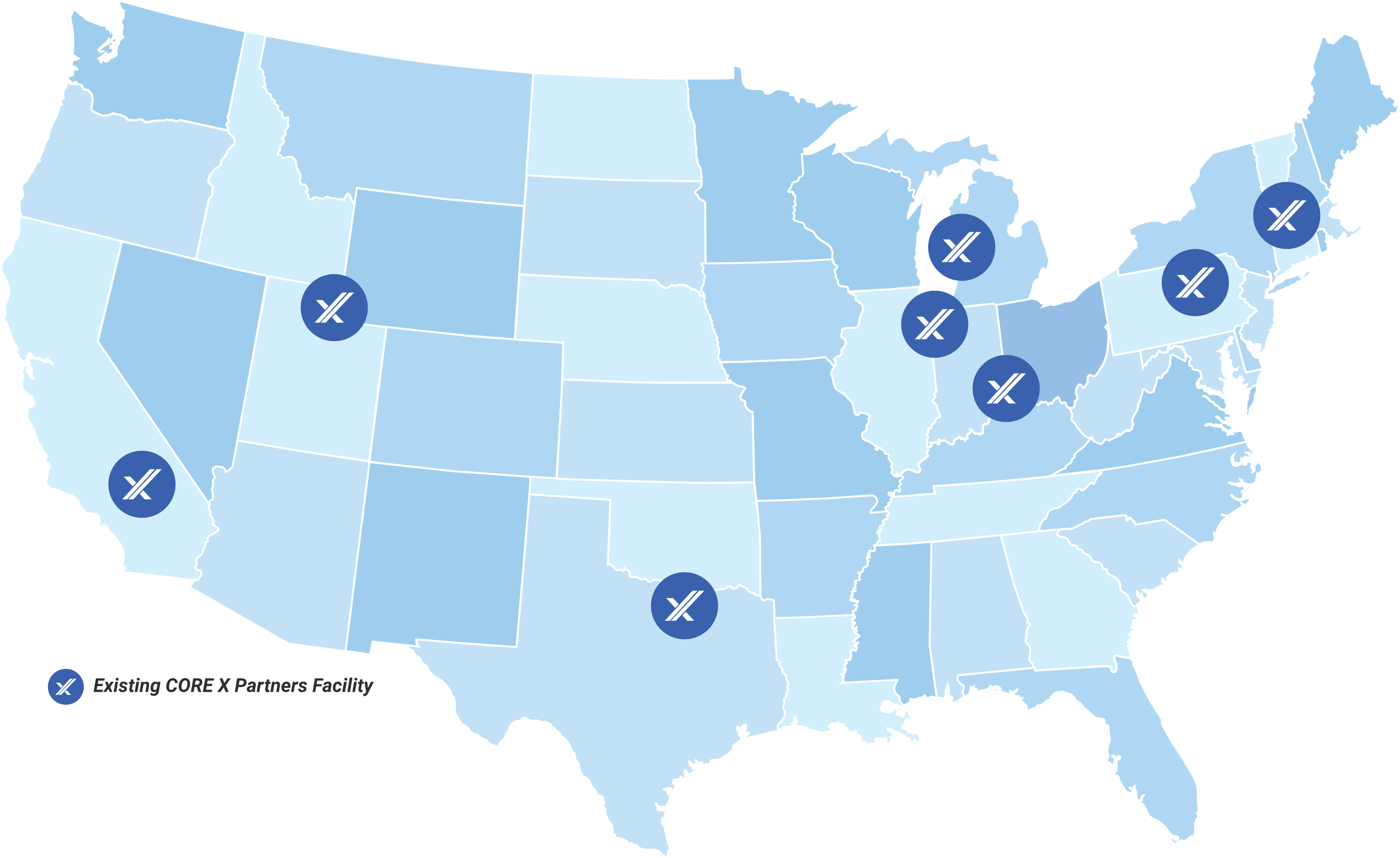
CORE X approaches cold freight shipping within this integrated framework. Nationwide temperature-controlled facilities connect directly to consolidated LTL programs, truckload capacity, and coordinated routing strategies. Rather than treating freight as a downstream handoff, movement is designed to support how product flows between regions.
Local execution at each facility operates within shared standards and visibility systems, allowing frozen and refrigerated freight to move predictably across regions while maintaining cost discipline.
Local Service. Nationwide Network.
[maxbutton id=”1″ text=”Contact us”]
Cold Freight Shipping That Supports Growth Without Structural Cost Escalation
Frozen and refrigerated freight becomes expensive when it scales without structure. The right mix of LTL, FTL, and consolidation, supported by defined lanes, proper packaging, and coordinated facility alignment, allows mid-sized food brands to expand across North America without multiplying cost or temperature exposure.
CORE X Partners aligns temperature-controlled storage, freight, and consolidation within a unified nationwide network built for scalable growth. Our integrated model connects LTL, FTL, and cross-dock strategies under shared standards that protect product integrity while improving cost control. Contact CORE X Partners to strengthen your cold freight shipping strategy.