A local cold storage provider can be exactly what a growing food manufacturer needs. The facility is close to production. The team knows the operation. Communication is direct, and the distribution footprint may still be concentrated in one region.
Problems start when the business grows beyond the model that originally worked.
New retailers add distribution centers in other markets. Freight lanes get longer. Seasonal inventory pushes local capacity. New products require different temperature zones. The manufacturer starts adding warehouses, brokers, carriers, and regional providers one at a time.
At that point, the question is no longer whether the local warehouse is doing a good job. The question is whether the food manufacturer distribution network can support the next stage of growth without becoming harder to manage.
When a Local Cold Storage Model Starts to Change
Growth does not automatically mean a manufacturer needs national coverage. Expanding too early can add cost and complexity before the volume supports it.
The better approach is to watch for the operating signals that indicate the current model is becoming restrictive.
A Local Warehouse Can Be the Right Starting Point
Proximity has real advantages.
A regional cold storage provider may offer short inbound lanes, strong local relationships, direct communication, and familiarity with the manufacturer’s production schedule. If most customers are nearby, there may be little reason to spread inventory across several markets.
A local model often works well when:
- Production is concentrated in one region
- Most customers can be served efficiently from one facility
- Shipment volume is manageable
- Temperature requirements fit the available space
- Seasonal peaks stay within capacity
- Freight lanes remain competitive
- Customer service is consistent
Manufacturers should not add facilities simply to create a larger footprint. Every new location introduces inventory decisions, transportation requirements, reporting needs, and another operating relationship.
Expansion should solve a real business problem.
Watch for the Triggers That Change the Equation
The need for a broader cold chain 3PL network usually develops gradually.
A manufacturer wins business with a retailer that has distribution centers several states away. A distributor expands into another region. Frozen freight begins traveling farther than it should. A local facility runs short on capacity during peak season. A new refrigerated SKU requires capabilities the current warehouse cannot support.
Common expansion triggers include:
- New geographic markets
- Retailer or distributor expansion
- Longer outbound freight lanes
- Rising transportation cost per case
- Local capacity constraints
- Seasonal overflow
- Additional frozen, refrigerated, cooler, dry, or deep-frozen requirements
- More frequent Less-Than-Truckload (LTL) shipments
- Longer customer lead times
- More complex delivery appointments
- Increased dependence on expedited freight
One signal may not justify a network change. Several appearing together deserve a closer look.
How to Expand Without Creating a Fragmented Cold Chain
Adding another warehouse is easy. Building a coordinated distribution model takes more planning.
The risks increase when each new market brings a new provider with its own systems, procedures, reporting, billing, and escalation process.
Account for the Cost of Adding Unrelated Providers
Food manufacturers often expand one market at a time.
The first regional warehouse solves one problem. A second provider solves another. A transportation broker is added for a new lane. Another cold storage facility handles seasonal overflow.
Each decision may make sense individually. Over time, the manufacturer can end up managing a fragmented operating structure.
That creates work that may not appear in the warehouse rate:
- Separate contracts
- Multiple invoices and rate structures
- Different inventory reports
- Different Warehouse Management Systems (WMS)
- Inconsistent lot or date-code processes
- Different customer portals
- Separate transportation contacts
- Multiple escalation paths
- More time reconciling data
- Greater administrative workload
A unified cold storage logistics network can reduce this fragmentation by connecting facilities, logistics support, technology, and operating standards within one broader structure.
The value becomes clearer as the number of markets grows.
Look for Local Accountability Within a Connected Network
Network scale should not come at the expense of local service.
Food manufacturers still need someone at the facility who understands the product, customer requirements, production patterns, and daily operating issues. At the same time, regional teams should have access to shared resources when a customer needs support across several markets.
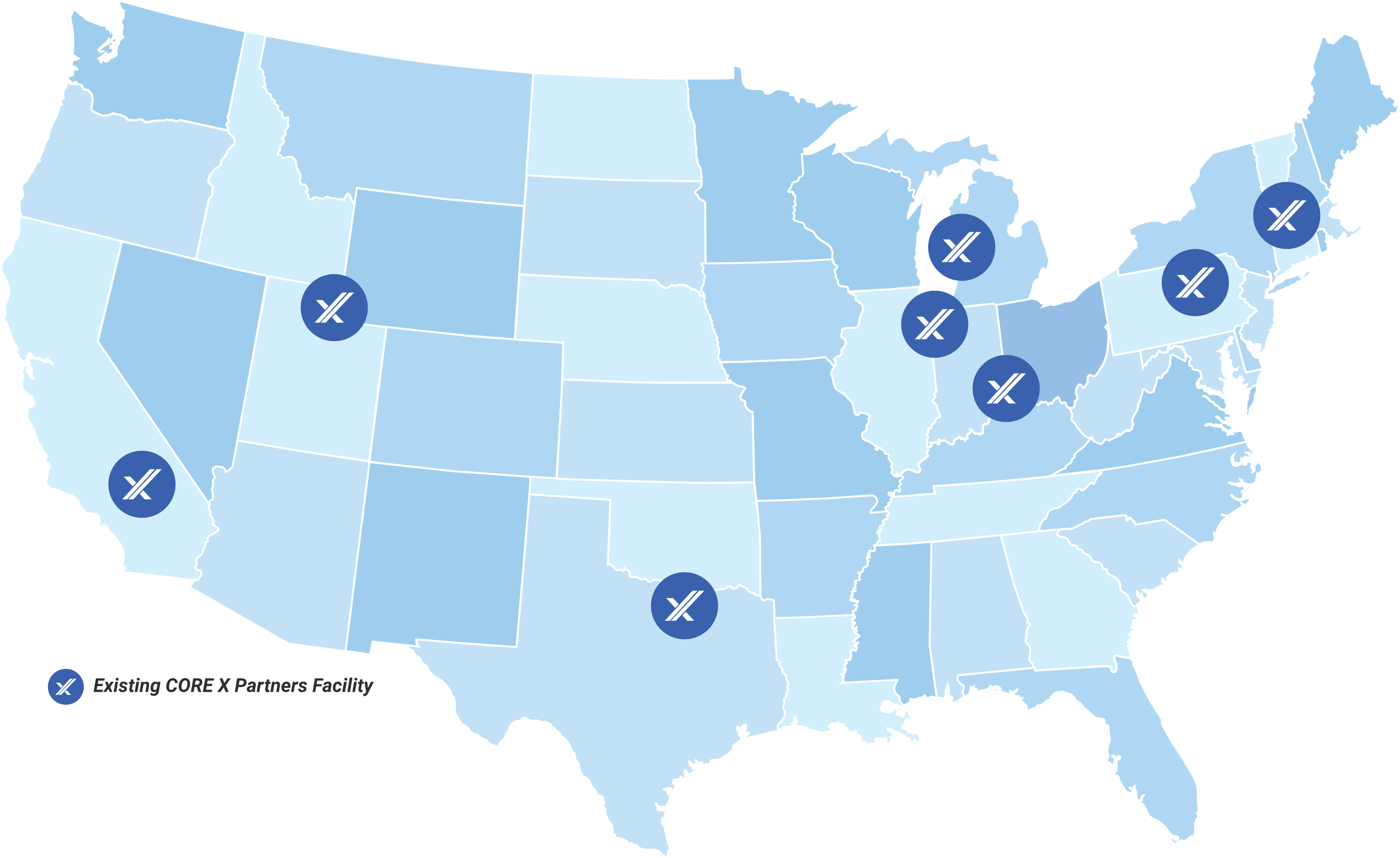
CORE X Partners uses Partnering Regional Operators to combine regional operating accountability with national resources, logistics access, shared technology, and network coordination.
For a growing manufacturer, that model can provide:
- Local facility leadership
- Regional market knowledge
- Common technology
- Coordinated logistics support
- Shared operating expectations
- Multi-region cold storage options
- A clearer path for escalation across the network
The objective is consistency without removing the regional expertise that made the local relationship valuable in the first place.
An integrated cold chain case study can also help manufacturers see how warehousing and distribution decisions change when a food brand begins serving broader markets.
Phase Cold Chain Expansion Around Real Demand
A growing manufacturer does not need inventory everywhere.
The distribution footprint should expand as customer demand develops.
Add Distribution Points Where They Improve the Model
The first step is usually to understand where orders are going and what it costs to serve them from the current facility.
A manufacturer may discover that one distant market is responsible for a growing share of freight spend. Another region may have several retail distribution centers receiving recurring shipments. A third may have demand, but not enough to justify inventory placement yet.
That information can guide the use of regional cold storage facilities.
A phased model may look like this:
- Keep primary inventory close to manufacturing.
- Identify markets where demand has become consistent.
- Compare freight and service performance from the current facility.
- Add a regional distribution point when volume supports it.
- Review inventory levels and replenishment frequency.
- Continue adding locations only where the business case is clear.
This approach allows the cold chain to grow with sales rather than getting ahead of them.
Standardize Data and Operating Procedures
Adding facilities should not mean redefining the product at every location.
Inventory definitions, lot requirements, temperature expectations, food-safety procedures, shelf-life rules, and reporting should remain consistent as the network expands.
Food manufacturers should define common requirements for:
- SKU identification
- Lot and date-code capture
- First Expired, First Out (FEFO) rotation
- Temperature documentation
- Hold and release status
- Customer-specific shelf-life requirements
- Receiving procedures
- Picking and staging
- Shipment documentation
- Exception reporting
- Inventory reporting
Standardization makes it easier to compare performance across facilities and move inventory between regions when needed.
It also gives customer service, quality, logistics, and operations teams a common view of the network.
Connect Freight Strategy to Facility Placement
Warehouse location and transportation strategy should be evaluated together.
A lower storage rate can lose its advantage if product has to travel hundreds of extra miles to reach the customer. A strategically placed cold storage facility may reduce outbound distance, support better replenishment frequency, or improve access to refrigerated LTL and consolidation options.
Facility planning should consider:
- Inbound distance from manufacturing
- Outbound freight miles
- Customer concentration
- Delivery lead time
- Shipment size and frequency
- LTL versus Full Truckload (FTL) mix
- Retail appointment requirements
- Transportation availability
- Seasonal demand
- Temperature requirements
This is an important part of scalable cold chain distribution. Storage and freight decisions influence each other, especially as a manufacturer moves from one regional market into several.
Build an Expansion Scorecard
A network decision should be supported by operating data.
Manufacturers can use a simple scorecard to see whether expansion is actually improving cost and service.
Suggested measures include:
| Measure | What to review |
| Cost per case | Total storage, handling, and transportation cost by region |
| Freight miles | Average distance from inventory to customer |
| Delivery lead time | Time required to serve each market |
| On-Time, In-Full (OTIF) | Delivery performance by customer or region |
| Number of providers | Administrative complexity across the network |
| Inventory turns | How efficiently regional inventory is moving |
| Exception rate | Frequency of delays, inventory issues, claims, or service problems |
| LTL/FTL mix | Whether shipment density is changing by market |
These are suggested planning measures, not industry benchmarks.
The scorecard should show whether a new facility is improving the distribution model or simply moving cost from one part of the cold chain to another.
For example, regional inventory may increase storage requirements while reducing freight miles and customer lead time. A new distribution point may also support stronger retail replenishment but require tighter inventory planning.
The full operating picture matters.
When a National Cold Storage Network Makes Sense
A national cold storage network becomes useful when the manufacturer has enough geographic complexity to benefit from coordinated regional support.
That may happen when the business needs to:
- Serve customers in several regions
- Position inventory closer to retail distribution centers
- Reduce long outbound lanes
- Support seasonal capacity across markets
- Access different temperature capabilities
- Develop refrigerated LTL or consolidation programs
- Standardize reporting across facilities
- Reduce the number of unrelated providers
- Expand without rebuilding the logistics model in every new market
The transition does not have to happen all at once.
A manufacturer may begin with one CORE X location, add another as customer demand develops, and expand the distribution footprint over time. The network provides options without requiring the brand to place inventory everywhere from the start.
Expand the Food Manufacturer Distribution Network with Control
A local cold storage provider can support a food manufacturer for years. The need for a broader model develops when customers, freight lanes, capacity requirements, or geographic markets begin stretching that original setup.
A scalable cold chain should let the manufacturer add distribution points without creating a new operating model every time. Common technology, consistent procedures, coordinated logistics, and strong regional leadership make that expansion easier to manage.
CORE X Partners connects regional cold storage operators through a national cold chain network designed to support growth across markets. Manufacturers can add capacity and regional distribution as demand develops while maintaining local operating support and shared network resources. Contact CORE X Partners to plan your distribution expansion around the markets, products, and customers driving your next stage of growth.