This article was previously published on 10-14-2024 and update on 1-21-2026
Frozen and refrigerated freight requires precise coordination across storage, handling, and transportation to protect product integrity and prevent temperature failures. Effective cold chain logistics depends on managing every handoff, dwell point, and transfer with consistent standards and operational control.
What Frozen Freight Shipping Really Involves
Frozen freight shipping extends beyond transit and depends on how temperature control, handling, and coordination are managed across the broader cold chain. Temperature-sensitive products move through receiving docks, staging areas, cross-docks, and temperature-controlled storage environments before and between transportation legs, making each touchpoint part of overall freight performance.
Temperature deviations are most likely to occur during handoffs, dwell time, and transitions between storage and transportation. Short delays at loading docks, extended staging, or misaligned schedules can introduce exposure risk that affects product quality and regulatory compliance.
For this reason, frozen freight shipping functions best within a coordinated cold chain logistics framework that aligns storage, handling, and transportation under consistent operational standards. When these elements are managed together, temperature risk is reduced, accountability improves, and frozen and refrigerated freight moves more reliably across the supply chain.
Cold Chain Logistics vs. Standalone Refrigerated Shipping
Cold chain logistics differs from standalone refrigerated shipping in both scope and accountability. Refrigerated shipping focuses on maintaining temperature during transit, while cold chain logistics addresses how storage, staging, handling, and transportation work together to protect product integrity across the full movement lifecycle.
When these functions are managed separately, temperature risk often increases at transfer points. Storage providers, carriers, and receivers may operate under different procedures or timelines, creating gaps during loading, staging, or dwell time. Cold chain logistics reduces this risk by coordinating these activities under aligned expectations and controls.
For frozen and refrigerated freight moving across multiple facilities or regions, logistics coordination improves temperature continuity, traceability, and operational reliability. It ensures that temperature control does not begin and end with the truck, but is maintained through every handoff that affects product condition.

Core Components of Frozen and Refrigerated Logistics
Reliable frozen freight shipping depends on several interconnected components working together under consistent standards. Each component plays a specific role in maintaining temperature stability and minimizing exposure risk.
These components typically include temperature-controlled storage and staging, cross-docking and consolidation services, coordinated refrigerated transportation, and structured scheduling and documentation processes. Clear communication and chain-of-custody controls support accountability as freight moves between facilities and carriers.
When these elements operate independently, inconsistencies can develop. When they are coordinated as a system, frozen and refrigerated freight moves more efficiently, with fewer temperature excursions and stronger compliance outcomes.
Why Nationwide Coverage with Local Execution Matters
Refrigerated and frozen freight shipping often occurs across regional and national distribution networks, but successful execution remains highly dependent on local conditions. Facility capabilities, infrastructure constraints, routing options, and response times all vary by market.
Nationwide coverage allows organizations to scale distribution and support broader customer networks. Local execution ensures that storage, handling, and transportation reflect the operational realities of each region. Cold chain logistics models that rely solely on centralized control or disconnected local providers may struggle to balance consistency with adaptability.
Combining national reach with experienced regional operators supports both scalability and reliability. This structure allows cold chain logistics programs to maintain consistent standards while responding effectively to local conditions that influence the performance of frozen freight.
How CORE X Partners Delivers Cold Chain Logistics Nationwide
CORE X Partners delivers cold chain logistics through a coordinated national network that aligns storage, handling, and transportation under consistent operational and quality standards. Services are executed locally through Partnering Regional Operators (PROs) with deep regional expertise.
This model supports faster response times, reduced handoff risk, and logistics execution that reflects local market conditions. Centralized oversight reinforces consistency across locations while allowing regional operators to manage day-to-day operations within defined expectations.
By coordinating logistics activities across regions rather than treating them as isolated services, CORE X Partners supports more reliable movement of frozen and refrigerated freight across the cold chain.
Strategic Cold Chain Locations That Support Efficient Freight Movement
Geographic positioning plays a critical role in frozen freight logistics. Facility locations influence transit times, dwell times, routing efficiency, and temperature-exposure risk throughout the supply chain.
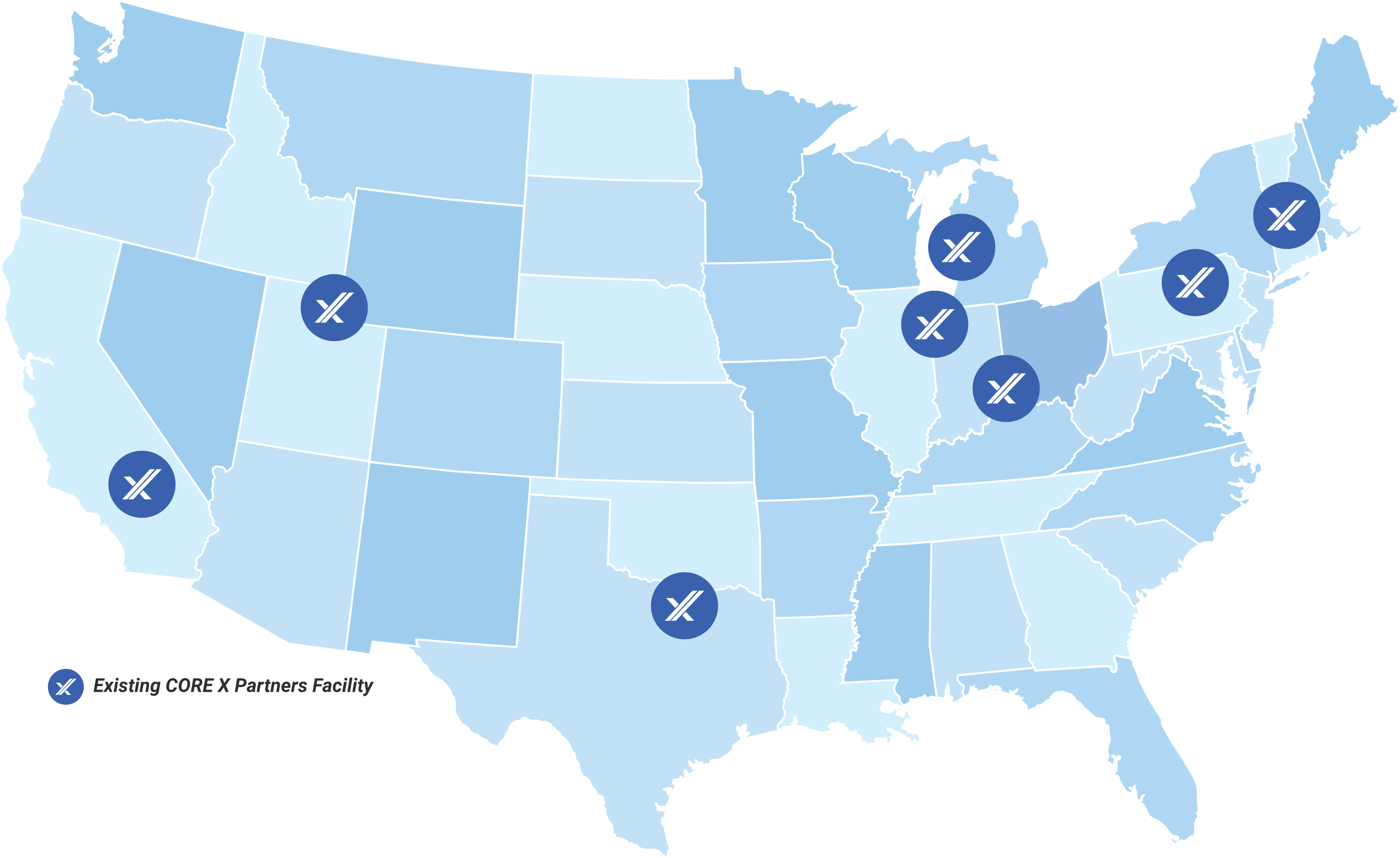
CORE X Partners maintains strategic cold chain locations across the United States to support regional distribution and nationwide freight movement. Each location is equipped to support temperature-controlled storage and logistics services while operating as part of an integrated network.
This distributed footprint allows customers to reduce transportation complexity, improve routing flexibility, and maintain consistent cold chain controls across markets without relying on a single centralized facility.
When to Partner with a Cold Chain Logistics Provider
As frozen freight shipping operations grow more complex, organizations often reach a point where internal coordination becomes difficult to sustain. This may occur as distribution footprints expand, volumes fluctuate, or compliance expectations increase.
Organizations commonly partner with cold chain logistics providers when shipments move across multiple regions, storage and transportation are managed by separate parties, or temperature monitoring and documentation requirements strain internal resources. In these scenarios, a coordinated logistics partner can help reduce complexity while improving temperature continuity and accountability.
Partnering decisions should focus on a provider’s ability to align storage, handling, and transportation under consistent standards rather than simply adding capacity.
How CORE X Partners Supports Frozen and Refrigerated Freight
CORE X Partners supports frozen and refrigerated freight by coordinating temperature-controlled storage, handling, and logistics across a unified national network. Rather than treating shipping as a standalone function, logistics services are designed to align facility operations, staging practices, and transportation execution.
Regional operators deliver services locally while operating within network-wide quality and safety expectations. This approach reduces handoff risk, improves visibility, and supports consistent cold chain execution across markets.
By combining regional expertise with centralized oversight, CORE X Partners helps organizations move frozen and refrigerated freight with greater reliability while protecting product integrity at every stage of the cold chain.
Reducing Risk in Frozen Freight Logistics
Reliability of frozen and refrigerated freight depends on how effectively storage, handling, and transportation work together as a coordinated system. Temperature control must be maintained not only during transit, but across every handoff and dwell point.
Organizations that approach cold chain logistics strategically gain stronger control over temperature risk, improved compliance readiness, and fewer avoidable losses. Coordinated logistics execution supports consistent performance whether shipments move regionally or nationwide.
CORE X Partners delivers cold chain logistics solutions designed to protect product integrity across storage, handling, and transportation. Our nationwide network combines local execution with centralized standards to support the reliable movement of frozen and refrigerated freight. Contact CORE X Partners to learn more about cold chain logistics solutions for reliable frozen freight shipping.