
A reefer trailer can be running at the correct set point and still struggle to maintain consistent conditions around the load. The reason often starts with loading.
Frozen freight depends on air moving through the trailer as the refrigeration system was designed to circulate it. Pallets that block airflow, press against trailer walls, sit too high, or obstruct return-air paths can create uneven conditions even when the equipment is operating normally.
Trailer preparation matters too. So does the condition of the product before loading and the amount of time it spends staged outside temperature-controlled storage. For frozen shippers, a good reefer trailer loading pattern is part of temperature control.
CORE X Partners connects temperature-controlled storage and transportation so warehouse preparation, staging, loading, freight movement, and shipment visibility can work from the same operating plan.
Why Loading Matters to Frozen Freight Temperature Control
A reefer unit maintains a controlled transportation environment. It cannot correct every problem created before the doors close.
If frozen product enters the trailer warmer than its shipping specification, the refrigeration unit has to manage that added heat while maintaining the trailer environment. If the load blocks circulation, conditioned air may not reach the entire trailer evenly. If pallets spend too long on an uncontrolled dock, a properly prepared trailer starts the trip with another variable to overcome. These issues are connected.
A strong loading process should confirm three things before departure:
- The product is already at its required shipping condition.
- The trailer is prepared for the load.
- The pallet configuration allows the refrigeration system to circulate air properly.
That makes trailer loading an operating control, not simply a warehouse task.
How Trailer Preparation and Loading Affect Airflow
Food manufacturers, warehouse teams, and carriers should understand the basic mechanics well enough to identify loading practices that create unnecessary risk.
Speak With A Cold Chain Specialist
Pre-Cool the Trailer Before Loading
A trailer can absorb heat while it is empty. Interior walls, floors, doors, and other surfaces can warm while the trailer sits between loads or waits at a dock. Pre-cooling helps bring the trailer environment toward the required operating condition before frozen product is loaded.
FDA guidance for sanitary transportation specifically addresses adequate preparation of mechanically refrigerated compartments before loading, including pre-cooling when necessary.
Pre-cooling does not mean turning on the unit as the first pallet enters. The process should give the equipment enough time to establish the intended trailer environment. The carrier and warehouse should also agree on the required set point and how pre-cooling will be verified.
A pre-load check may include:
- Reefer unit operation
- Trailer temperature
- Correct set point
- Cleanliness
- Door seals
- Interior damage
- Floor channels
- Air chutes
- Sensor readiness
- Documentation of the pre-trip inspection
The trailer should be ready before product leaves temperature-controlled storage.
Do Not Expect the Reefer to Pull Down Warm Product
Frozen product should enter transportation at the condition specified by the shipper. Transport refrigeration equipment is designed primarily to maintain product conditions during transit. Loading product that is warmer than intended adds a heat load the trailer was not meant to remove quickly.
That can slow temperature recovery and create uneven conditions inside the load. Before loading begins, manufacturers and warehouse teams should know:
- Required shipping temperature
- Product condition at release
- Whether temperature verification is required
- How product that falls outside specification will be handled
- Who has authority to release or hold the shipment
This keeps the carrier from inheriting a temperature problem that started before transportation.
Understand How Air Moves Through the Trailer
Reefer airflow is a circulation system. Conditioned air moves from the refrigeration unit through the trailer and returns to the unit after passing around the freight. That circulation helps the reefer maintain the required environment.
The exact airflow design varies by equipment, but the operating principle is straightforward: air needs a path through and around the load.
If pallets block that path, the system may still produce cold air while some areas of the trailer receive less circulation. The return-air path is especially important. Blocking it can make it harder for the refrigeration system to maintain even conditions throughout the trailer.
That is why load planning should consider airflow before trying to use every available inch of trailer space.
Avoid Loading Patterns That Create Warm Zones
Several common loading problems can interfere with airflow.
These include:
- Freight loaded too close to trailer walls
- Blocked air chutes or evaporator outlets
- Pallets obstructing return-air paths
- Product stacked above recommended trailer height
- Damaged pallets restricting floor airflow
- Cartons or stretch wrap hanging into airflow channels
- Dense mixed-load configurations
- Pallets shifting during transit
Some problems begin with the pallet itself.
Poorly constructed loads may lean or move after departure. Carton overhang can place product against trailer walls. Inconsistent pallet heights can complicate load planning and create unstable configurations.
CORE X discusses frozen and refrigerated palletization practices for refrigerated Less-Than-Truckload (LTL) freight, where pallets may face additional handling and consolidation events.
The principle carries into long-haul frozen freight as well: pallet construction and trailer loading both affect how the load behaves after the doors close.
Dock Staging Can Undo Good Trailer Preparation
Trailer airflow receives a lot of attention, but product condition before loading matters just as much.
A frozen pallet that leaves storage and waits on an uncontrolled dock may begin warming before it reaches the trailer. If loading is delayed, that exposure can continue while paperwork, equipment, labor, or transportation issues are resolved.
The solution is coordination.
Warehouse and transportation teams should align:
- Order release
- Picking
- Staging
- Trailer arrival
- Pre-trip inspection
- Pre-cooling
- Loading labor
- Documentation
- Seal application
- Departure timing
Using temperature-controlled warehousing as part of the transportation plan can help keep product in the proper environment until the trailer and loading team are ready.
This becomes especially important during peak periods, appointment delays, or high-volume loading windows.
It also reinforces a broader point: cold-chain touchpoints outside the trailer can affect shipment quality before the highway portion of the trip even begins.
Build a Pre-Departure Verification Process
Once the trailer is loaded, the team should confirm that the shipment is ready for transit.
A simple pre-departure process can catch problems while the truck is still at the facility.
Verify Product and Trailer Conditions
Confirm that the shipment meets the shipper’s requirements before the doors close.
Depending on the product and program, this may include:
- Product-temperature verification
- Trailer temperature
- Reefer operating set point
- Unit status
- Temperature-monitor placement
- Pallet condition
- Required airflow clearances
- Seal condition
- Load securement
The goal is to establish a documented starting point.
If a temperature or airflow question arises later, teams can compare in-transit data with what was recorded at departure.
Check the Load From an Airflow Perspective
A final visual inspection should consider more than whether the pallets fit.
Ask:
- Is the return-air path clear?
- Are air chutes unobstructed?
- Is freight pressed against trailer walls?
- Are pallet heights within the planned load configuration?
- Are floor airflow paths open?
- Is loose packaging or stretch wrap blocking circulation?
- Are pallets stable enough to remain in position during transit?
These questions take little time compared with the cost of discovering a loading problem after the shipment has traveled hundreds of miles.
Speak With A Cold Chain Specialist
Confirm Monitoring Before Dispatch
Temperature monitors should be active and positioned as planned before departure.
Depending on the shipment, the program may use reefer telemetry, ambient data loggers, product-level probes, or multiple sensors in representative locations.
The departure record should confirm:
- Monitoring devices are active
- Sensors are placed correctly
- Initial readings are available
- Alarm thresholds are configured
- The appropriate team receives alerts
Loading, airflow, and temperature monitoring work together. Monitoring helps reveal whether the physical loading plan performed as expected once the trailer is in transit.
Questions to Ask a Frozen Freight Carrier or 3PL
Shippers should understand how a transportation provider manages trailer preparation and loading before awarding frozen freight.
Useful questions include:
- How is trailer pre-cooling documented?
- What pre-trip inspection is completed before frozen loads?
- What loading standards protect supply and return airflow?
- How are pallet height and wall clearance handled?
- Who verifies trailer condition before loading?
- How are reefer set point and equipment status documented?
- What temperature monitoring is available during transit?
- Who responds if a temperature alarm occurs?
- How are loading-related exceptions investigated?
- What procedures apply when product is staged or transferred between facilities?
A qualified cold transport partner should be able to explain the operating process behind the trailer, not simply provide equipment and a freight rate. CORE X currently positions transportation within a broader model that connects storage, staging, consolidation, freight coordination, and shipment visibility.
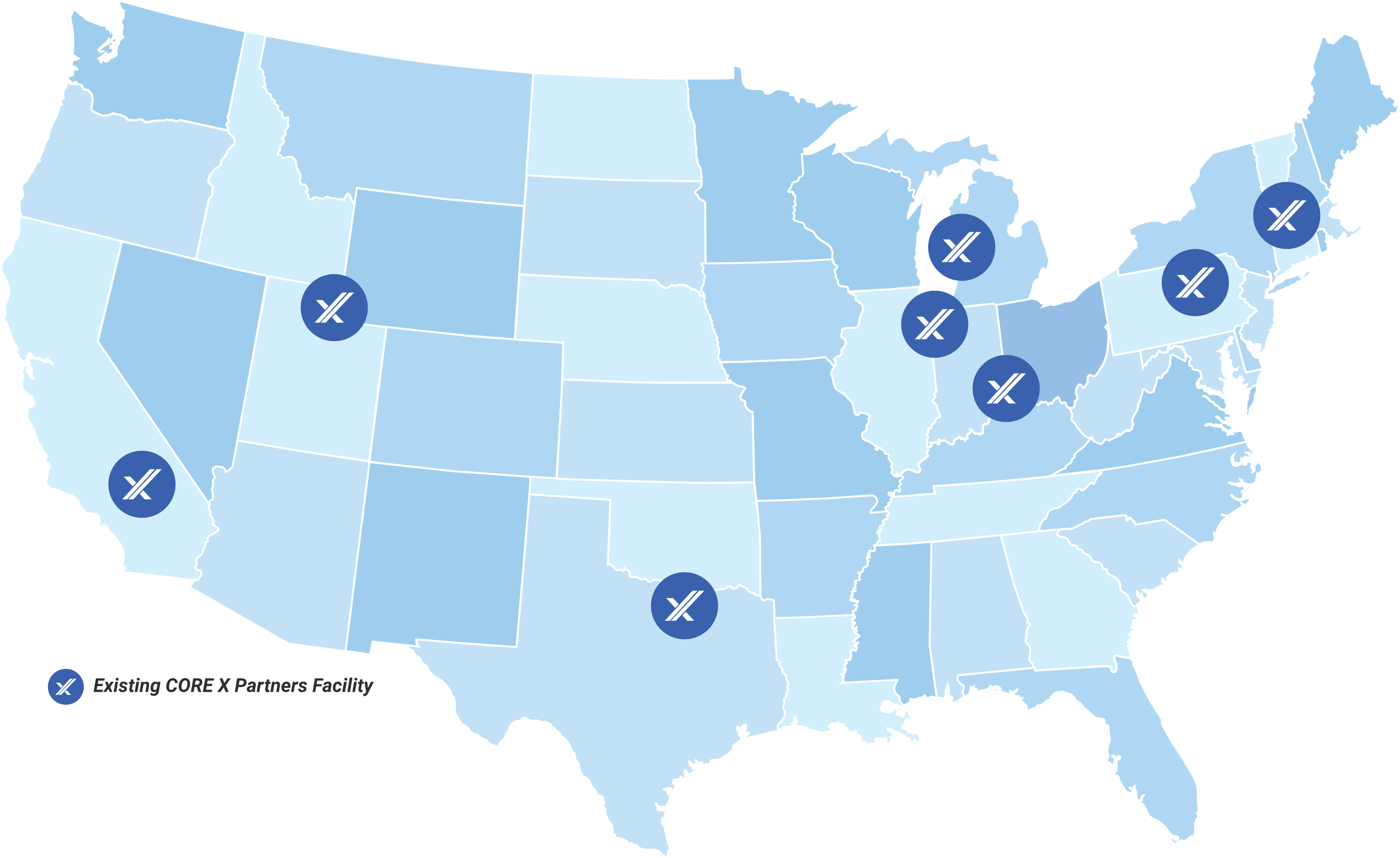
Regional facility support can strengthen that model as well. For freight moving through the Midwest and Chicagoland market, CORE X CROWN cold storage in Crown Point, Indiana connects temperature-controlled storage with transportation and consolidation support across a nationwide network.
Review Loading-Related Exceptions
If temperature monitoring shows repeated instability, the reefer unit should not automatically get the blame. The loading process may be part of the root cause.
Post-shipment reviews should compare:
- Loading pattern
- Pallet configuration
- Trailer type
- Pre-cooling records
- Product condition at loading
- Sensor placement
- Temperature trends
- Door events
- Dock dwell
- Reefer faults
- Stop and delivery history
Patterns across multiple loads can be particularly useful.
If one pallet configuration consistently shows uneven temperature performance, the loading standard may need to change. If excursions appear after the same dock or transfer event, staging practices deserve review. If one trailer type performs differently from another, equipment compatibility may be the issue.
Thermal maps, temperature traces, approved loading photos, and pre-trip inspection records can help operators see what happened rather than relying on assumptions.
Protect Frozen Freight Before the Truck Leaves
Reefer trailer loading pattern deserves the same attention as equipment condition and temperature monitoring.
Product should be ready before loading. The trailer should be pre-cooled when required. Pallets should preserve airflow, and staging should be timed so frozen freight does not wait unnecessarily outside temperature-controlled storage. A pre-departure check then confirms that the load, reefer, and monitoring system are ready for the route.
CORE X Partners helps connect cold storage, dock operations, transportation, and shipment visibility so frozen product can move through each handoff with stronger operating control. Our regional teams support temperature-controlled transportation within a broader cold chain network designed around product requirements and customer delivery needs. Contact CORE X Partners to discuss reefer loading, frozen freight, and transportation requirements for your distribution program.