Retailer delivery performance gets more complicated when frozen and refrigerated products are involved. OTIF stands for On Time/In Full, and for food brands shipping to retail distribution centers, it generally means the order arrives within the retailer’s required delivery window and in the expected quantity.
For cold chain shipments, that is only part of the challenge. A load can arrive on time and in full, but still create problems if the product is not received in acceptable condition. Temperature integrity, labeling, pallet condition, documentation, ASN/EDI accuracy, and order details all affect whether a delivery is accepted without rework, rejection, claims, or chargebacks.
That is why food companies need to look beyond transportation alone when they want to improve retailer OTIF. Stronger performance comes from connecting inventory placement, temperature-controlled storage, staging, freight coordination, delivery appointments, shipment visibility, and exception response into one coordinated cold chain process.
Why Cold Chain OTIF Failures Often Start Before the Truck Leaves
OTIF is often treated like a delivery metric, but many failures begin upstream. A carrier may be blamed for a late or incomplete delivery, even when the real issue started with inventory, warehouse readiness, scheduling, paperwork, or communication.
Frozen and refrigerated shipments are especially vulnerable because timing and temperature control are connected. Product that is picked too late may miss its dispatch window. Product that is staged too early may face unnecessary temperature exposure. Inventory that is available but stored in the wrong region can create longer transit times, tighter delivery windows, and higher freight pressure.
Common causes of cold chain OTIF issues include:
- Inventory positioned too far from the retail distribution center
- Product available in the system but not allocated correctly
- Orders picked late or staged too early
- Dock schedules that do not align with pickup or delivery windows
- ASN, EDI, PO, labeling, or documentation mismatches
- Temperature exposure during staging, loading, or dwell time
- Delayed exception communication when a shipment is at risk
Each of these issues can affect retailer performance before the truck is even moving. Improving OTIF requires better control over the full order path, not just the final transportation leg.
How Cold Chain Providers Help Improve Retailer OTIF
Food brands can improve retailer OTIF when their cold chain provider supports the operational controls that influence both delivery timing and product condition. That includes where inventory is stored, how orders are prepared, how freight is scheduled, how exceptions are identified, and how quickly the right teams respond.
A cold chain provider can support stronger OTIF performance by helping customers align several core functions:
- Inventory positioning closer to target retail DCs
- Temperature-controlled storage and staging before dispatch
- Retail appointment and routing-guide discipline
- Freight coordination across LTL, truckload, and consolidation needs
- Real-time visibility into inventory, order status, shipments, and exceptions
- Escalation processes for delayed, short, or temperature-sensitive loads
This connected approach is especially important for food manufacturers, distributors, importers, retailers, and foodservice companies managing multiple SKUs, regions, customers, and delivery requirements. When cold storage, freight, and logistics planning operate separately, small timing issues can become expensive service failures. When those functions are aligned, teams have a better chance to protect the delivery window without putting product quality at risk.
Why OTIF Requires Warehouse and Transportation Alignment
The handoff between warehouse operations and transportation is one of the most common points of cold chain risk. The warehouse may be focused on picking, staging, and loading. The transportation team may be focused on carrier availability, route timing, and delivery appointments. Customer service may be tracking retailer requirements and exception updates.
If those teams are disconnected, no one has the full picture.
An order might be ready, but the carrier is delayed. A trailer may arrive, but the product is not fully staged. A delivery appointment may be scheduled, but the outbound dock is backed up. A shipment may be loaded, but documentation or EDI details do not match the retailer’s receiving expectations.
Integrated cold storage and transportation helps reduce those gaps. When facility teams and freight teams are aligned, customers can better coordinate:
- Order readiness
- Dock scheduling
- Temperature-controlled staging
- Trailer availability
- Dispatch timing
- Shipment tracking
- Delivery confirmation
- Exception response
This helps reduce the “who owns the issue?” delay that often slows corrective action. For frozen and refrigerated retail distribution, faster communication can be the difference between a managed exception and a rejected or compromised shipment.
How to Improve Retailer OTIF Without Increasing Temperature Risk
Improving retailer OTIF should not mean rushing product through the cold chain. Moving faster without the right controls can increase dwell time, create loading mistakes, expose product to temperature variation, or push incomplete orders into the network.
The better goal is controlled speed. Food brands need orders prepared accurately, staged properly, loaded efficiently, and monitored closely from storage through delivery.
Cold chain providers help reduce temperature risk by supporting practices such as temperature-controlled staging, coordinated dock timing, clear loading procedures, shipment visibility, and early exception escalation. These controls help protect product while still supporting retailer delivery expectations.
For example, a shipment should not be staged too early just to avoid a late pickup. A better process aligns picking, staging, trailer arrival, and dispatch timing so product spends less time in uncontrolled transition points. The same principle applies to delivery appointments, cross-docking, LTL consolidation, and multi-stop routes. The process needs to support both timing and temperature integrity.
Retailer OTIF Also Depends on Data Visibility
Retailer scorecard performance is difficult to improve when teams rely on delayed updates, manual emails, or disconnected systems. By the time someone realizes a shipment is late, short, or at risk, the best corrective options may already be gone.
Cold chain data visibility helps teams identify issues earlier. Food companies need insight into inventory status, order progress, shipment movement, temperature records, appointment status, and exception history. That visibility supports better decision-making before an issue becomes a chargeback, rejection, or service failure.
For cold chain retail distribution, useful visibility may include:
- Real-time inventory status
- Order picking, staging, and loading updates
- Shipment tracking
- Temperature records
- Delivery appointment status
- ASN/EDI confirmation
- Exception notes and root-cause reporting
The value is not just in collecting data. The value comes from using that data to act sooner. If a load is delayed, teams need to know who is responsible for rescheduling, communicating with the customer, protecting product condition, and updating internal stakeholders.
KPIs Food Brands Should Ask Their Cold Chain Provider to Report
OTIF improvement depends on measuring more than whether a load arrived. Food brands need reporting that shows where failures happen and why they happen.
Useful cold chain performance metrics may include:
- On-time appointment arrival
- In-full shipment rate
- Order accuracy
- Temperature exception rate
- Rejected-load rate
- ASN/EDI accuracy
- Dock dwell time
- Fill-rate impact by SKU, customer, or facility
These KPIs help separate transportation misses from warehouse misses, inventory misses, documentation misses, and temperature-related issues. That distinction matters because each root cause requires a different fix.
For example, late deliveries may point to appointment scheduling or carrier issues. Short shipments may point to inventory accuracy, allocation, or replenishment problems. Rejected loads may point to temperature control, documentation, pallet condition, labeling, or retailer receiving requirements. Without root-cause reporting, teams may keep solving the wrong problem.
Questions to Ask Before Choosing a Cold Chain Provider
Food companies that ship to retail distribution centers need a provider that understands both cold chain execution and retail performance expectations. The right partner should be able to explain how storage, freight, data, and customer communication work together.
Before choosing a cold chain provider, ask:
- Can you provide visibility into inventory, shipments, temperature records, and KPI reporting?
- How do you communicate shipment, temperature, or appointment exceptions?
- How do you manage retailer-specific delivery requirements by customer or region?
- Can you support refrigerated LTL consolidation for lower-volume retail lanes?
- How do you connect cold storage readiness with outbound freight planning?
- Can you report OTIF misses by root cause?
The answers should show whether the provider can support daily execution and ongoing improvement. A provider that only reports final delivery status may not give food brands enough visibility to reduce risk. A connected cold chain partner should help customers understand what happened, why it happened, and how to improve future performance.
Improve Retailer OTIF With Connected Cold Chain Execution
Retailer OTIF performance improves when storage, freight, logistics, visibility, and exception response work together. For frozen and refrigerated products, the goal is not only to arrive on time and in full. The product also needs to arrive in acceptable condition, with the right documentation, accurate order details, and temperature integrity protected across the cold chain.
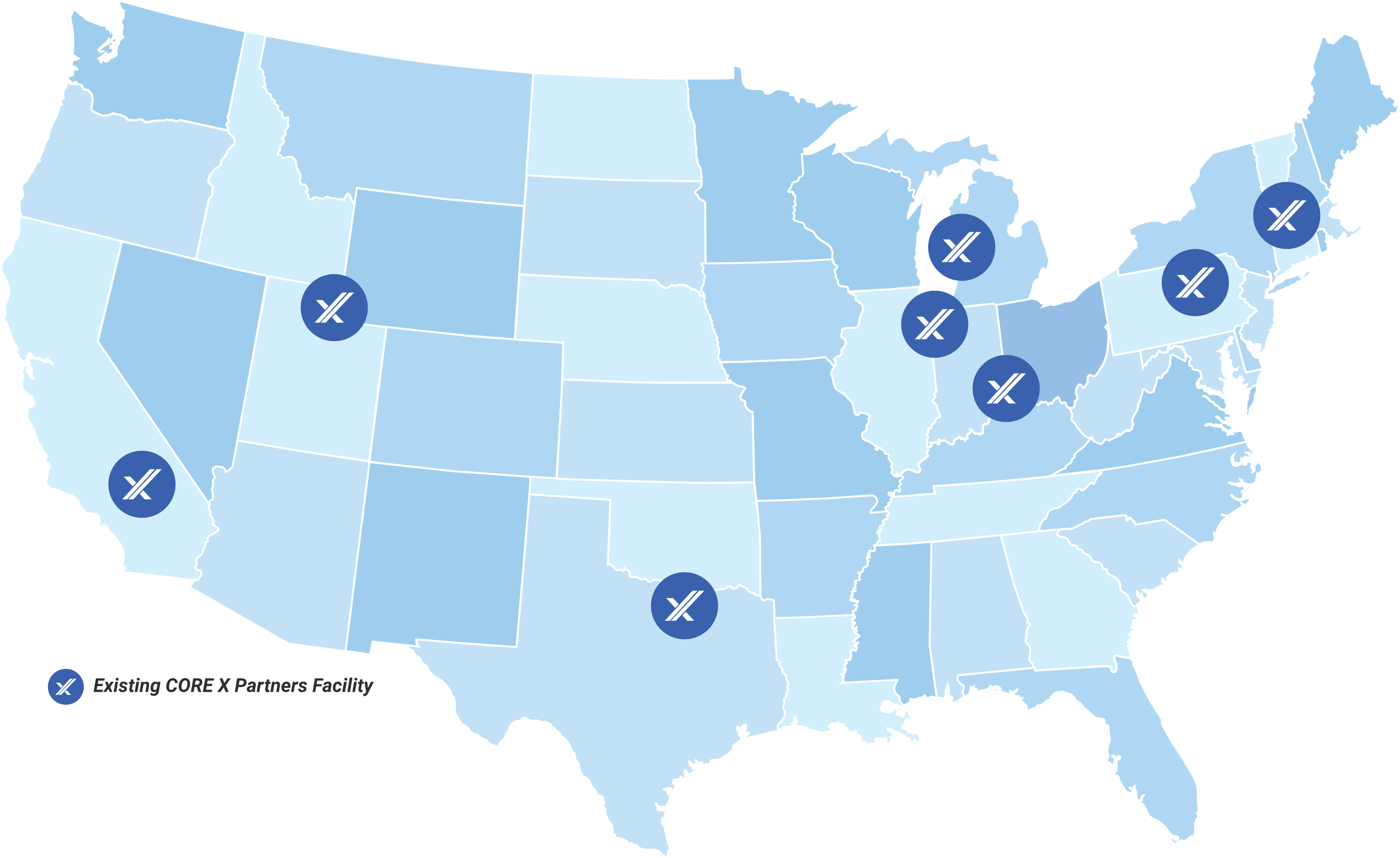
CORE X Partners helps food manufacturers, distributors, importers, retailers, and foodservice companies strengthen retail delivery performance through connected cold storage, transportation coordination, refrigerated LTL, consolidation, logistics support, shipment visibility, and customer communication. With a national cold chain network and experienced regional operators, CORE X supports the coordination food brands need to reduce handoffs, protect product quality, and respond faster when delivery risk appears.
CORE X Partners helps food companies improve retailer OTIF by connecting temperature-controlled storage, freight coordination, logistics support, shipment visibility, and exception response through one national cold chain network. Our regional operators, shared technology, managed logistics, transportation support, and reporting tools help customers protect product quality while supporting stronger retail delivery performance. Contact CORE X Partners to learn how our connected cold chain solutions can support frozen, refrigerated, and temperature-sensitive products moving to retail distribution centers.