Table of Contents
ToggleHow Integrated Storage, Transportation, and Network Coordination Support Scalable Cold Chain Distribution
Temperature-controlled distribution, supported by reliable cold chain logistics partners, has become one of the most critical components of modern food supply chains. Frozen and refrigerated products now move through highly distributed networks that must maintain strict temperature control while supporting national retail, food service, and e-commerce channels.
As brands expand into new regions, the ability to coordinate temperature-controlled storage, staging, and transportation across multiple facilities becomes essential to maintaining product quality, regulatory compliance, and operational efficiency.

Market growth reflects the scale of this shift.
Industry forecasts estimate the global cold chain market at approximately $371 billion in 2025, with projections exceeding $1.6 trillion by 2033, driven by rising demand for frozen foods, fresh products, and temperature-controlled distribution across multiple industries.
North America remains the largest regional market, supported by extensive refrigerated warehousing infrastructure and expanding cold storage capacity.
Continued investment in temperature-controlled facilities and national distribution networks reflects the growing role of cold chain solutions in supporting modern food supply chains.
Rising demand for frozen foods, fresh products, and temperature-controlled distribution is accelerating investment in cold chain logistics infrastructure nationwide and around the globe.
Food Brands Must Support a Changing Distribution Model
At the same time, distribution patterns are changing. Manufacturers increasingly ship smaller pallet quantities to more destinations rather than concentrating inventory in a few regional warehouses. This shift increases complexity across transportation, storage, and inventory coordination.
Cold chain logistics providers are responding by moving beyond the traditional “warehouse plus trucking” model. Instead, modern cold chain systems integrate temperature-controlled storage, freight coordination, consolidation programs, and inventory visibility within a unified network.

National cold storage and logistics services are designed to support this environment. By coordinating infrastructure and transportation planning across multiple regions, these networks allow companies to scale distribution while maintaining product protection and controlling logistics costs.
This whitepaper examines how national cold chain logistics networks operate, what capabilities modern food distribution requires, and how integrated storage and freight systems support scalable temperature-controlled supply chains.
The Growing Demand for National Cold Storage & Logistics Services
Demand for cold chain solutions continues to expand as food supply chains become more geographically distributed. Consumers expect reliable access to frozen and refrigerated products, while grocery and foodservice networks increasingly operate national fulfillment models that require consistent supply across multiple regions.
As a result, cold chain logistics has developed into a major global infrastructure sector. Food manufacturers, distributors, and retailers are investing heavily in temperature-controlled storage, transportation systems, and distribution networks designed to support nationwide operations.

Several industry trends are driving this growth:
- Increased demand for frozen and refrigerated food products
- Expansion of national grocery and foodservice distribution networks
- Growth in e-commerce grocery fulfillment
- Greater focus on food safety, traceability, and regulatory compliance
- The need for cold chain networks that operate across multiple regions
These trends are changing how companies evaluate logistics partners. Rather than selecting individual warehouse locations, food brands increasingly seek providers capable of delivering integrated cold chain logistics services across a national network.
What Do National Cold Storage & Logistics Services Include?
Cold chain logistics is often misunderstood as simply refrigerated warehouse space. National cold storage and logistics services combine storage infrastructure, transportation coordination, and operational systems designed to move temperature-sensitive products across large geographic networks.
Cold storage facilities provide the environmental controls necessary to preserve perishable products during staging and inventory storage. Facilities typically operate multiple temperature zones that may include refrigerated, frozen, and deep-frozen environments, depending on product requirements.

However, effective cold chain logistics extends far beyond storage. Modern national networks integrate several operational capabilities that allow products to move efficiently between facilities and destination markets.
Typical services include:
- Multi-temperature cold storage infrastructure
- Inventory management and product staging
- Cross-dock and consolidation operations
- Refrigerated transportation coordination
- Freight brokerage and carrier management
- Shipment monitoring and logistics visibility
When these capabilities operate within a coordinated network, companies can position inventory strategically, consolidate shipments moving toward similar regions, and align transportation capacity with distribution demand.
For food brands shipping frozen and refrigerated products nationwide, integrated cold-chain logistics offers a more stable operating model than relying on isolated warehouses or disconnected transportation providers.
The Network Model: Why Coordination Matters in Cold Chain Logistics
Operating multiple cold storage facilities across different regions does not automatically create a national logistics network. Without coordination, facilities often function independently, creating fragmented distribution systems that increase handling events, complicate freight planning, and reduce visibility across the supply chain.
Cold chain logistics networks require consistent operating standards, coordinated inventory positioning, and integrated transportation planning in order to function efficiently. These elements allow products to move smoothly between storage locations, consolidation hubs, and delivery destinations while maintaining strict temperature control.

Successful cold chain networks typically combine local operational expertise with national coordination. Local operators manage day-to-day storage, staging, and facility operations, while shared standards and centralized systems ensure consistent performance across the broader network.
This model allows companies to balance regional responsiveness with national distribution efficiency. Inventory can be positioned closer to key markets, shipments can be consolidated across facilities, and transportation lanes can be coordinated across the network.
For food manufacturers distributing frozen and refrigerated products across the United States, this integrated approach provides the operational stability required to scale distribution while maintaining product integrity.
Nationwide Facility Networks: Infrastructure That Supports Scalable Cold Chain Distribution
Cold chain logistics networks depend on infrastructure specifically designed for temperature-controlled product movement. Unlike conventional warehouses, cold storage facilities must maintain strict environmental conditions while supporting rapid product movement, inventory accuracy, and coordinated freight operations.
Facilities within national cold chain networks typically operate multiple temperature zones to support a range of products. Refrigerated environments preserve fresh foods, while frozen and deep-frozen areas maintain products that must remain at sub-zero temperatures throughout storage and transportation.

Modern cold storage facilities also function as distribution nodes within a larger cold chain logistics network. In addition to storage, these sites support several operational activities:
- Receiving and staging inbound shipments
- Blast freezing or temperature stabilization when required
- Inventory management and order preparation
- Cross-docking and consolidation operations
- Outbound freight coordination
Within a national logistics system, facilities often serve different roles depending on their location. Some act as primary storage hubs near production facilities or ports of entry. Others operate as consolidation centers positioned along major freight corridors. Regional distribution nodes support final delivery to grocery distribution centers, foodservice operators, and retail locations.
When facilities operate within a coordinated cold chain logistics network, companies can move products efficiently between locations while maintaining temperature integrity and operational visibility across the supply chain.
Transportation, Consolidation, and Freight Coordination
Cold chain logistics requires close coordination between storage infrastructure and transportation planning. Without structured freight coordination, shipments moving in smaller pallet quantities can pass through fragmented networks that increase handling events, extend transit times, and raise logistics costs.
Frozen and refrigerated food brands often ship partial orders to multiple customers rather than building full truckloads for every destination. To manage this complexity, national cold chain logistics providers typically implement several freight coordination strategies.
Consolidation and LTL Programs

Freight consolidation allows compatible shipments moving toward the same regions to share refrigerated trailer capacity. Instead of moving independently through multiple LTL terminals, shipments can be staged in temperature-controlled facilities and consolidated before long-haul transportation. This approach improves trailer utilization while reducing handling events that could expose products to temperature fluctuations.
Cross-Dock Operations

Cross-dock facilities accelerate freight movement by transferring products directly between inbound and outbound trucks rather than storing shipments for extended periods. When operated within temperature-controlled environments, cross-docking allows refrigerated freight to move efficiently through the cold chain network.
Integrated Freight Planning

National cold chain logistics providers also coordinate multiple transportation modes, including refrigerated LTL, full truckload, brokerage services, and intermodal options when appropriate. Integrated freight planning helps align transportation capacity with inventory positioning across the distribution network.
When transportation services coordinate with cold storage infrastructure, companies can create predictable distribution lanes that improve delivery performance while controlling logistics costs.
Scaling Cold Chain Distribution Without Losing Operational Control
As food brands expand into new markets, cold chain logistics quickly become more complex. Companies often begin with a limited number of warehouses serving regional customers, but growth introduces additional facilities, new transportation lanes, and a broader mix of delivery destinations.
Without coordination, expansion can create operational challenges. Inventory may become fragmented across locations, freight planning becomes more difficult, and visibility across the distribution network declines. For temperature-sensitive products, these gaps increase the risk of temperature excursions, delivery delays, and rising logistics costs.
To address these challenges, many manufacturers are shifting toward integrated cold chain logistics models that align storage infrastructure, freight coordination, and operating standards across the network.
In an integrated system, facilities operate as part of a coordinated distribution platform rather than independent warehouses. Storage locations are positioned along major freight corridors, allowing companies to stage inventory closer to key markets while supporting efficient long-haul transportation routes. Consolidation programs group compatible shipments bound for similar destinations, improving trailer utilization and reducing handling events.


As food brands expand into new markets, cold chain logistics quickly become more complex. Companies often begin with a limited number of warehouses serving regional customers, but growth introduces additional facilities, new transportation lanes, and a broader mix of delivery destinations.
Without coordination, expansion can create operational challenges. Inventory may become fragmented across locations, freight planning becomes more difficult, and visibility across the distribution network declines. For temperature-sensitive products, these gaps increase the risk of temperature excursions, delivery delays, and rising logistics costs.
To address these challenges, many manufacturers are shifting toward integrated cold chain logistics models that align storage infrastructure, freight coordination, and operating standards across the network.
In an integrated system, facilities operate as part of a coordinated distribution platform rather than independent warehouses. Storage locations are positioned along major freight corridors, allowing companies to stage inventory closer to key markets while supporting efficient long-haul transportation routes. Consolidation programs group compatible shipments bound for similar destinations, improving trailer utilization and reducing handling events.

Integrated cold chain storage and distribution also improve operational visibility. When inventory management, freight planning, and shipment monitoring operate across the same network, logistics teams can track product movement more accurately and respond quickly to disruptions.

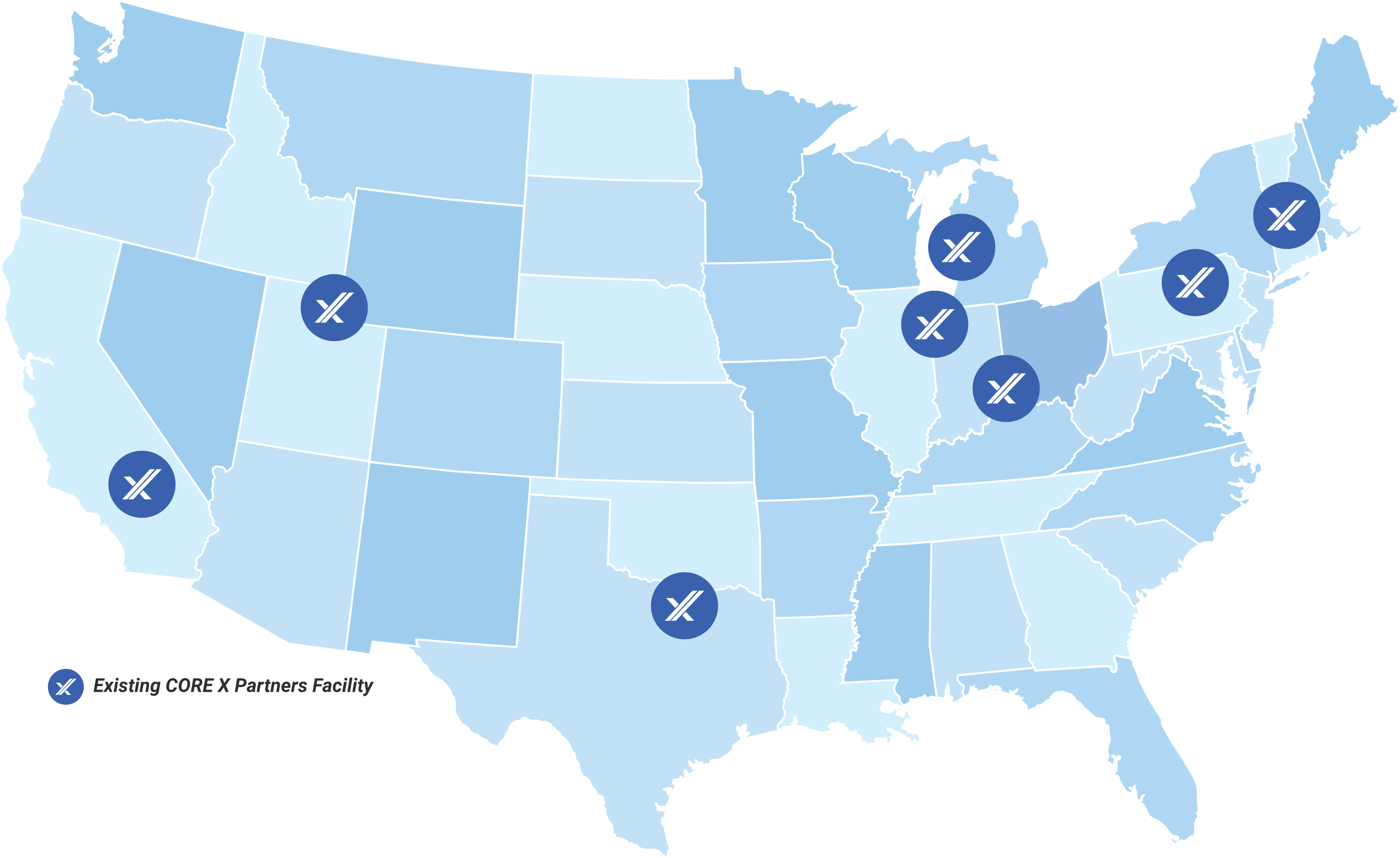
CORE X Partners operates under this integrated model through a national cold chain logistics network designed specifically for temperature-controlled distribution. Rather than functioning as isolated facilities, CORE X locations operate as connected nodes within a coordinated system, linking storage, freight planning, and transportation services.

This structure reflects CORE X’s guiding approach:
Local Service. Nationwide Network.
Local facility operators maintain strong relationships with regional customers and understand the operational needs of their markets. At the same time, shared systems, standardized procedures, and centralized coordination enable the broader network to function as a unified cold-chain logistics platform.
Integrated cold chain storage and distribution also improve operational visibility. When inventory management, freight planning, and shipment monitoring operate across the same network, logistics teams can track product movement more accurately and respond quickly to disruptions.
CORE X Partners operates under this integrated model through a national cold chain logistics network designed specifically for temperature-controlled distribution. Rather than functioning as isolated facilities, CORE X locations operate as connected nodes within a coordinated system, linking storage, freight planning, and transportation services.
This structure reflects CORE X’s guiding approach:
Local Service. Nationwide Network.
Local facility operators maintain strong relationships with regional customers and understand the operational needs of their markets. At the same time, shared systems, standardized procedures, and centralized coordination enable the broader network to function as a unified cold-chain logistics platform.


Through this model, CORE X supports several essential capabilities for national cold chain distribution:
- Multi-temperature cold storage positioned along major freight corridors
- Freight consolidation programs that improve LTL efficiency
- Cross-docking and staging operations that accelerate product movement
- Integrated transportation planning through CORE X Freight
- Operational visibility across multiple facilities and shipping lanes
By aligning storage infrastructure with coordinated freight planning, CORE X helps food brands expand distribution while maintaining product integrity and operational control.
Compliance and Audit Readiness in National Cold Chain Logistics
Temperature-controlled distribution is subject to strict regulatory oversight designed to protect food safety throughout the supply chain. As cold chain logistics networks expand across multiple regions and facilities, maintaining consistent compliance standards becomes increasingly important.
U.S. Food and Drug Administration

One of the most important regulatory frameworks governing temperature-controlled transportation in the United States is the FDA’s Sanitary Transportation rule. The regulation establishes responsibilities for shippers, carriers, and receivers to prevent contamination and ensure that food remains within appropriate temperature ranges during transportation. The rule addresses risks such as improper temperature control, unsanitary equipment, and inadequate protection during shipment. It reinforces a core principle of cold chain logistics: temperature-sensitive products must remain within controlled environments throughout storage, handling, and transportation.
Compliance requires clear procedures, documented handling practices, and reliable monitoring systems that can verify temperature conditions across the distribution network.
Many food manufacturers and retailers also rely on third-party certification frameworks when evaluating cold chain logistics providers. One widely recognized standard is the BRCGS Storage and Distribution Standard, which outlines best practices for product safety management in storage and logistics operations. The framework addresses facility design, sanitation procedures, traceability systems, and operational controls that protect product integrity.

Cold chain logistics providers typically support compliance through several operational practices:
- Continuous temperature monitoring during storage and transportation
- Documented sanitation procedures for facilities and equipment
- Traceability systems that track product movement across the network
- Standardized operating procedures applied across facilities
- Audit-ready documentation supporting regulatory and retailer requirements
When these practices are implemented consistently across a national network, cold chain logistics providers can support regulatory compliance while maintaining reliable distribution performance.
Sustainability and Food Stewardship in Cold Chain Logistics
Food manufacturers and distributors are also placing greater emphasis on sustainability and responsible product stewardship. Cold chain logistics plays an important role in these efforts because temperature control directly affects product quality, shelf life, and food waste reduction.
The Food and Agriculture Organization of the United Nations estimates that roughly 14% of food produced globally is lost between harvest and retail, often due to supply chain inefficiencies, temperature failures, or transportation disruptions.
Cold chain logistics infrastructure helps reduce these losses by maintaining consistent storage conditions and coordinated transportation planning throughout the distribution process.


However, even well-managed supply chains occasionally produce excess inventory due to demand fluctuations, packaging changes, or product transitions. In these situations, redistribution programs can help prevent usable food from being discarded.
Some cold chain logistics providers support structured food recovery initiatives that collect surplus products, inspect and repackage items when necessary, and redirect them to food banks or nonprofit organizations. Maintaining proper temperature control during redistribution ensures that food remains safe while reducing waste.
However, even well-managed supply chains occasionally produce excess inventory due to demand fluctuations, packaging changes, or product transitions. In these situations, redistribution programs can help prevent usable food from being discarded.
Some cold chain logistics providers support structured food recovery initiatives that collect surplus products, inspect and repackage items when necessary, and redirect them to food banks or nonprofit organizations. Maintaining proper temperature control during redistribution ensures that food remains safe while reducing waste.

CORE X Partners supports these efforts through its Excess Food Redistribution program, which works with food brands and nonprofit partners to redirect surplus products to communities in need. The program combines temperature-controlled storage, product inspection, repackaging as needed, and partnerships with food banks to ensure food remains safe and usable throughout the redistribution process.
For companies seeking to strengthen both operational efficiency and sustainability commitments, cold chain logistics partners can help support responsible food stewardship while maintaining strict product safety standards.
How to Evaluate a National Cold Storage & Logistics Partner
Selecting a national cold storage and logistics provider involves more than comparing warehouse capacity or transportation rates. Because frozen and refrigerated products move through multiple facilities and transportation lanes, companies must ensure their logistics partners can maintain consistent standards across the entire distribution network.
A structured evaluation process helps supply chain leaders determine whether a provider can support long-term distribution growth while protecting product integrity.
Key factors to evaluate include:

Network coverage and infrastructure
A national provider should operate strategically located facilities that support major freight corridors and regional distribution markets. Networks should include multi-temperature storage environments capable of handling refrigerated and frozen products under controlled conditions.

Integrated transportation capabilities
Cold chain logistics providers should coordinate transportation alongside storage operations. This often includes refrigerated LTL programs, truckload services, freight brokerage, and consolidation programs that improve trailer utilization.

Operational consistency across facilities
National networks must operate under shared standards. Standardized operating procedures, consistent inventory systems, and coordinated freight planning help ensure products are handled consistently across facilities.

Visibility and reporting
Modern cold chain logistics requires clear visibility into inventory and shipment movement. Reporting systems should allow companies to monitor temperature conditions, track shipments, and evaluate performance across regions.
When these capabilities operate together, logistics providers can support reliable national distribution programs that balance operational efficiency with strict temperature control.
CORE X Partners: Local Service. Nationwide Network.

Cold chain distribution requires more than individual warehouses or transportation providers operating independently. As food brands expand distribution into new markets, they increasingly require logistics networks that integrate storage infrastructure, transportation coordination, and operational standards across multiple regions.
CORE X Partners delivers this capability through a nationwide cold chain logistics network built on a model of local execution supported by national coordination.
Rather than operating as independent facilities, CORE X connects temperature-controlled storage locations, freight services, and logistics planning into a unified operational system. Each facility contributes local expertise and market knowledge, while shared standards and centralized coordination allow the network to function as a consistent distribution platform.

CORE X supports national cold chain logistics through several integrated capabilities:
- Temperature-controlled storage across multiple facilities
- Refrigerated and frozen freight coordination through CORE X Freight
- Consolidation and cross-docking programs that improve LTL efficiency
- Inventory visibility and logistics reporting tools
- Redistribution initiatives that help reduce food waste and support communities
By aligning storage infrastructure with transportation planning and operational visibility, CORE X helps food manufacturers and distributors move temperature-sensitive products efficiently across expanding distribution networks.
This integrated approach reflects our guiding principle:
Local Service. Nationwide Network.

For food brands navigating the growing complexity of temperature-controlled distribution, coordinated cold chain logistics networks provide the operational foundation required to scale distribution while protecting product quality, meeting compliance requirements, and controlling logistics costs.
Integrated Cold Chain Storage, Freight, and Logistics Solutions

As demand for temperature-controlled logistics continues to grow, companies must evaluate how their cold chain infrastructure supports long-term distribution strategies.
To learn how integrated cold storage and logistics services can strengthen your distribution network, connect with the cold chain specialists at CORE X Partners to discuss your storage, transportation, and consolidation needs.
RJ Neu
RJ Neu is the President and Regional Partner of CORE X Alliance, where he leads growth strategy and operational alignment across a national cold-storage and supply-chain platform. He brings deep experience in scaling asset-intensive businesses and building disciplined operating models within the cold chain and logistics sectors. RJ’s leadership focuses on strengthening infrastructure, aligning operators and partners, and driving long-term value creation in complex, multi-market environments. He is known for his pragmatic, execution-oriented approach and his ability to translate strategy into operational results. With a strong grounding in real-world operations, RJ contributes to ongoing industry dialogue around growth, scale, and the future of cold storage and supply-chain networks.