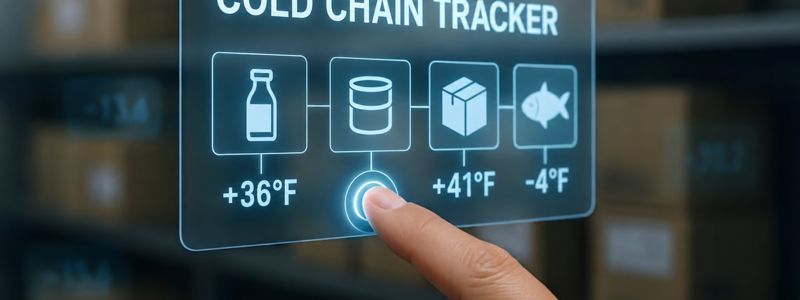
Frozen freight temperature monitoring should answer one practical question: Is the product staying within the conditions required for the shipment?
That sounds simple, but the data can be easy to misread.
A reefer set point is not the same as product temperature. Supply air and return air tell different parts of the story. A single temperature reading may miss a localized warm spot. An alert without a defined response process may create noise instead of useful action.
For long-haul frozen transportation, the strongest monitoring programs track temperature together with time, location, equipment status, door activity, and response. The goal is not to collect more data. It is to identify meaningful changes early enough to protect the load.
CORE X Partners supports continuous visibility across storage and transit through coordinated cold storage, transportation planning, shipment visibility, and exception management.
Reefer Set Point Is Not the Same as Product Temperature
The reefer set point shows what the refrigeration unit has been instructed to maintain. It does not tell you exactly what every pallet or case is experiencing.
Several measurements may be involved in a frozen shipment:
- Set point: The target operating temperature programmed into the reefer unit.
- Supply-air temperature: The temperature of air leaving the refrigeration unit and entering the trailer.
- Return-air temperature: The temperature of air returning to the refrigeration unit after moving through the load.
- Product temperature: The actual temperature of the food itself.
- Ambient trailer temperature: The air temperature recorded at a specific point inside the trailer.
These readings should not be treated as interchangeable.
A trailer may show a correct set point while airflow problems create warmer areas elsewhere in the load. Return-air temperature may indicate how much heat is coming back through the system, but it still does not provide a direct product reading. Product-level measurements can provide stronger evidence of actual product condition, but they may not be necessary or practical for every shipment.
The right monitoring plan depends on the product, route, customer requirements, and risk profile.
Speak With A Cold Chain Specialist
What Frozen Freight Temperature Monitoring Should Track
Temperature is the starting point, but it is not the only variable that matters. A useful monitoring program combines thermal data with operating context so teams can understand not just that a change occurred, but why.
Temperature and Excursion Duration
Temperature monitoring should show both the degree of deviation and how long it lasted.
A brief spike during a door opening is different from a prolonged temperature drift caused by equipment failure. The event duration matters because product specifications often define acceptable limits based on both temperature and time.
Manufacturers should avoid using one universal excursion threshold for every SKU. Frozen products can have different quality requirements, packaging, thermal mass, and customer specifications.
Monitoring should therefore capture:
- Highest recorded temperature
- Lowest recorded temperature
- Time above or below the defined specification
- Duration of the event
- Rate of temperature change
- Recovery time after the event
This creates a more useful picture than a simple pass/fail result.
Alarm History
Alarm data helps show when the reefer or monitoring system identified a problem. Useful alarm records may include:
- High-temperature alarms
- Low-temperature alarms
- Reefer fault codes
- Power interruption
- Sensor malfunction
- Door-open alerts
- Communication loss
- Unit shutdown or restart
Alarm history becomes much more valuable when response is tracked at the same time. An alert that is acknowledged in two minutes and corrected quickly is different from one that sits unnoticed for an hour. The event itself matters, but so does how the operation handled it.
Door Events
Repeated or extended door openings can affect trailer conditions. Door-event monitoring helps identify when doors were opened, how long they stayed open, and whether the event lined up with a temperature change.
This is particularly useful during:
- Loading
- Cross-docking
- Inspections
- Delivery stops
- Partial unloads
- Unexpected roadside checks
- Receiving delays
A door event does not automatically mean the shipment is at risk. It provides context for interpreting the temperature trace.
Location and Stop Duration
Temperature data becomes more useful when it is tied to where the truck was and what was happening.
GPS and stop-duration data can show whether an excursion occurred during highway transit, at a fuel stop, at a distribution center, during a weather delay, or while waiting for a customer appointment.
That helps teams distinguish between several root causes.
A repeated temperature spike at the same delivery location may point to long unload times. A recurring issue at a specific cross-dock may indicate handling or staging problems. A pattern on one lane may be related to weather, congestion, or equipment performance.
This is where monitoring begins to support broader cold chain transportation KPIs.
Reefer Faults and Equipment Status
Temperature changes are often the symptom. Equipment data may help explain the cause.
Reefer telemetry may show:
- Unit operating mode
- Fuel level
- Compressor activity
- Fault codes
- Power status
- Defrost cycles
- Set-point changes
- Unit shutdowns or restarts
This information can help transportation teams determine whether the shipment needs immediate intervention.
A temperature drift paired with a refrigeration fault requires a different response than a brief temperature change associated with a planned delivery stop.
Sensor Placement Matters
One sensor cannot always tell the full story. Temperature conditions can vary inside a reefer trailer, especially when airflow is restricted or loading patterns create uneven circulation.
Risk-based placement may include sensors:
- Near the front of the trailer
- In the middle of the load
- Near the rear doors
- Close to known airflow risk areas
- Within or near representative product
- Near the return-air path
The right placement depends on trailer design, product type, pallet configuration, and monitoring objectives. A frozen shipment data logger placed near the rear doors may capture door-related temperature changes. A logger in the middle of a dense pallet load may show whether cold air is reaching the center of the trailer. Multiple sensors can help reveal patterns that a single device may miss.
Product probes and ambient loggers serve different purposes. Product probes measure the actual temperature of the product or a representative load. Ambient loggers measure the surrounding environment. Both can be useful, but they answer different questions. Monitoring devices should also be calibrated and verified before use. Poor sensor accuracy can create unnecessary alarms or, worse, fail to identify a real problem.
What a Useful Temperature Alert Looks Like
An alert should tell the team that something needs attention. It should not simply create another notification.
A useful temperature alert includes four elements:
- A defined threshold
- A duration requirement
- A responsible person or team
- A defined corrective action
For example, a company may decide that a short temperature change during a controlled door opening requires monitoring, while a sustained excursion triggers immediate investigation. The actual thresholds should be based on product specifications, quality requirements, and customer standards.
This helps avoid alarm fatigue.
If thresholds are too sensitive, teams may receive constant alerts that do not require action. If they are too loose, real problems may be missed. The monitoring plan should focus on conditions that are operationally meaningful.
Trend Monitoring Is More Useful Than Binary Compliance
A shipment can arrive frozen and still show signs of instability. Repeated temperature swings may indicate airflow problems, poor loading, equipment issues, extended stops, or frequent door openings. Looking only at the final reading can hide those patterns.
Trend monitoring shows how the shipment behaved over time. A stable load may show relatively consistent temperatures throughout the route. A less stable load may show repeated spikes and recovery periods, even if the final receiving temperature falls within specification.
This matters because repeated instability can become a quality concern and may point to a recurring operating problem. A temperature trace can help answer questions such as:
- Did the load remain stable during highway transit?
- Did temperature changes occur at the same point on the route?
- Was recovery slow after a door event?
- Did one trailer type perform differently from another?
- Are certain carriers showing more repeated excursions?
- Is dock dwell contributing to the problem?
That is where frozen freight temperature monitoring becomes a performance tool rather than a compliance record.
What Happens When an Alarm Occurs?
Monitoring only works when teams know what to do next. When an alert is triggered, the first step is usually verification. The driver or dispatcher may need to confirm reefer operation, check fault codes, review door status, or inspect the equipment.
From there, the response may include:
- Adjusting the reefer unit if appropriate
- Contacting maintenance support
- Reducing unnecessary door openings
- Rerouting around a delay
- Moving the shipment to a replacement trailer
- Diverting to temperature-controlled storage
- Notifying the shipper or quality team
- Holding the product for review
- Preserving all temperature and event records
The escalation path should be defined before the shipment leaves.
CORE X supports managed temperature-controlled transportation with transportation coordination, visibility, and access to a broader cold chain network when routes or equipment need additional support.
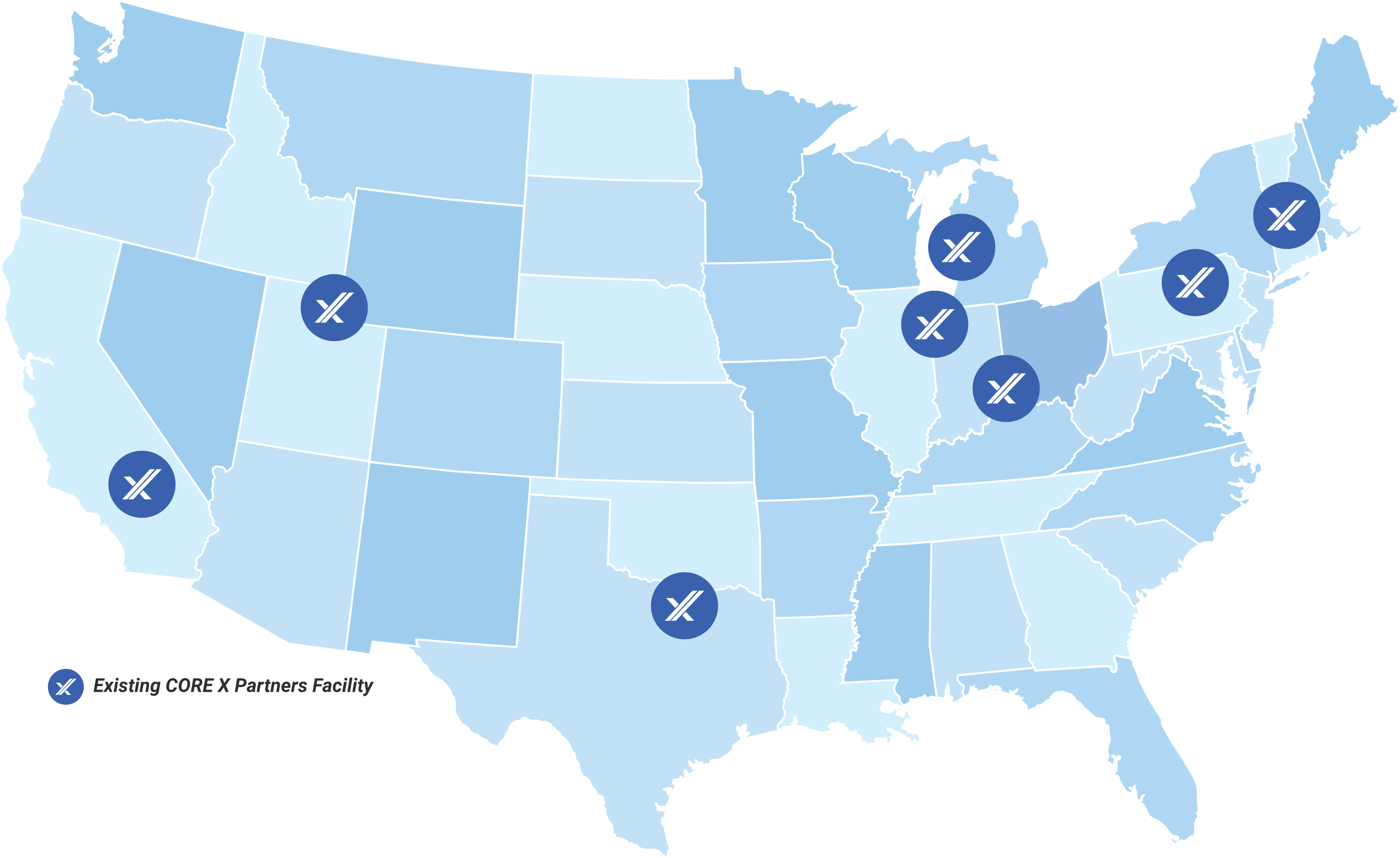
CORE X Partners operates a nationwide cold storage facility network that gives food manufacturers access to regional storage, transportation support, and recovery options across multiple markets. That broader footprint can be especially valuable when a long-haul shipment needs temporary storage, cross-docking, or another operating solution away from the origin facility. In the Midwest, CORE X CROWN in Crown Point, Indiana is part of that regional coverage, supporting frozen and refrigerated distribution near the Chicagoland market.
The value of that coverage becomes clearer when a shipment needs a practical backup option instead of another phone call.
Build Temperature Performance into Carrier Reviews
Temperature monitoring should feed carrier performance reviews. Manufacturers should know which carriers consistently maintain stable loads, respond quickly to alerts, provide complete data, and resolve problems before they become claims.
Useful carrier metrics may include:
- Temperature excursions per 100 shipments
- Average excursion duration
- Alarm acknowledgment time
- Corrective-action response time
- Percentage of shipments with complete temperature data
- Reefer fault frequency
- Claims tied to temperature events
- Rejected loads
- Repeat root causes
- On-Time, In-Full (OTIF) performance
These should be tracked consistently rather than compared against generic industry benchmarks. The goal is to see whether performance is improving and whether the same problems keep returning.
A carrier with a competitive rate but frequent alarms, incomplete data, or slow response may create more cost than the linehaul rate suggests.
Speak With A Cold Chain Specialist
Turn Shipment Data into Network Intelligence
One shipment trace can explain one event. A group of shipment traces can show where the cold chain needs improvement.
Food manufacturers should compare data across:
- Carriers
- Freight lanes
- Seasons
- Trailer types
- Facilities
- Customers
- Delivery locations
- Loading patterns
- Shipment sizes
Patterns may reveal that one lane experiences more dwell, one facility shows longer loading times, or one carrier has a higher rate of unresolved temperature alarms.
That information can guide changes in carrier allocation, trailer selection, route planning, staging, sensor placement, and inventory positioning. This is where cold chain visibility and logistics coordination become connected. Monitoring provides the data. Operations teams use that data to improve how the network is designed and managed.
Measure What Helps Protect the Load
Frozen freight temperature monitoring should make the shipment easier to manage, not harder to understand.
Set point, supply air, return air, product temperature, alarms, door events, stop duration, reefer faults, and location data can all provide useful information. The right combination depends on the product and the risk profile of the shipment.
The strongest programs also measure response. Teams need to know how quickly alarms are acknowledged, how corrective action is handled, and whether the same root causes keep appearing.
CORE X Partners helps food manufacturers connect shipment visibility with transportation coordination, temperature-controlled storage, and regional operating support across the cold chain. Our teams use practical monitoring and performance data to help customers see where risk is developing and respond before a small issue becomes a larger freight or product problem. Contact CORE X Partners to discuss frozen freight requirements and the visibility needed to support them.