Freight strategy changes as a food manufacturer grows.
A small brand may start with a few pallets moving into local distributors or regional retail customers. As volume builds, the same company may need to ship frozen or refrigerated product into multiple retail distribution centers, foodservice customers, and new geographic markets. Some lanes may still be too small for Full Truckload. Others may be dense enough to justify dedicated movement.
That is why cold chain transportation for food manufacturers should not rely on one freight mode forever.
Refrigerated LTL shipping, frozen LTL freight, Full Truckload (FTL), and consolidation each have a place. The right choice depends on shipment size, frequency, temperature requirements, customer expectations, lane density, and how quickly the business is growing.
CORE X Partners supports temperature-controlled freight services for food manufacturers that need transportation planning connected to storage, handling, visibility, and regional execution.
Why Shipment Size Matters for Growing Manufacturers
Shipment size is one of the clearest signs that a freight strategy needs to evolve.
A five-pallet order moving into a new retail market may not justify a dedicated truck. A recurring 20-pallet lane may need a different plan. A full truckload into one retail distribution center may make sense, while smaller replenishment shipments into several regions may need a consolidation program.
The challenge is that growth rarely happens evenly.
One customer may order weekly. Another may order monthly. One region may develop enough volume for FTL quickly. Another may stay in smaller replenishment quantities for a long time. Seasonal peaks, product launches, retailer promotions, and new distributor relationships can all change the freight profile.
Food manufacturers should evaluate freight by lane, customer, product type, and order pattern. The question is not only, “How many pallets are shipping today?” It is also, “Will this lane keep growing, and does the current mode still make sense?”
How to Choose Between LTL, FTL, and Consolidation
No single freight mode is always the right answer. A scalable transportation plan should match the shipment to the risk, cost, timing, and service requirement.
When Refrigerated LTL Shipping Fits
Less-Than-Truckload (LTL) shipping can work well when a food manufacturer needs to move smaller quantities into scattered customer locations.
Refrigerated LTL shipping may fit when:
- Order quantities are too small for a full truckload
- Customers are spread across multiple regions
- A new market is still developing
- Shipments are recurring but not dense enough for FTL
- Retail or distributor replenishment requires smaller, more frequent moves
LTL gives growing manufacturers a practical way to serve customers before volume supports dedicated lanes. It can help a brand avoid waiting too long to build a full truckload, especially when customer availability and delivery cadence matter.
The tradeoff is control. LTL freight may involve more handling, more scheduling variables, and tighter attention to temperature requirements. Frozen LTL freight also needs careful coordination around dock activity, transfer points, routing, and product compatibility.
For temperature-sensitive products, the cheapest LTL option may not be the best option. The provider needs to understand frozen and refrigerated handling, appointment timing, customer requirements, and how to communicate when a shipment is delayed or at risk.
When Refrigerated FTL Fits
Full Truckload (FTL) generally fits when shipment volume, timing, and service requirements justify dedicated movement.
Refrigerated FTL may be the better fit when:
- The shipment fills or nearly fills a trailer
- The lane runs consistently
- Product is time-sensitive
- Fewer handling points are preferred
- The customer has strict appointment requirements
- The load needs tighter control from pickup through delivery
FTL can reduce handling and simplify the chain of custody. It may also support more direct scheduling, cleaner appointment planning, and greater control over product movement.
For growing food manufacturers, FTL often becomes practical as a market matures. A region that started with small LTL shipments may eventually generate enough demand for dedicated truckload service. When that happens, the freight plan should be reviewed instead of left on autopilot.
The cost comparison should look beyond the linehaul rate. A higher freight charge may still make sense if it reduces handling, missed appointments, rejected loads, product risk, or administrative burden.
Where Consolidation Changes the Economics
Consolidation can help bridge the gap between smaller shipments and full truckload volume.
In cold chain transportation, consolidation brings compatible frozen or refrigerated shipments together into a planned program. Instead of treating each smaller order as a separate freight problem, food manufacturers can move compatible freight with better utilization, more predictable planning, and stronger coordination.
Refrigerated LTL consolidation may be useful when:
- Several smaller shipments move toward similar regions
- Retail replenishment is recurring but not full-truckload dense
- Freight costs are rising on low-volume lanes
- Retail customers require delivery windows that need better planning
- The manufacturer wants fewer one-off freight decisions
Consolidation is not simply putting freight together. Product compatibility, temperature zone, pallet condition, route timing, delivery appointments, documentation, and dwell time all matter.
A good consolidation program should give growing manufacturers a more structured way to move smaller orders without losing visibility or increasing avoidable handling risk.
Look Beyond the Freight Rate
Freight mode decisions should not be based on rate alone.
A low-cost shipment can become expensive if it creates delays, rework, claims, missed appointments, rejected loads, accessorial charges, or too much internal follow-up. A higher transportation rate may be the better business decision if it protects the customer relationship and reduces avoidable friction.
Food manufacturers should evaluate the full cost of each freight mode, including:
- Freight cost per case or pallet
- Storage dwell time before pickup
- Handling and transfer points
- Accessorial charges
- Detention or layover risk
- Claims and rejected appointments
- Temperature exception risk
- Customer service workload
- Administrative time spent coordinating providers
- Impact on On-Time, In-Full (OTIF) performance
This broader view is especially important for small and mid-size manufacturers. A freight decision that looks efficient on paper may create hidden costs if the warehouse, transportation provider, customer service team, and retailer are not working from the same plan.
Coordinate Warehouse and Transportation Planning
Freight performance often starts before the truck arrives.
Orders need to be picked, staged, documented, and loaded around the transportation plan. Trailers need to be available and appropriate for the product. Retail appointments need to be realistic. Customer requirements need to be clear before the shipment leaves.
Food manufacturers can reduce cold chain risk when they coordinate warehousing and outbound transportation as one process.
That coordination should include:
- Inventory readiness
- Pick timing
- Staging discipline
- Trailer availability
- Temperature requirements
- Loading sequence
- Retail appointment windows
- Advanced Shipping Notice (ASN) requirements
- Electronic Data Interchange (EDI) requirements
- Exception response if timing changes
When storage and transportation are planned separately, small issues can become expensive. Product may be picked before a truck is ready. A carrier delay may not reach the dock team quickly enough. A retailer appointment may change after product is already staged.
A connected plan helps reduce those gaps. Product can stay in the right environment until the next step is ready, and teams can respond faster when a shipment moves off plan.
Freight-Mode Decision Matrix
A decision matrix can help food manufacturers compare LTL, FTL, and consolidation without oversimplifying the choice.
| Decision factor | Refrigerated or frozen LTL | Consolidation | Refrigerated FTL |
| Shipment size | Smaller orders | Recurring smaller orders moving toward similar regions | Larger or full-truckload orders |
| Lane density | Low or developing | Moderate and repeatable | High and consistent |
| Handling points | May be higher | Managed through a planned program | Usually fewer |
| Best fit | New markets, dispersed customers, smaller replenishment | Repeat retail lanes, compatible freight, improved utilization | Dedicated lanes, high-volume customers, time-sensitive loads |
| Planning need | Strong scheduling and visibility | Strong coordination and product compatibility | Strong appointment and lane management |
| Watchouts | Handling, timing, temperature control | Compatibility, dwell time, delivery timing | Underfilled trailers, higher cost if volume is inconsistent |
This table should not replace operational review. It gives manufacturers a starting point for the freight conversation.
A growing brand may use all three modes at the same time. The goal is to assign each shipment to the mode that fits the product, customer, lane, and business stage.
Revisit the Freight Mix as the Company Grows
The right freight plan today may not be the right plan six months from now.
A manufacturer may start with frozen LTL freight into a new market, shift into consolidation as orders become more frequent, and eventually move to refrigerated FTL once the lane develops enough volume. Another region may stay in LTL longer because order density remains low. A seasonal product may need FTL during peak demand and consolidation during normal replenishment.
Freight strategy should be reviewed when:
- Retail accounts are added
- Distributor coverage expands
- Order size changes
- Shipment frequency increases
- A region develops stronger demand
- Seasonal volume changes the outbound profile
- Freight costs rise faster than volume
- Claims, accessorials, or missed appointments increase
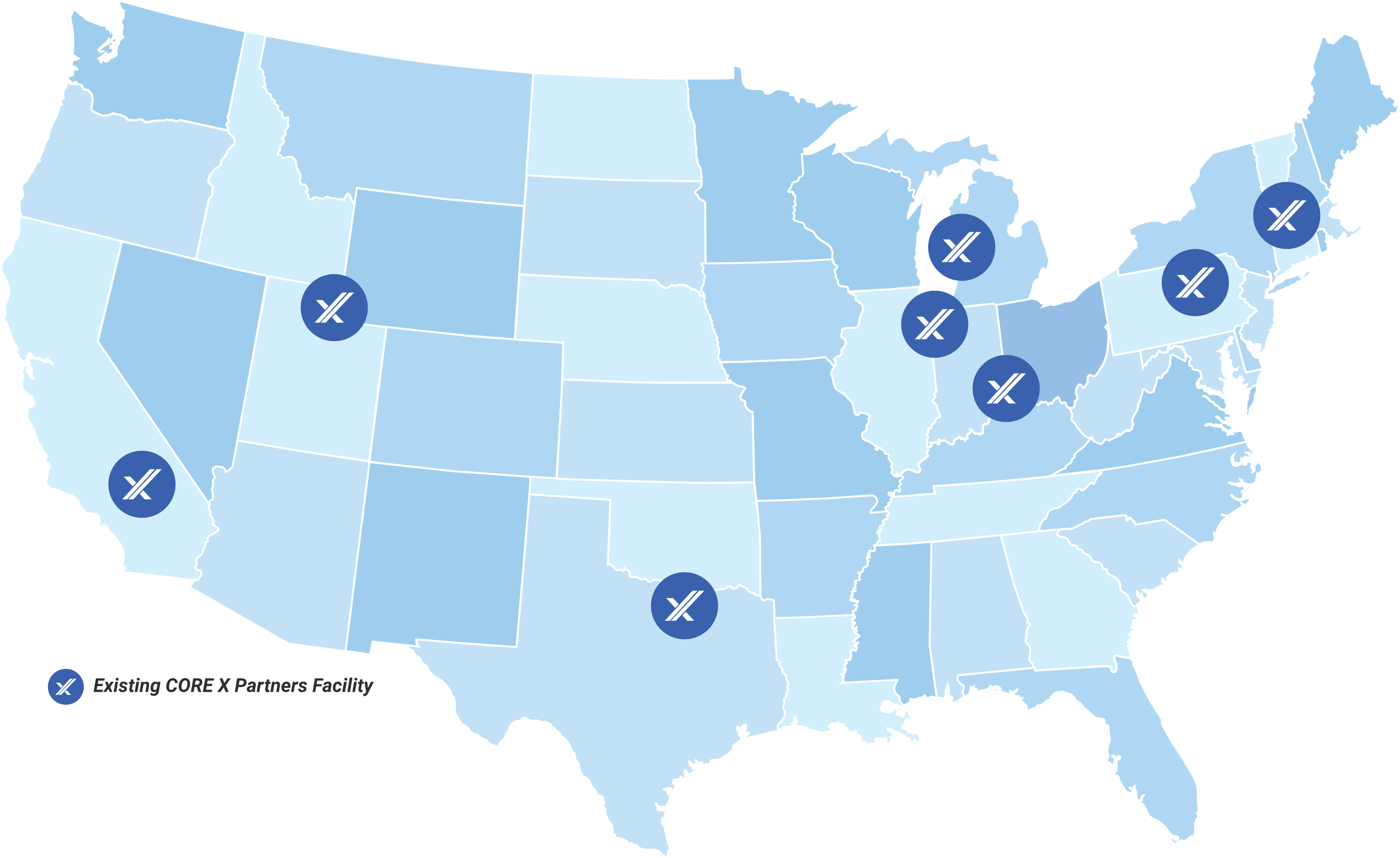
A regional cold storage network can help support this review by placing inventory closer to customers as demand develops. Facility placement and freight mode should be evaluated together. If product is stored too far from the customer, even the right freight mode may face unnecessary cost or timing pressure.
Build Freight Strategy Around the Growth Stage
Growing food manufacturers need freight strategies that can change as the business changes.
Refrigerated LTL shipping can support smaller orders and new markets. Consolidation can create better structure for recurring compatible shipments. Refrigerated FTL can support higher-volume lanes, fewer handling points, and tighter customer requirements.
The strongest freight plan connects these decisions to warehouse readiness, customer requirements, regional demand, and product temperature needs. That helps manufacturers avoid treating each shipment as a separate problem and gives the business a clearer path for scaling cold chain transportation.
CORE X Partners helps food manufacturers match freight strategy to real shipment volume, customer requirements, and regional growth. Our network supports temperature-controlled freight, refrigerated LTL consolidation, FTL planning, storage coordination, and visibility across product movement. Contact CORE X Partners to build a cold chain transportation plan that can evolve with your food manufacturing business.