Quick Answer: How a 3PL Integrates Warehouse Management and Transportation Management for Refrigerated Products
A refrigerated 3PL helps integrate warehouse management and transportation management by connecting WMS data, TMS workflows, inventory visibility, order fulfillment, dock planning, reefer dispatch, freight tracking, compliance records, and customer reporting into a single coordinated cold chain operating model. This allows food companies to manage refrigerated products from receiving and storage through picking, staging, loading, transportation, delivery confirmation, and exception resolution with greater consistency.
For food manufacturers and distributors, the value comes from tighter coordination between what happens inside the warehouse and what happens once freight leaves the dock. A 3PL that connects warehouse management and transportation management can reduce missed pickups, overstaged product, dock congestion, manual follow-up, unclear exception ownership, and customer service delays.
A strong refrigerated 3PL should help food companies answer practical operating questions:
- Is the right product available, allocated, and ready to pick?
- Which lot, expiration date, storage zone, or hold status applies?
- Has the order been picked, staged, and assigned to the correct dock?
- Is the carrier, reefer trailer, route, and appointment window confirmed?
- Can warehouse teams and transportation teams see the same order status?
- Are exceptions documented with clear ownership and corrective action?
- Can leadership see service, cost, risk, and quality performance across the cold chain?
The strongest 3PL model connects systems, people, processes, facilities, and accountability so refrigerated inventory and transportation activity move together through one operating framework.
Why Refrigerated Products Require Integrated Warehouse and Transportation Management
Refrigerated products depend on precise timing, accurate inventory, controlled temperatures, and clean handoffs between storage and transportation. If warehouse and transportation teams work from disconnected systems, products may be picked too early, staged too long, delayed at the dock, assigned to the wrong carrier, or shipped without clear visibility into exceptions.
This matters because the refrigerated order lifecycle crosses several operational points before the product reaches the customer. Inventory must be received, stored, allocated, picked, staged, loaded, dispatched, tracked, delivered, and documented. Each step affects the next one.
A Warehouse Management System, or WMS, manages the warehouse side of the process. In refrigerated 3PL operations, this includes inventory by SKU, lot, expiration date, facility location, storage temperature zone, pick status, staging location, dock readiness, product holds, allocations, and availability.
A Transportation Management System, or TMS, manages the freight side of the process. In refrigerated logistics, this includes carrier assignment, route planning, pickup and delivery appointments, trailer requirements, reefer dispatch coordination, in-transit status, delivery confirmation, and transportation exceptions.
The integration challenge is whether warehouse and transportation workflows operate from the same execution plan. When they do, teams can coordinate around actual inventory readiness, trailer availability, dock timing, and customer requirements.
Disconnected warehouse and transportation planning can create several risks:
- Missed pickups when the order is not ready when the carrier arrives.
- Overstaged product when inventory moves out of controlled storage before the trailer is ready.
- Dock congestion when loading schedules do not match carrier appointments or outbound priorities.
- Inventory errors when lot, expiration, hold, or allocation details do not flow into shipment planning.
- Customer service delays when order status and freight status live in separate systems.
- Unclear exception ownership when delays, shortages, temperature concerns, or appointment changes cross the warehouse and transportation teams.
Cold chain transportation also requires clear expectations among shippers, carriers, loaders, and receivers before products move through the network. The Global Cold Chain Alliance’s Cold Chain Transportation Best Practices help parties understand expected practices for cold chain movement, reinforcing the importance of coordinated handoffs between warehouse and transportation execution.
A refrigerated 3PL helps solve this by connecting warehouse management and transportation management into a single operating view. The WMS confirms what product is available, where it is stored, when it is picked, and where it is staged. The TMS confirms how the freight will move, which carrier or trailer is assigned, when pickup should occur, and whether the delivery appointment can be met.
When those workflows connect, food companies gain better control over timing, product movement, customer communication, and exception response. That foundation supports every other part of the refrigerated cold chain, including order fulfillment, visibility, compliance documentation, cost control, and scalable multi-region distribution.
Learn more: How Integrated WMS and TMS Reduce Risk in Refrigerated 3PL Operations
How WMS and TMS Integration Reduces Cold Chain Risk
Integrated WMS and TMS workflows reduce risk by integrating warehouse activity with transportation planning before the product reaches the dock. The strongest value occurs at the points where warehouse activity triggers transportation.
In refrigerated logistics, these handoffs matter because product movement must align with temperature requirements, trailer readiness, carrier timing, and customer delivery windows. When teams rely on disconnected emails, calls, spreadsheets, or separate portals, risk increases before anyone may see the full issue.
WMS and TMS integration matters most in several operating moments:
- Order release to pick planning: The WMS confirms inventory availability, lot status, expiration requirements, storage location, and temperature zone assignment before the order enters active picking.
- Pick completion to dock appointment: Warehouse readiness aligns with dock availability, carrier arrival, and customer delivery requirements.
- Staging to reefer dispatch: Product moves from controlled storage to staging based on trailer readiness, route timing, and temperature requirements.
- Shipment status to customer reporting: Customer service teams gain visibility into pickup confirmations, in-transit movements, appointment times, delivery statuses, and exceptions.
- Exception alerts to corrective action: Teams can identify a delay, assign ownership, and document the response before the issue grows.
A simple comparison shows how integration changes execution:
| Risk Area | Disconnected Workflow | Integrated WMS/TMS Workflow |
| Product staging | Products may be staged before trailer readiness is confirmed | Staging aligns with dock and carrier timing |
| Carrier coordination | Freight planning may happen separately from warehouse readiness | Transportation planning uses real order status |
| Exceptions | Issues handled through emails, calls, or spreadsheets | Exceptions can be tracked with ownership |
| Customer updates | Order and freight status may sit in different systems | Customer-facing teams get a more complete view |
| Product movement | Warehouse and transportation milestones may not match | Product moves through a coordinated workflow |
This type of integration gives food companies better control over risk. Warehouse teams know what needs to be picked and staged. Transportation teams know what is ready to move. Customer service teams can answer questions with more confidence. Leadership can see whether the network is operating as planned.
Refrigerated Order Fulfillment: From Inventory Allocation to Reefer Dispatch
A refrigerated 3PL integrates warehouse and transportation management by coordinating the timing of inventory readiness, warehouse execution, dock activity, and outbound transportation. The process depends on accurate WMS data, disciplined warehouse handling, and TMS planning that reflects what is actually ready to ship.
A practical refrigerated order fulfillment workflow looks like this:
- Confirm the Order — SKU, quantity, lot, expiration date, temperature requirement, destination, and delivery window
- Allocate Inventory — available product, hold status, storage location, FIFO or FEFO rules, and customer requirements
- Pick and Verify — product accuracy, pallet integrity, labeling, and temperature-zone discipline
- Stage by Dispatch Plan — dock door, trailer readiness, route sequence, and appointment timing
- Assign the Reefer Move — LTL, truckload, brokerage, private fleet, consolidation, or regional transportation
- Dispatch and Track — pickup confirmation, in-transit status, ETA, exceptions, and customer updates
- Close the Record — delivery confirmation, exception notes, temperature records where available, and performance reporting
Each step creates a warehouse or transportation touchpoint. The value of an integrated refrigerated 3PL is the ability to connect those touchpoints so that inventory, fulfillment, dock planning, and transportation teams work from the same operating plan. A connected WMS/TMS workflow supports the same general principle: warehouse and transportation activities need to work together throughout order processing, picking, shipping, routing, and delivery execution.
Order Confirmation and Inventory Allocation
The process starts before a picker enters the warehouse. The 3PL needs to confirm the order details, including SKU, quantity, lot or batch number, expiration date, FIFO or FEFO requirements, product temperature requirement, destination, requested delivery window, and customer-specific instructions.
The WMS confirms whether the correct product is available, where it is stored, whether it is eligible to ship, and how it should be allocated. That matters because transportation planning should reflect confirmed inventory, product status, and realistic fulfillment timing.
Picking, Verification, and Temperature-Zone Discipline
Picking refrigerated products requires accuracy and timing. A refrigerated 3PL should manage lot control, pallet integrity, labeling, customer-specific order rules, and product-handling standards while maintaining the appropriate temperature-zone discipline.
The timing of the pick matters. Picking too late can create dock pressure and increase the risk of missed pickup. Picking too early can increase staging dwell time and unnecessary product movement outside controlled storage. The goal is to give the warehouse enough time to verify accuracy while keeping the order aligned with the outbound transportation plan.
Staging, Dock Planning, and Reefer Assignment
Staging is one of the most important warehouse-to-transportation handoffs. Products should move from controlled storage into staging based on trailer availability, dock door assignment, route sequence, delivery window, pallet configuration, and loading order.
The TMS helps connect the staged order to the right transportation option. For refrigerated products, which may include refrigerated LTL, truckload, brokerage, private fleet reefer trailers, consolidation, or regional movement. Load planning should account for trailer requirements, appointment windows, route density, transit time, delivery sequence, and product temperature requirements.
Dispatch, Tracking, and Exception Management
Once the shipment is loaded, dispatch execution and visibility become the focus. Customer service, warehouse, and transportation teams need timely updates on pickup status, carrier movement, delivery timing, and exceptions.
Exception management should cover carrier delays, missed pickup windows, appointment changes, access issues, rejected loads, short shipments, documentation gaps, detention events, and temperature concerns where applicable. When these updates connect back to the order record, teams can respond faster and communicate more clearly.
Delivery Confirmation and Documentation
Refrigerated order fulfillment does not end when the truck leaves the dock. Delivery confirmation closes the loop between transportation execution, customer service, and performance reporting.
A complete fulfillment record should include proof of delivery, delivery timestamp, appointment performance, exception notes, temperature records where available, customer acceptance or rejection details, accessorial notes, and carrier performance information. This record supports better service reviews, claims handling, customer communication, and continuous improvement.
Learn more: Refrigerated Order Fulfillment Process: How a Refrigerated 3PL Coordinates Warehouse and Transportation
Cold Chain Visibility: What Executives Need to Track Across Warehouse and Transportation
Cold chain visibility gives executives a clear view of refrigerated warehouse activity, transportation status, service performance, cost exposure, and product risk. Owners, COOs, presidents, and general managers do not need every system detail. They need to know where inventory is, which orders are moving, where exceptions are developing, and who owns the next action.
Visibility often breaks down when warehouse and transportation data live in different places. One provider may report inventory through a portal. Another may send spreadsheets. Carriers may provide updates through emails, tracking links, or customer service calls. Executives receive pieces of the story without a complete view of the network.
Common visibility gaps include:
- inventory status is separated from shipment status
- warehouse and transportation teams using different data sources
- carrier updates arriving after customer service issues begin
- temperature exceptions reported outside the order or shipment record
- cost data disconnected from service performance
- facility performance is measured separately from lane performance
End-to-end cold chain visibility should connect warehouse activity, transportation activity, product condition, and customer-facing service performance. The goal is one operating view across the product, order, shipment, facility, and customer requirements.
A practical visibility model should include:
- inventory by SKU, lot, expiration date, and facility
- available, allocated, staged, shipped, and held inventory
- pick, pack, staging, and dock status
- carrier assignment and pickup status
- in-transit status and estimated arrival time
- temperature exceptions and corrective actions
- delivery confirmation and exception reporting
- claims, rejected shipments, and customer compliance issues
CORE X supports network visibility through a unified WMS that tracks inventory status, lot details, temperature records, and product movement, while EDI helps maintain data continuity between CORE X systems and customer platforms.
A useful executive dashboard should organize information around risk, service, cost, and quality:
| Dashboard Category | What to Track | Why It Matters |
| Risk | Late loads, dwell time, rejected shipments, unresolved exceptions | Shows where issues may affect customers or product integrity |
| Service | OTIF, appointment compliance, order accuracy, on-time pickup, and delivery | Shows whether the network is meeting expectations |
| Cost | Detention, expedited freight, accessorials, cost-to-serve | Shows where poor coordination creates expense |
| Quality | Temperature exceptions, damage claims, holds, and corrective actions | Shows where product integrity may be at risk |
Cold chain visibility should turn data into action. A dashboard only helps when teams can see the issue, understand the impact, assign ownership, and document the response.
Learn more: The Executive’s Guide to Cold Chain Visibility: What to Track Across Warehouse and Transportation
Cold Chain Compliance Documentation: Building Better Records Before There Is a Problem
Integrated WMS and TMS workflows help refrigerated 3PLs build stronger compliance documentation by connecting warehouse records with transportation records before a claim, rejection, customer question, or audit request occurs. Refrigerated products move through multiple custody points, and each point needs a clear record of what happened, when it happened, where the product was, and who acted.
A practical cold chain documentation path looks like this:
- Receive and record — inbound condition, receiving temperature checks, SKU, lot, expiration date, and initial storage location
- Store and control — temperature zone, hold or release status, inventory movement, and product eligibility
- Pick and stage — pick timestamp, staging timestamp, order accuracy, pallet condition, and customer requirements
- Load and dispatch — trailer or carrier assignment, dock timing, pickup time, and shipment release
- Track and resolve — in-transit status, delivery confirmation, exception notes, corrective action owner, and resolution status
This structure gives teams a complete record across the warehouse-to-transportation handoff. It also helps answer the questions that usually matter during a review: which product moved, which lot was involved, where it was stored, when it was picked, which trailer or carrier was assigned, whether an exception occurred, and who owned the response.
BRCGS Storage and Distribution is a relevant framework for this kind of documentation discipline because it addresses safety and integrity in warehousing and logistics. BRCGS describes the standard as reflecting best practice through risk-based product safety management systems and supporting product quality and safety during storage and distribution throughout the supply chain.
Receiving and Storage Records
The first documentation layer starts when product enters the facility. A refrigerated 3PL should capture receiving details, product condition, temperature checks where required, SKU, lot or batch number, expiration date, storage location, and assigned temperature zone.
These records establish the starting point for traceability. They also help teams confirm whether product was received correctly, stored in the proper environment, and made available for fulfillment under the right conditions.
Inventory Control and Fulfillment Records
The next layer connects inventory status with order activity. The WMS should show whether product is available, allocated, on hold, released, picked, staged, or shipped. It should also connect fulfillment activity to lot, expiration, customer requirements, and order status.
This matters because many documentation gaps appear when product moves from storage to picking or from picking to staging. A connected workflow helps show when product moved, why it moved, and whether it followed the correct fulfillment rules.
Transportation and Delivery Records
Transportation documentation connects the warehouse record to the freight record. This includes trailer or carrier assignment, dock timing, pickup time, shipment release, in-transit updates, delivery confirmation, and exception notes.
When WMS and TMS data connect, teams can review the full order history without pulling information from separate emails, spreadsheets, carrier portals, and warehouse reports. That supports faster investigations, cleaner customer reporting, and stronger audit readiness.
Exception and Corrective Action Records
Exception records become especially important when something does not go as planned. A refrigerated 3PL should document carrier delays, missed pickup windows, appointment changes, access issues, rejected loads, short shipments, documentation gaps, detention events, and temperature concerns where applicable.
A strong exception record should identify the issue, timestamp, owner, corrective action, customer communication, and resolution status. That level of documentation helps teams respond faster and gives leadership a clearer view of recurring process issues.
Learn more: WMS + TMS Integration and Cold Chain Regulatory Compliance: Building Better Records Before There’s a Problem
How Integrated Warehouse and Transportation Planning Reduces Cold Chain Cost
Cold chain cost optimization comes from better coordination between inventory availability, staging timing, load planning, carrier assignment, appointment scheduling, and customer reporting. Refrigerated logistics costs often rise when warehouse operations and transportation planning run on separate tracks, because teams start reacting to issues rather than planning around actual order status, dock capacity, trailer availability, and customer delivery requirements.
The costs are not always obvious at first. They often show up as extra labor, customer penalties, emergency freight decisions, claims, rejected loads, or avoidable accessorial charges. The most common cost drivers include:
- Overstaged product
- Missed pickups
- Detention and dwell
- Expedited freight
- Poor trailer utilization
- Duplicate customer service work
- Claims and rejected loads
- Inconsistent accessorial charges
When warehouse and transportation teams plan separately, these costs can look like normal friction in the cold chain. When teams work from shared timing, inventory, and freight data, the same network can operate with fewer touches, cleaner handoffs, stronger trailer utilization, and more predictable execution.
Integrated planning creates savings in several practical ways. Inventory allocation improves because orders can be filled from the right facility, lot, and storage location before freight planning is finalized. Load planning becomes more accurate because transportation teams can plan around confirmed order size, pickup readiness, destination, delivery windows, and temperature requirements. Refrigerated LTL consolidation becomes more effective when compatible frozen or refrigerated shipments bound for the same customer, distribution center, or region can be grouped to improve trailer utilization.
The same coordination also improves appointment scheduling and exception response. Warehouse and freight teams can align picking, staging, dock access, carrier arrival, and customer delivery windows before problems develop. Shared data also reduces follow-up emails, phone calls, spreadsheet updates, duplicate customer service work, and delays in assigning the next action when product holds, capacity issues, appointment changes, or carrier delays occur.
Cost control must still protect product integrity. The strongest savings come from better planning, fewer touches, stronger consolidation, more accurate staging, and predictable execution. Cost reduction should not come from weakening temperature control, increasing handling risk, or pushing delivery timing beyond customer expectations.
A simple comparison shows where integrated warehouse and transportation planning can reduce cost without increasing risk:
| Cost Area | Disconnected Planning | Integrated Warehouse + Transportation Planning |
| Freight Utilization | Partial loads planned separately | Compatible shipments consolidated |
| Dock Activity | Carrier timing and staging are misaligned | Staging matched to trailer and appointment timing |
| Detention | Higher risk from wait time and congestion | Reduced through coordinated dock planning |
| Expedites | Used to recover from missed handoffs | Reduced through earlier visibility |
| Labor | Manual status checks and rework | Fewer duplicate updates |
| Claims / Rejections | Harder to trace the root cause | Better visibility across order, facility, and lane |
| Customer Service | Reactive updates after issues occur | More proactive status and exception communication |
CORE X Freight supports this storage-to-freight coordination through integrated transportation, multi-vendor LTL consolidation, freight logistics solutions, EDI capabilities, electronic freight tracking, network analysis, data analytics, and dedicated customer service.
Learn more: How Integrated Warehouse and Transportation Planning Reduces Cold Chain Cost Without Increasing Risk
What to Look for in a Refrigerated 3PL That Can Integrate WMS, TMS, and Cold Chain Execution
Food companies should evaluate a refrigerated 3PL based on how well it connects systems, people, workflows, facilities, reporting, compliance, and accountability. A provider may have a WMS and a TMS, but the real test is whether those systems support daily execution across inventory, staging, dock planning, carrier coordination, freight tracking, exception management, and customer reporting.
For refrigerated products, integration has to work in the field, not only in software. Warehouse teams need accurate inventory and order status. Transportation teams need confirmed readiness, dock timing, and delivery requirements. Customer service and leadership teams need visibility into what is moving, what is delayed, and who owns the next step.
CORE X Partners supports WMS, TMS, and cold chain execution through one national WMS platform, EDI, 24/7 customer portal access, customizable business intelligence, managed logistics, transportation solutions, cybersecurity systems, and regional operator expertise connected through a national partner network. For buyers evaluating a refrigerated 3PL, these capabilities show whether the provider can connect warehouse operations, transportation planning, visibility, and execution across real cold chain workflows.
A strong refrigerated 3PL should demonstrate several capabilities:
Connected Warehouse and Transportation Execution
The provider should show how inventory status, picking, staging, dock scheduling, carrier assignment, dispatch, and customer communication work together. This includes support for LTL, truckload, brokerage, consolidation, regional movement, dock planning, freight tracking, and exception communication.
Temperature-Controlled Infrastructure
The provider needs physical infrastructure that matches product requirements. Look for frozen, refrigerated, and deep-frozen environments, product-specific handling, disciplined dock and staging practices, temperature-zone control, and procedures that reduce unnecessary product exposure.
Visibility Across Inventory, Freight, and Performance
The provider should be able to report on inventory status, lot details, temperature records, product movement, shipment status, carrier assignment, exception alerts, KPI scorecards, and performance by facility, lane, customer, or product group.
Compliance and Documentation Support
The provider should support chain-of-custody records, lot and expiration tracking, hold and release status, temperature exception handling, corrective action documentation, customer reporting, and audit support. These records matter when customers need to investigate a claim, review an exception, support an audit, or confirm what happened across a warehouse-to-transportation handoff.
Network Design and Scalability
The provider should support growth without forcing the customer to rebuild processes every time a new region, customer, SKU, or lane is added. Evaluate whether facilities are positioned near production sites, ports, customers, retail distribution centers, and major freight lanes. Also, look for local execution supported by shared standards, shared technology, and network-level coordination.
Clear Implementation Process
The provider should explain how integration will work before go-live. That includes data mapping, SOP alignment, customer requirements, EDI/API needs, WMS/TMS workflow testing, reporting setup, phased rollout, exception escalation planning, and go-live support.
A structured scorecard helps executives compare providers beyond basic capability claims:
| Evaluation Area | What to Look For | Why It Matters |
| Warehouse Execution | Inventory status, lot control, staging discipline | Confirms product readiness |
| Transportation Execution | Carrier planning, dispatch, freight tracking | Connects order readiness to movement |
| Cold Chain Control | Temperature zones, staging, exception handling | Protects product integrity |
| Visibility | WMS, TMS, EDI, portal, reporting | Gives teams one operating view |
| Compliance | Documentation, traceability, audit readiness | Supports review and accountability |
| Scalability | Multi-region network and shared standards | Supports growth |
| Implementation | Data mapping, SOPs, testing, rollout support | Reduces transition risk |
Food companies should also ask direct evaluation questions before selecting a refrigerated 3PL:
- Can you show how an order flows from WMS to TMS?
- How do inventory status, pick status, staging, dock planning, and freight dispatch connect?
- How are exceptions handled across storage and transportation?
- What reporting will our leadership team receive?
- Which systems integrate with customer platforms?
- Do you support EDI, API, portal access, or recurring reporting?
- How do you coordinate multi-region distribution?
- How do you document temperature exceptions, carrier delays, and delivery issues?
- What does implementation look like from data mapping through go-live?
These questions help separate surface-level technology claims from true cold chain execution capability. The right refrigerated 3PL should be able to show how warehouse management, transportation management, people, facilities, and reporting work together under real operating conditions.
Learn more: What to Look for in a Refrigerated 3PL That Can Integrate WMS, TMS, and Cold Chain Execution
How CORE X Connects Warehouse Management and Transportation Management
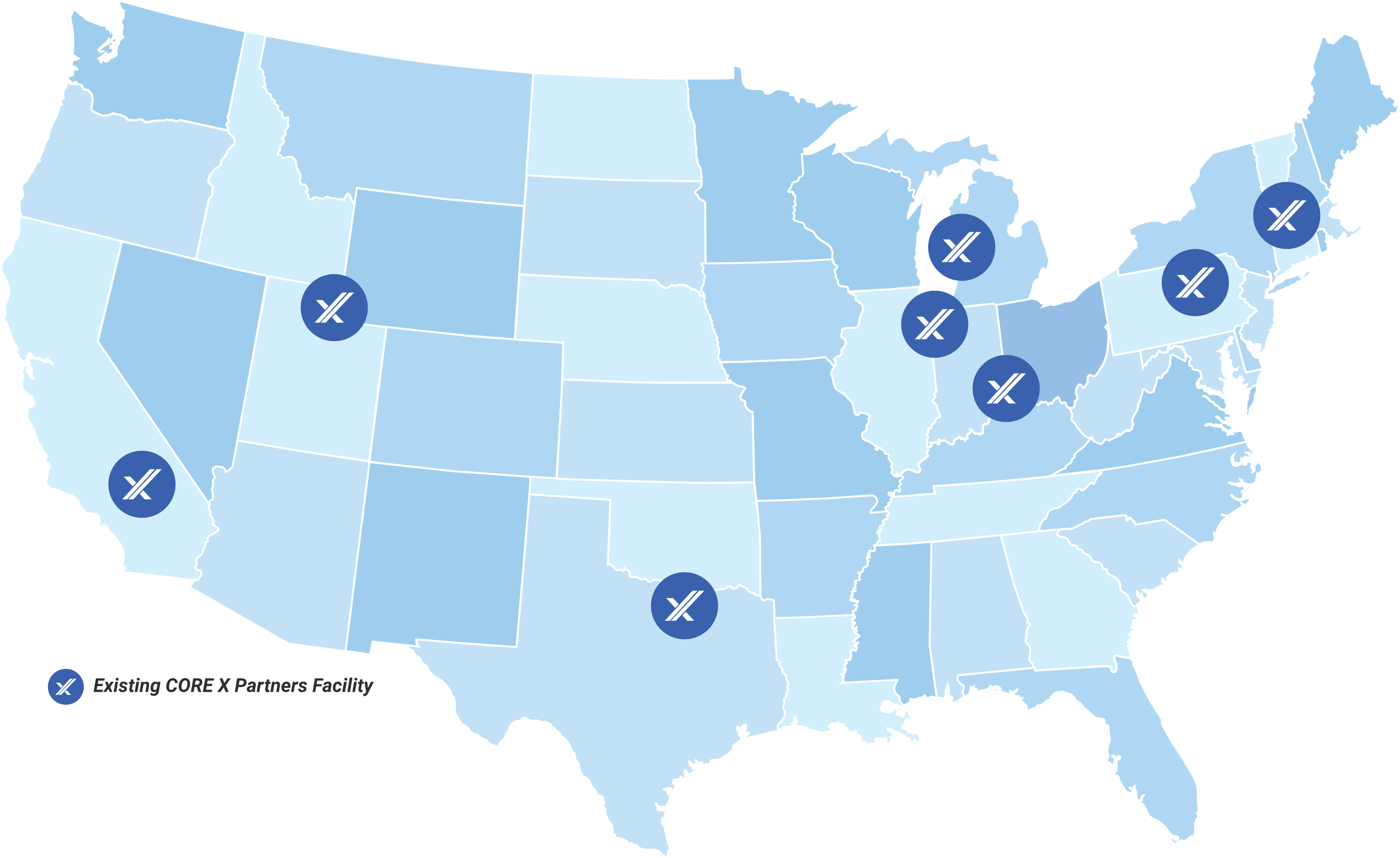
CORE X Partners helps food manufacturers and distributors connect refrigerated warehouse management and transportation management through a national cold chain network built around regional operator expertise, shared technology, managed logistics, and coordinated transportation support. CORE X’s model brings together cold storage facilities, Partnering Regional Operators (PROs), a national WMS platform, EDI, 24/7 customer portal access, managed logistics and transportation solutions, cybersecurity systems, and customizable business intelligence tools.
For refrigerated products, this connection matters most at the operating handoff between inventory readiness and freight movement. Warehouse teams need to manage receiving, storage, inventory status, picking, staging, and dock activity. Transportation teams need to coordinate carrier assignment, routing, dispatch, LTL consolidation, truckload movement, freight tracking, and delivery confirmation. Customer service and leadership teams need reporting that connects product movement with shipment status, exceptions, and performance.
CORE X supports this integrated model through several connected capabilities:
- Warehouse Execution: Cold storage facilities, inventory control, product movement, picking, staging, and temperature-controlled handling.
- Transportation Coordination: Integrated transportation, LTL consolidation, freight logistics, private fleet reefer trailers, carrier coordination, and electronic freight tracking.
- Technology and Visibility: One national WMS platform, EDI-enabled coordination, 24/7 customer portal access, data analytics, and customizable business intelligence.
- Regional and National Support: Partnering Regional Operators for local execution, shared standards, and national cold chain network resources.
- Customer and Exception Support: Reporting, communication, freight visibility, and issue escalation across storage and transportation workflows.
This structure helps customers align storage, order fulfillment, transportation planning, exception management, and reporting across refrigerated operations. For companies expanding across regions, it also helps reduce the operational friction that develops when cold storage and transportation providers are added one at a time.
Refrigerated Warehouse and Transportation Integration Checklist
Food companies evaluating a refrigerated 3PL should confirm that the provider can integrate warehouse and transportation management in daily operations, not only in system descriptions. The strongest providers should be able to show how inventory, fulfillment, dock activity, freight movement, reporting, and exception management work together.
Key questions include:
- Can inventory status and shipment status be viewed together?
- Can the 3PL show how an order flows from WMS to TMS?
- How are refrigerated products staged based on trailer readiness?
- How are lot, expiration, and temperature records maintained?
- How are carrier delays, appointment changes, and temperature exceptions documented?
- Can leadership see KPIs by facility, lane, customer, and product group?
- How does the provider handle LTL consolidation, truckload, brokerage, and regional movement?
- How does the provider support customer-specific requirements?
- How are SOPs aligned across locations?
- What does implementation look like from data mapping through go-live?
This checklist helps food companies evaluate whether a 3PL can support the full refrigerated operating model, from warehouse execution to freight movement to customer reporting. A connected provider should be able to explain the workflow, define ownership at each handoff, and show how data moves through the refrigerated supply chain.
Frequently Asked Questions About Warehouse Management and Transportation Management for Refrigerated Products
What is the difference between WMS and TMS in refrigerated logistics?
A Warehouse Management System, or WMS, manages what happens inside the refrigerated warehouse. This includes receiving, storage, inventory status, lot control, expiration tracking, picking, staging, temperature-zone assignment, product holds, and warehouse movement.
A Transportation Management System, or TMS, manages what happens once freight is planned or moved. This includes carrier assignments, routing, pickup appointments, dispatch, shipment tracking, delivery confirmation, transportation exceptions, and freight performance. In refrigerated logistics, the strongest results come when WMS and TMS workflows connect so warehouse readiness and transportation execution stay aligned.
Why does WMS and TMS integration matter for refrigerated products?
WMS and TMS integration matters because refrigerated products depend on timing, temperature control, and clean handoffs between warehouse and transportation teams. If inventory is picked too early, staged too long, assigned to the wrong trailer, or delayed without clear ownership, the risk of service failures, added cost, and product integrity concerns increases.
Integrated workflows help teams coordinate inventory availability, pick status, dock timing, carrier assignment, pickup windows, delivery requirements, and exception response. This reduces over-staging, missed pickups, dock congestion, manual updates, and unclear accountability between warehouse and transportation teams.
What should executives track in cold chain visibility dashboards?
Executives should track the metrics that show risk, service, cost, quality, and accountability across refrigerated warehouse and transportation operations. Useful dashboard data includes inventory status, order status, carrier assignment, in-transit status, ETA, OTIF, appointment compliance, dwell time, detention, temperature exceptions, claims, rejected loads, cost-to-serve, and unresolved exceptions.
The dashboard should also show where issues are happening by facility, lane, customer, product group, or carrier. CORE X supports visibility through one national WMS platform, EDI, customer portal access, cybersecurity systems, and customizable business intelligence tools, which are the types of capabilities food companies should evaluate when comparing refrigerated 3PL providers.
How does a refrigerated 3PL support compliance documentation?
A refrigerated 3PL supports compliance documentation by connecting receiving records, lot and expiration data, storage zones, pick and staging timestamps, trailer assignments, pickup times, delivery confirmations, and exception notes into a more complete shipment history. That record helps explain what product moved, where it was stored, when it was picked, how it was shipped, whether an exception occurred, and who owned corrective action.
This matters because refrigerated products pass through multiple custody points before reaching the customer. BRCGS describes its Storage and Distribution Standard as supporting product quality and safety during storage and distribution through a risk-based product safety management system, which reinforces the value of consistent documentation across warehouse and logistics operations.
How can integrated warehouse and transportation planning reduce cold chain costs?
Integrated warehouse and transportation planning can reduce cold chain costs by improving inventory allocation, load planning, LTL consolidation, appointment scheduling, trailer utilization, exception response, and customer communication. It can also reduce detention, expedited freight, manual follow-up, duplicate customer service work, accessorial charges, and delays caused by poor coordination between warehouse and transportation teams.
The key is to reduce cost without increasing product risk. Savings should come from better planning, fewer touches, stronger consolidation, more accurate staging, and earlier visibility into exceptions rather than weaker temperature control or rushed handling.
What should food companies look for in a refrigerated 3PL?
Food companies should look for a refrigerated 3PL that can connect warehouse execution, transportation coordination, cold chain control, visibility, compliance documentation, network scalability, and implementation support. A provider may have a WMS and a TMS, but buyers should confirm how those systems work together in daily operations.
Strong evaluation questions include: Can inventory status and shipment status be viewed together? Can the 3PL show how an order flows from WMS to TMS? How are exceptions documented? What reporting will leadership receive? How are SOPs aligned across locations? The strongest refrigerated 3PL should be able to show how systems, facilities, people, and reporting support real cold chain execution.
Build a More Connected Refrigerated Cold Chain with CORE X Partners
Food companies need refrigerated warehouses and transportation operations that work from the same plan. When inventory, fulfillment, staging, dock planning, reefer dispatch, freight tracking, compliance records, exception management, and customer reporting are connected, teams gain better control across every cold chain handoff.
CORE X Partners helps food manufacturers and distributors improve refrigerated warehouse and transportation management through integrated storage, freight, visibility, and reporting solutions. Our national cold chain network supports regional execution, shared standards, logistics coordination, LTL consolidation, and scalable refrigerated distribution. Contact CORE X Partners to integrate warehouse management and transportation management for refrigerated products.