A low frozen freight rate can become expensive quickly if the shipment arrives late, runs into a temperature problem, misses a retail appointment, or must be replaced.
For food manufacturers, the carrier decision affects more than transportation spend. It can influence product quality, claims, customer service, retailer performance, internal workload, and the cost of recovering a shipment when something goes wrong.
That is why frozen freight carrier selection should look beyond the quoted rate.
A strong evaluation should consider temperature-control capability, equipment condition, monitoring, loading practices, breakdown response, geographic fit, and performance reporting. CORE X Partners works with cold transport companies as part of a broader transportation model that connects freight planning with temperature-controlled storage, visibility, and regional support.
Why the Lowest Rate Can Create Higher Downstream Cost
Freight rates are easy to compare because they appear as a clear number. The downstream cost of a weak carrier is harder to see until something fails.
A late or temperature-compromised shipment can create:
- Claims or rejected loads
- Replacement product and freight
- Retail penalties or service deductions
- Extra warehouse handling
- Customer-service escalation
- Quality review and product holds
- Internal labor spent resolving the issue
Those costs can outweigh a modest savings on linehaul. Carrier evaluation should therefore focus on total operating performance. The right question is not simply, “Who has the lowest rate?” It is, “Which carrier can move this product reliably, maintain the required conditions, respond quickly when something changes, and support the lane as our business grows?”
Evaluate the Carrier Across the Full Frozen Freight Process
The best way to compare carriers is to look at the controls that affect the shipment before, during, and after transit.
1. Temperature-Control Capability
Start with the carrier’s ability to maintain the conditions required by the product.
That includes the suitability of the refrigeration equipment, operating procedures, monitoring practices, and history of temperature events.
Ask how the carrier verifies reefer set points, what temperature data is available during transit, and how temperature alarms are handled. The carrier should also understand that reefer set point and product temperature are not the same measurement.
Product requirements should drive the operating specification. A carrier should be able to follow shipper-defined temperature requirements rather than relying on one standard setting for every frozen load.
2. Preventive Maintenance and Trailer Condition
Reliable transportation starts with equipment that is ready for the route.
Carrier qualification should include refrigeration-unit maintenance, trailer condition, insulation, door seals, cleanliness, and pre-trip inspection practices. If the carrier cannot explain how equipment is checked before loading, that is a concern.
The reefer unit is only one part of the trailer. Damaged seals, poor insulation, airflow obstructions, or interior damage can create problems even when the refrigeration system itself is running.
Pre-cooling procedures also matter. The trailer should be prepared for the load before frozen product enters the compartment when pre-cooling is required by the operating plan.
3. Monitoring and Data Access
A carrier should be able to show what happened during the shipment.
Useful visibility may include reefer telemetry, temperature history, alarm records, GPS location, stop duration, door events, and equipment faults. The amount of data needed will vary by product and customer requirements, but the shipper should know what information is available before the load moves.
The bigger question is who sees the data while the shipment is in transit.
If an alarm occurs, who receives it? How quickly is it acknowledged? Can the shipper see the event? How long is the data retained? Can it be provided during a customer or quality review?
Good monitoring gives teams time to act. It should not exist only as a report that appears after delivery.
4. Loading and Handling Discipline
Some temperature problems begin before the truck is moving.
Carrier standards should address trailer pre-cooling, airflow, pallet condition, load securement, sanitation, and cross-contamination controls. Food manufacturers should understand how the carrier works with warehouse teams to protect return-air paths and avoid loading patterns that restrict circulation.
The carrier should also have clear expectations for trailer cleanliness and previous cargo.
For Less-Than-Truckload (LTL) or consolidated frozen freight, handling discipline becomes even more important because the shipment may pass through additional facilities or transfer points. A carrier that understands frozen freight should be able to explain these procedures clearly rather than treating loading as someone else’s responsibility.
Speak With A Cold Chain Specialist
Evaluate How the Carrier Responds When the Plan Fails
Strong frozen freight performance is not only about prevention. It is also about recovery.
Breakdown and Delay Response
A reefer can fail. A tractor can break down. Weather can close a route. Retail appointments can be missed. The carrier should have a defined response for each of those situations.
Ask how after-hours support works, what repair coverage is available, and how quickly replacement equipment can be arranged. Shippers should also know whether the carrier has rescue capacity and what happens if the shipment needs to be diverted or transferred.
A strong reefer breakdown plan should identify who owns the first response and who communicates with the shipper. The quality of that response can matter as much as the original failure.
Access to Temperature-Controlled Recovery Options
Long-haul frozen freight can be difficult to recover if the carrier has nowhere nearby to protect the load.
Access to alternate temperature-controlled facilities can give the transportation team another option when equipment is down or a receiver cannot accept the shipment.
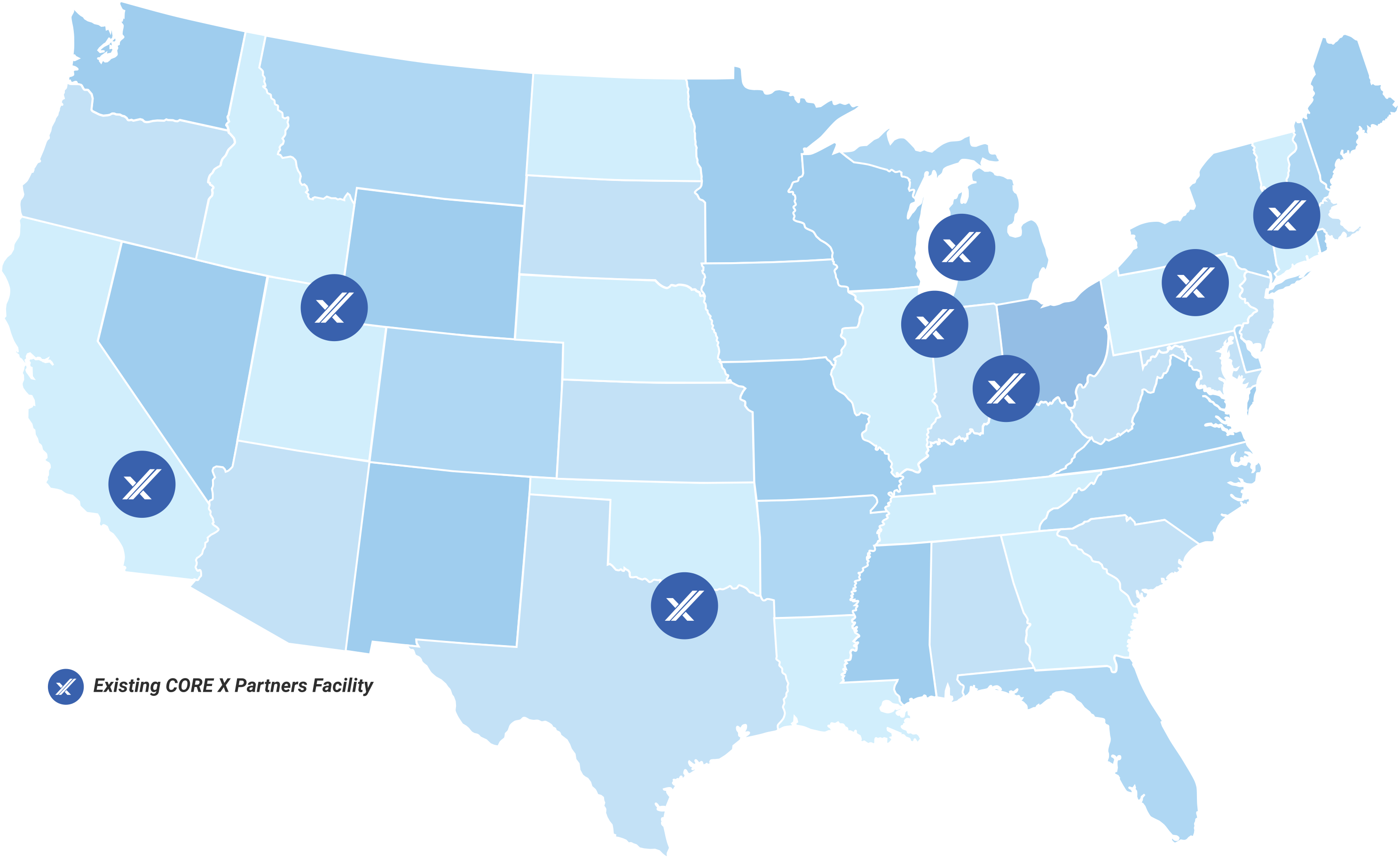
For example, CORE X CROWN in Crown Point, Indiana provides frozen and refrigerated storage, cross-docking, transportation support, and regional access near the Chicagoland market.
That type of regional support can be valuable when a shipment needs a practical recovery location rather than a return trip to origin.
Make Sure the Carrier Fits the Freight Network
A good carrier can still be the wrong fit for the lane.
Food manufacturers should evaluate whether the provider’s service model matches shipment size, frequency, delivery geography, customer requirements, and temperature needs.
LTL, FTL, and Consolidation Fit
A manufacturer may use several freight modes at the same time. Smaller shipments may move through refrigerated LTL. Recurring compatible freight may fit a consolidation program. Higher-volume lanes may justify Full Truckload (FTL).
Carrier capability should align with that mix.
CORE X discusses choosing between LTL, FTL and consolidation as shipment volume and lane density change. A carrier that works well for one dedicated truckload lane may not be the right provider for smaller retail replenishment shipments moving into several regions.
The mode should fit the shipment rather than forcing every load into the same transportation model.
Geographic Coverage and Lane Density
Network fit also depends on where the carrier operates well. A provider with strong density in one region may offer better scheduling, recovery options, or appointment performance there than in a market where it has limited coverage.
Food manufacturers should look at where their customers are today and where distribution is headed. Carrier selection should support the next stage of the network, not only the current route map.
Use Performance Data, Not Impressions
Carrier reviews should be based on operating performance over time.
A carrier may communicate well and still show recurring temperature events. Another may have strong on-time performance but generate excessive accessorial charges. A low-cost provider may require so much follow-up that the administrative burden erodes the savings.
Useful metrics can include:
| Measure | What It Helps Evaluate |
|---|---|
| On-time delivery | Schedule reliability |
| Temperature-event frequency | Thermal performance |
| Alarm response time | Speed of intervention |
| Claims and rejected loads | Product and customer impact |
| Reefer breakdown frequency | Equipment reliability |
| Dock dwell | Handoff efficiency |
| Accessorial charges | Hidden transportation cost |
| Repeat root causes | Whether problems are actually being corrected |
These measures should be reviewed against the shipper’s own requirements rather than generic industry benchmarks.
A good carrier-review process should also look at trends. One isolated problem may not mean the provider is failing. The same issue appearing repeatedly is different.
CORE X’s freight content emphasizes setting service expectations for cold chain carriers and using performance information to manage carrier mix over time.
Build a Weighted Frozen Freight Carrier Scorecard
A scorecard helps move carrier selection away from rate-only comparisons.
The weighting should reflect the manufacturer’s priorities. A high-value frozen product moving into strict retail appointments may place more weight on temperature performance and recovery capability. A stable regional lane may emphasize cost and on-time performance more heavily.
An example scoring model might look like this:
| Evaluation Area | Example Weight |
|---|---|
| Temperature-control capability | 20% |
| Equipment and maintenance | 15% |
| Monitoring and data access | 15% |
| Loading and handling discipline | 10% |
| Breakdown and delay response | 15% |
| Network and lane fit | 10% |
| Performance reporting | 10% |
| Rate | 5% |
These percentages are examples, not recommended industry standards.
The value of the scorecard is consistency. It forces the decision team to evaluate the same criteria across providers and makes tradeoffs easier to see.
Rate still belongs in the comparison. It simply should not erase weaknesses in the areas that protect product and customer service.
Look at Continuous Improvement After the Carrier Is Selected
Carrier qualification should not end when the contract is signed. Frozen freight performance should be reviewed regularly using On-Time, In-Full (OTIF), claims, temperature events, dwell, accessorial charges, breakdowns, and corrective-action history.
When an issue occurs, the review should ask whether the root cause is understood and whether the same problem is likely to happen again. Strong carrier relationships improve over time because both sides use operating data to adjust procedures, lane assignments, equipment expectations, and escalation practices.
A carrier that shares data and participates in corrective-action reviews gives the shipper a stronger basis for improvement than one that only responds when a claim is filed.
Speak With A Cold Chain Specialist
Consider When an Integrated Cold Chain Provider Changes the Equation
Carrier performance does not exist separately from the warehouse. Orders must be picked and staged on time. Trailers must arrive when product is ready. Appointments need to align with realistic transit schedules. Temperature visibility should continue across storage and transportation.
When different providers manage each step independently, accountability can become harder to trace. An integrated refrigerated transport model can help connect storage, staging, carrier management, freight movement, and shipment visibility within a broader operating plan.
That does not eliminate carrier risk. It can reduce the number of gaps between the teams responsible for the shipment.
For growing food manufacturers, this can become increasingly valuable as the number of carriers, facilities, customers, and freight lanes increases.
Choose a Frozen Freight Carrier for the Full Cost of Performance
The best frozen freight carrier is not automatically the provider with the highest rate or the lowest one. The better choice is the carrier that fits the product, lane, customer requirements, and level of risk the manufacturer needs to manage.
Temperature control, equipment reliability, monitoring, handling discipline, breakdown response, network fit, and performance reporting all belong in the decision. A consistent scorecard helps manufacturers compare those capabilities without allowing the freight rate to dominate the entire evaluation.
CORE X Partners helps food manufacturers manage temperature-controlled freight through coordinated carrier strategy, cold storage, visibility, and regional network support. Our teams can help evaluate transportation requirements across LTL, FTL, consolidation, and long-haul frozen lanes while keeping product quality and service performance in view. Contact CORE X Partners to discuss temperature-controlled freight and carrier requirements for your cold chain.