
How Can Food Manufacturers Reduce Temperature-Related Spoilage in Their Supply Chain?
Food manufacturers reduce temperature-related spoilage by managing the cold chain as a single, integrated operating system rather than a series of separate warehouse, freight, and customer service tasks. Product quality can be protected in storage and still be put at risk during staging, loading, transportation, retail receiving, or exception response. The goal is to control […]

How Cold Chain Providers Help Improve Retailer OTIF Without Increasing Temperature Risk
Retailer delivery performance gets more complicated when frozen and refrigerated products are involved. OTIF stands for On Time/In Full, and for food brands shipping to retail distribution centers, it generally means the order arrives within the retailer’s required delivery window and in the expected quantity. For cold chain shipments, that is only part of the […]

Cold Chain LTL vs. Traditional LTL – Infographic
This infographic compares standard LTL shipping with cold chain LTL consolidation, showing why temperature-sensitive freight needs a more controlled process than general freight.
How Can Integrated Cold Chain Providers Help Reduce Food Waste for Manufacturers?
Quick Answer Integrated cold chain providers help manufacturers reduce food waste by keeping cold storage, inventory visibility, staging, transportation, and issue response connected throughout the post-production process. Finished goods can lose value even when they are made correctly and remain safe to use. A late pickup, temperature variation, poor inventory rotation, missed appointment, short-coded lot, […]

How Cold Chain Providers Support Excess Food Redistribution
Food waste reduction starts with prevention. Manufacturers need strong temperature control, inventory visibility, staging discipline, and transportation timing to keep products moving through normal commercial channels. Still, some products become difficult to sell because of short-coded dates, packaging changes, overproduction, customer order changes, or forecast misses. The product may be safe and usable, but it […]

How Integrated Cold Chain Logistics Protects Margin
Food waste is not just a product loss. For manufacturers, it is a margin problem. Every rejected load, short-coded pallet, missed delivery window, or temperature-related claim carries costs that extend beyond the product itself. By the time product becomes waste, the manufacturer has already invested in ingredients, packaging, labor, storage, freight, customer service time, and […]

Network-Wide Compliance: How Core X Partners Supports BRCGS Certification Across Locations- Infographic
Showcase what it takes to sustain certification across multiple sites: centralized oversight, standardized documentation, and consistent execution at the facility level.

Reducing Dwell Time: Why Staging, Loading, and Transportation Timing Matter
For temperature-sensitive products, avoidable waiting can create real business risk. It can reduce shelf-life margin, increase handling, complicate delivery timing, and make it harder to meet customer requirements. Why Dwell Time Creates Waste Risk Dwell time does not have to create a crisis to create a cost. A few extra minutes or hours may seem […]

FEFO Inventory Cold Storage: How Manufacturers Can Use Cold Chain Data to Ship Smarter
For food manufacturers, shelf life is more than a date printed on a case. It affects which orders can ship, which customers will accept product, and how much time sales teams have to move inventory before it becomes difficult to sell. That is where FEFO inventory cold storage becomes valuable. FEFO means “First Expired, First […]

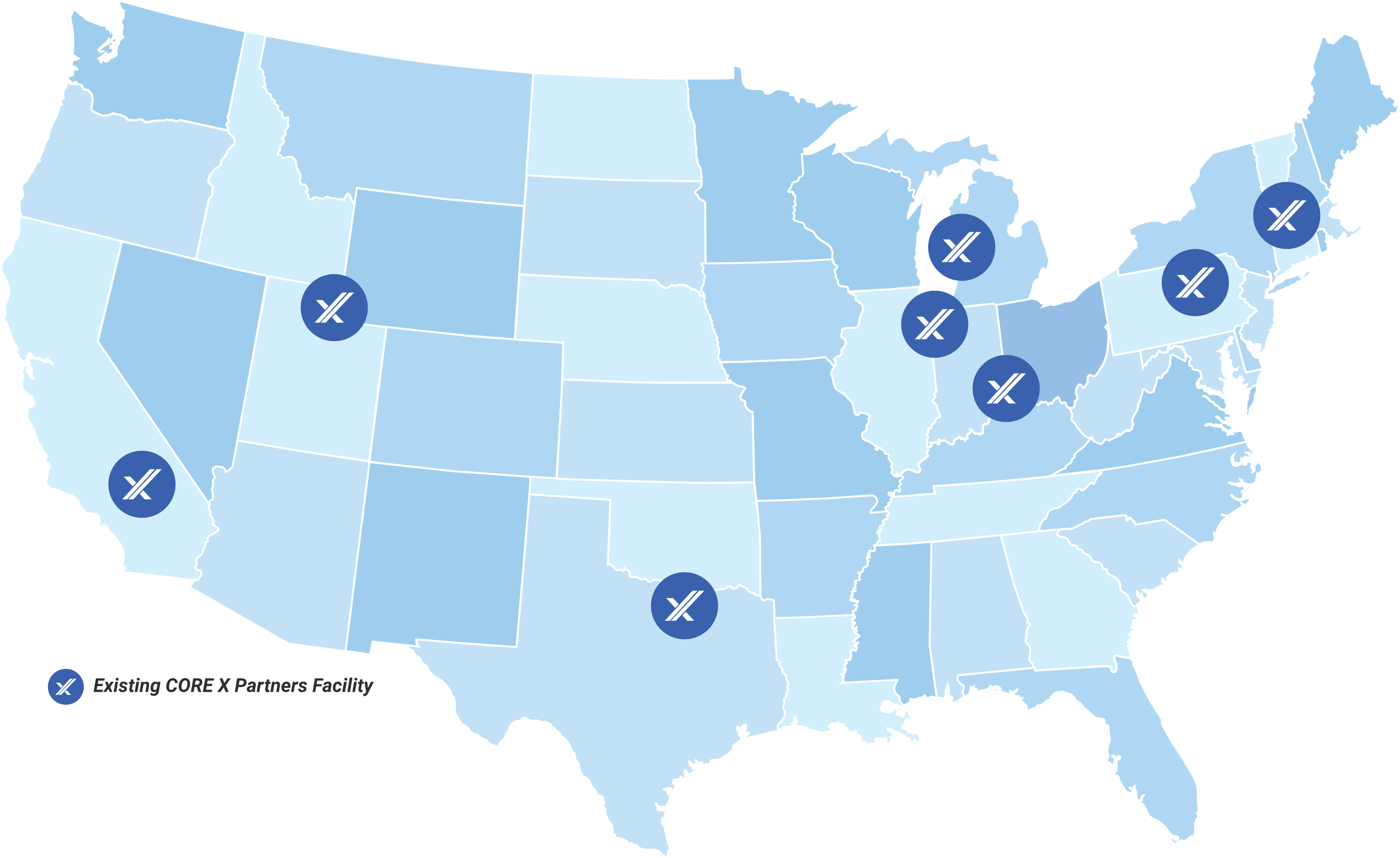
How CORE X Partners Runs a Coordinated National Cold-Chain Network- Infographic
Turn CORE X’s operating model into a clear, visual flow: centralized oversight for consistency, executed locally through Partnering Regional Operators (PROs). This infographic is designed for sales enablement and “how we work” explainers.
Find a Facility