


Long-haul frozen transportation adds distance, time, and operating variables between the freezer and the customer.
A reefer trailer may be set correctly, but product quality still depends on what happens before loading, during transit, at handoffs, and at receiving. Trailer preparation, airflow, temperature monitoring, dwell time, carrier response, and contingency planning all affect whether the load arrives in the condition the shipper expects.
The strongest frozen freight programs treat those controls as one operating system. That means defining the product requirement first, preparing the trailer correctly, loading for airflow, monitoring the right data, responding quickly when conditions change, and reviewing performance after delivery. It also means choosing transportation partners for their ability to protect and recover the load, not simply for the lowest linehaul rate.
Quick Answer: What Protects Product Quality on Long-Haul Frozen Freight?
Long-haul frozen transportation works best when shippers control the full journey rather than relying on the refrigeration unit alone.
The key strategies are to:
- Establish product-specific temperature requirements before dispatch.
- Confirm the product is already at the required shipping condition.
- Inspect and pre-cool the trailer when required.
- Protect supply and return airflow during loading.
- Monitor temperature together with time, location, equipment status, and door activity.
- Reduce unnecessary dwell at loading, transfer, and receiving points.
- Build a recovery plan for reefer failures, delays, and missed appointments.
- Evaluate carrier performance using quality, response, and service data.
- Review temperature events and use the findings to improve future shipments.
For many frozen foods, 0°F (-18°C), recommended by the U.S. Department of Agriculture (USDA), is a common quality benchmark, but the transportation plan should follow the applicable product specification, regulatory requirements, and customer requirements. One temperature target should not be applied blindly across every frozen SKU.
Why Long-Haul Frozen Freight Creates More Exposure
Longer routes create more opportunities for a shipment to move off plan.
Weather can slow the route. Traffic can add several hours. A refrigeration unit can fail. A retail appointment can be missed. A trailer may wait at a dock longer than expected. Product may also pass through additional handling or transfer points before reaching the final receiver.
Individually, some of these events may be manageable. The concern is what happens when several occur during the same trip.
A short loading delay followed by a long traffic stop and another delay at receiving creates a different risk profile than a shipment that moves smoothly from origin to destination. The same is true when product is staged too early, trailer airflow is restricted, or an alarm is detected but not acted on quickly.
That is why long-haul frozen transportation should be evaluated across the entire movement of the product.
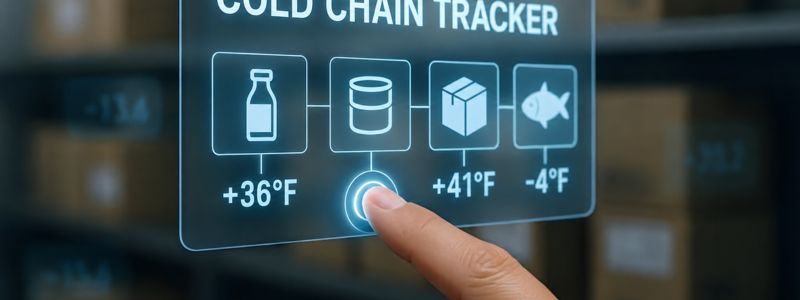
How to Protect Frozen Product Quality Across the Full Trip
The most reliable programs establish controls before the load leaves and maintain them through receiving.
Build a Long-Haul Frozen Freight Control Checklist
A repeatable checklist turns the transportation plan into actions that warehouse, transportation, and receiving teams can verify and document. The exact controls should reflect the product, lane, customer requirements, and applicable regulations. For covered food shipments, this may include the U.S. FDA’s Final Rule on Sanitary Transportation of Human and Animal Food and specific customer requirements.
Before Loading
☐ Confirm the product-specific shipping temperature, acceptable range, and handling requirements.
☐ Verify that the product is at the intended shipping condition before it leaves temperature-controlled storage.
☐ Confirm applicable regulatory requirements, customer instructions, and the responsibilities of the shipper, loader, carrier, and receiver.
☐ Inspect the trailer’s refrigeration unit, cleanliness, door seals, insulation, interior condition, and airflow paths.
☐ Pre-cool the trailer when required by the operating plan and record the appropriate pre-loading checks.
☐ Confirm that the loading pattern will protect supply and return airflow, including any required clearance around pallets, walls, floors, and air chutes.
☐ Position and activate temperature-monitoring devices, then record initial readings where appropriate.
During Transit
☐ Monitor temperature trends, refrigeration-unit status, route progress, unexpected stops, delays, and door activity when that information is available.
☐ Respond to alarms and equipment problems according to the established escalation and contingency plan.
☐ Document temperature events, delays, equipment issues, communications, and corrective actions.
☐ Keep the shipper, carrier, receiver, and quality team informed when an exception could affect delivery or product condition.
At Receiving
☐ Review the shipment’s temperature history, alarms, and exception documentation.
☐ Compare the arrival condition with product specifications and customer acceptance requirements.
☐ Inspect the shipment and trailer for signs of temperature instability, damage, contamination, or load shifting.
☐ If a material temperature-control failure could affect food safety, hold the shipment from distribution until a qualified individual completes a safety determination.
☐ Document the acceptance, hold, rejection, or disposition decision and retain the required records.
☐ Review recurring problems and use the findings to improve future loading, monitoring, carrier, or contingency controls.
Using the same checklist for every shipment creates consistency without assuming that every product or lane has identical requirements. It also gives teams a clearer record of what was checked, what happened during transit, and how exceptions were handled.
Explore the full operating sequence in Long-Haul Frozen Freight Checklist: Controls That Protect Product Quality.
Measure More Than the Reefer Set Point
The reefer set point matters, but it doesn't tell the whole story. The set point shows what the refrigeration unit has been instructed to maintain. Supply-air temperature shows the temperature of air leaving the unit. Return-air temperature shows what returns after circulating through the trailer. Product temperature and ambient trailer readings provide different information.
Don't treat these measurements as interchangeable. A trailer can show the correct set point while poor airflow creates a warmer area elsewhere in the load. One sensor may also miss a localized issue near the rear doors or within a dense pallet configuration.
Useful frozen freight temperature monitoring may combine temperature readings with alarm history, door events, location data, stop duration, and reefer faults. That context helps operations teams understand what happened rather than simply seeing that a number changed.
Alerts also need structure. A useful alert should have a defined threshold, a time component, a responsible person, and a corrective action. Otherwise, the system can create noise without helping the team make a decision.
Trend data can be especially valuable. A load may arrive within specification but still show repeated temperature instability that points to loading, airflow, equipment, or dwell issues.
Learn what the data should actually tell you in Frozen Freight Temperature Monitoring: What Should You Actually Measure?
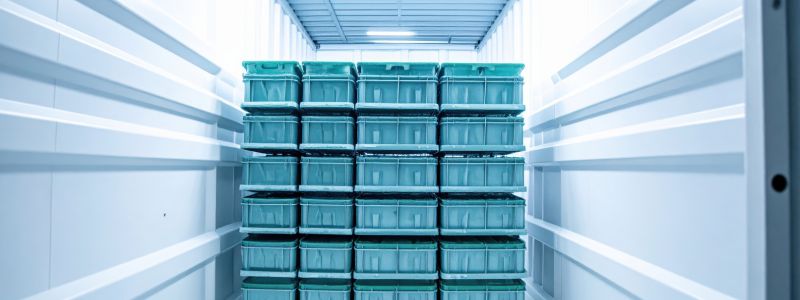
Protect Airflow Through Trailer Preparation and Loading
Frozen freight quality can be affected by the way the trailer is loaded. A reefer unit maintains the trailer environment. It cannot compensate for every loading problem.
If pallets obstruct return-air paths, block air chutes, sit too high, press against trailer walls, or restrict floor airflow, some areas of the trailer may receive less circulation. Product can also shift during transit if pallet construction or load securement is poor.
The trailer should be prepared before loading begins. Pre-cooling helps remove stored heat from the trailer environment, while a pre-trip inspection can identify damaged seals, interior problems, or refrigeration issues before product is loaded.
Dock staging matters too. Frozen product that leaves storage and waits on an uncontrolled dock can begin gaining heat before it reaches the trailer. Trailer arrival, pre-cooling, labor, paperwork, and loading time should therefore be coordinated with order readiness.
A useful pre-departure check should confirm the return-air path is clear, the pallet configuration is stable, air chutes are unobstructed, the product is positioned correctly, and monitoring devices are active.
See how these details affect temperature performance in Why Reefer Trailer Loading Pattern Matters More Than Most Frozen Shippers Think.
Speak With A Cold Chain Specialist
Plan for the Shipment That Does Not Go According to Plan
Prevention is only part of a strong frozen freight program. Long-haul transportation also needs a recovery strategy.
Build a Recovery Plan Before the Truck Leaves
Long-haul frozen shipments face predictable disruptions. Reefer units fail, tractors break down, weather closes roads, delivery appointments change, and traffic, inspections, or terminal congestion can extend transit time. Establish a frozen freight contingency plan before dispatch that answers three questions: What could go wrong? Who has authority to respond? What recovery resources are available?
1. Identify Likely Failure Scenarios
The plan should address the disruptions most likely to affect the shipment, including refrigeration-unit failures, mechanical breakdowns, route closures, extended delays, missed appointments, and unexpected dwell time. Each scenario should have a defined trigger and an initial response.
2. Assign Communication and Decision Responsibilities
Everyone involved should know who receives an alert, who contacts the driver, who informs the shipper and receiver, and when the quality team must become involved. The plan should also identify who has authority to approve repairs, replacement equipment, route changes, diversions, transloading, or temporary storage.
3. Establish Escalation Levels
Temperature and transportation events can be grouped by the response they require:
- Monitor: Conditions have changed, but the shipment remains within its operating requirements.
- Investigate: An alert, delay, or unexpected reading requires verification and closer review.
- Intervene: A confirmed equipment, route, or scheduling problem requires corrective action.
- Hold and assess: A material temperature-control failure could affect food safety or product acceptability, so the load must be held from distribution until a qualified individual completes the appropriate evaluation.
These are response categories, not universal temperature thresholds. The actual triggers and limits should be based on product specifications, customer requirements, applicable regulations, and company procedures. A structured escalation process helps protect cold chain temperature integrity while giving the team a documented basis for action.
4. Pre-Arrange Physical Recovery Options
Communication alone cannot recover a stranded load. The plan should identify repair providers, replacement equipment, rescue carriers, transload support, alternate routes, and nationwide cold storage facilities that can protect the product while the original problem is resolved.
A contingency plan is most useful when you establish contacts, decision authority, and physical recovery options before the truck is sitting on the roadside. Build the response side of the program with Refrigerated Transportation Risk Management: What Happens When the Reefer, Route, or Schedule Fails?
Choose Transportation Partners for Performance, Not Rate Alone
Carrier selection directly affects temperature integrity, service performance, and recovery capability.
Evaluate the Frozen Freight Carrier as an Operating Partner
A low frozen freight rate can become expensive if the shipment arrives late, experiences repeated temperature problems, misses a retail appointment, or requires replacement.
Carrier evaluation should therefore extend beyond price. Food manufacturers should review temperature-control capability, refrigeration-unit maintenance, trailer condition, monitoring and data access, loading standards, breakdown response, geographic coverage, and reporting.
A practical carrier scorecard can keep those factors visible:
| Evaluation Area | What to Assess |
|---|---|
| Temperature control | Equipment capability, monitoring, temperature-event history |
| Equipment condition | Maintenance, insulation, seals, cleanliness |
| Monitoring | Alarm visibility, data access, reporting |
| Recovery | Repair support, rescue capacity, alternate facilities |
| Network fit | Geography, lane density, LTL, FTL, consolidation |
| Performance | OTIF, dwell, claims, accessorials, repeat issues |
| Rate | Transportation cost within the full performance picture |
The weighting should reflect the shipper’s priorities.
For a high-value frozen product serving strict retail appointments, temperature performance and recovery capability may deserve more weight. A stable regional lane may place more emphasis on cost and delivery consistency. Rate still belongs in the decision. It shouldn't erase weaknesses elsewhere.
Use the full selection framework in How to Evaluate a Frozen Freight Carrier Without Choosing on Rate Alone.
Measure the Cost of Temperature Instability
Connect temperature performance to business performance.
Track the Financial Impact of Temperature Events
A temperature event does not have to result in a rejected load to cost money.
Product may be placed on hold while quality teams review the data. Inventory may be unavailable for sale. Customer-service teams may need to manage a delay. Operations teams may spend hours collecting documentation and working with the carrier.
More serious events can lead to claims, replacement inventory, disposal, expedited freight, customer credits, or service deductions. That makes temperature performance an operating and financial issue.
Useful measures include:
- Temperature-event frequency
- Event duration and severity
- Alarm-response time
- Claims and rejected loads
- Dock dwell
- On-Time, In-Full (OTIF) performance
- Cost per successful delivery
The last measure is especially useful because it looks beyond the quoted freight rate.
A basic calculation may include:
Freight cost + claims + accessorials + disposal + replacement freight + internal intervention
Consider a simple example. One carrier saves $150 per load. Across 100 loads, the apparent savings are $15,000. If one high-value rejected shipment creates $25,000 in product loss, replacement freight, and customer-related costs, that rate advantage disappears. Those numbers are illustrative, but the business principle is important.
Explore the broader financial impact in The Hidden Cost of Frozen Freight Temperature Excursions.
Speak With A Cold Chain Specialist
Put the Six Controls Into One Operating Model
The six controls should function as one connected operating model. Each control answers a different question about whether the shipment is prepared, protected, monitored, and supported throughout the trip.
| Control Area | What to Assess |
|---|---|
| Product requirements | Temperature range, tolerances, customer requirements |
| Trailer and loading | Trailer readiness, pre-cooling, airflow, load pattern |
| Monitoring | Sensors, temperature trends, alarms, data access |
| Contingency planning | Response roles, escalation triggers, recovery options |
| Carrier management | Equipment, communication, recovery capability |
| Performance review | OTIF, claims, cost, recurring issues |
Connect the Controls to Find the Source of Problems
Problems often begin in one part of the trip and appear in another:
- A transit temperature event may begin with early staging or excessive dock dwell.
- A recurring alarm may point to the loading pattern or restricted airflow.
- A missed appointment may expose a scheduling or route-planning problem.
- A slow recovery may reveal unclear authority or limited diversion options.
An integrated cold chain logistics model connects storage, loading, transportation, monitoring, and exception response. That connection helps teams trace root causes and improve the full process instead of treating each event in isolation.
What Should Operations Leaders Review Monthly?
A monthly frozen freight review does not need dozens of metrics. A focused scorecard should show whether temperature control, response, equipment performance, service, and cost are improving.
| Performance Area | What to Review |
|---|---|
| Temperature control | Event frequency, carrier and lane trends |
| Response | Alarm response, corrective actions |
| Equipment and handling | Reefer failures, trailer issues, dock dwell |
| Service | OTIF, claims, rejected loads |
| Cost | Cost per successful delivery |
Look for Patterns
Review the trend, not one isolated month. Determine whether the same problem is repeatedly connected to one carrier, facility, trailer type, transportation lane, or customer location.
Act on the Findings
When a pattern appears, adjust carrier allocation, revise the loading standard, change staging or appointment timing, reposition inventory, or add a recovery option along the lane. Visibility creates value when the findings lead to a clear operating decision.
How CORE X Supports Long-Haul Frozen Transportation
Long-haul freight becomes easier to manage when storage and transportation are connected through one broader operating structure.
CORE X Partners supports temperature-controlled transportation alongside frozen and refrigerated storage, freight coordination, refrigerated less-than-truckload (LTL), full truckload (FTL), consolidation, shipment visibility, and regional operating support.
The network also provides options when a shipment moves off plan. A delayed or disabled load may need another cold storage facility, a different transportation solution, or a local operating team that can respond quickly.
For Midwest and Chicagoland routes, CORE X CROWN in Crown Point, Indiana provides frozen and refrigerated storage, transportation support, cross-docking, and regional distribution capabilities within the broader CORE X national network.
That combination of local execution and national resources gives food manufacturers another way to manage long-haul freight without treating storage, transportation, and exception response as separate problems.
Frequently Asked Questions: Long-Haul Frozen Transportation
At what temperature should frozen food be transported?
There is no single transportation temperature for every frozen product. The required operating range should come from the product specification and any applicable regulatory and customer requirements. The USDA Food Safety and Inspection Service’s freezing guidance uses 0°F (-18°C) or below as the benchmark for freezer storage, but that storage benchmark should not replace product-specific transportation requirements.
Is the reefer set point the same as the product temperature?
No. The reefer set point is the target programmed into the refrigeration unit; it is not a direct measurement of product temperature. Supply-air, return-air, trailer ambient, and product temperatures describe different conditions and should be evaluated together.
How many temperature sensors should be used in a frozen shipment?
There is no universal sensor count. The appropriate number and placement depend on the product, trailer configuration, loading pattern, route, shipment value, and risk profile. Sensors should capture meaningful conditions across the load, including areas where temperature variation is most likely.
What should happen when a frozen freight temperature alarm occurs?
First, verify the alarm by reviewing the temperature data, reefer status, and related operating conditions. Then follow the established escalation procedure and notify the appropriate people, which may include the driver, dispatcher, maintenance provider, shipper, quality team, or an alternate temperature-controlled facility. For operations subject to the rule, the U.S. FDA’s Sanitary Transportation requirements require that food not be sold or distributed after an indication of a possible material temperature-control failure that may render it unsafe unless a qualified individual determines that the deviation did not make the food unsafe.
How should food manufacturers evaluate frozen freight carriers?
Food manufacturers should evaluate carriers on more than rate. Reviews should consider temperature performance, equipment condition, monitoring and data access, response time, loading practices, lane fit, claims, dock dwell, On-Time, In-Full (OTIF) performance, and recovery capability. The strongest provider offers the best overall balance of product protection, service reliability, recovery support, and cost.
Protect Product Quality Across the Full Long-Haul Route
Long-haul frozen transportation requires control before the truck leaves and throughout the trip. Product condition, trailer preparation, airflow, monitoring, carrier performance, contingency planning, and post-shipment review all influence how well the load holds up across miles and handoffs.
CORE X Partners helps food manufacturers connect temperature-controlled storage, freight planning, monitoring, and regional operating support across long-haul frozen transportation. Our network gives customers greater visibility into product movement and more options when a route, trailer, or schedule moves off plan. Contact CORE X Partners to discuss a frozen freight strategy built around product quality, reliable execution, and stronger cold chain control.
